
大副面试英语
大副面试英语1大副面试英语1. can you tell me about your educational backgroud and working experience?A reference answer:I graduated from Nantong navigation college in 1987. I studied there for two and half years. I have worked as a seamen on ten ships for seventeen years. I have the experience of chief officer on two ships for twelve months. One ship is J.TONG, which registered port is HONGKONG. The another ship is J.KING, which registered port is Kingstown. Up to now, I have worked for Jiangsu ocean shipping company in the past seventeen years. JOSCO now changed his name to Jiangsu ocean shipping limited company. I just ceased contract with them. I want to work for freign shipowner for next ten years. This is my first face-to-face interview. I will try my best. Thank you.2. can you tell me the responsibilities of the chief officer? Under the leadership of the master, the chief officer shall carry out thedaily management of the deck department, and he is also responsible for cargo handling. The specific duties include:1) watch-keeping from 0400-0800 hours and 1600-2000 hours when underway or at anchor;2) safety of the ship and work place, safety equipment; 3)dailysafety and sanitary inspection;24)store and spare parts inventory management;5)maintenance on deck;6)stowage plan making;7)supervision of the loading and unloading process;8)cargo caring on board;9)some other work and duties designated by the master of the vessel 3. can you talk about the previous vessel you worked on board. It was an ocean-going ship, but is mainly loaded and discharging cargoes in Asia.It was an old ship built at 1994. But the general condition of the ship was quite good because we did very good maintenance work on board.4. what types of cargoes have ever been carried on board your last vessel?I have worked on container and general cargo vessels and I have experienced a lot of cargo handling.5. where was your last vessel’s trading (plying , sailing) area?It was an ocean-going ship, but it mainly loaded and discharged cargoes in Asia . She has ever been to many countries such as China, Japan , Korea, Thailand , Philippines, Singapore, Malaysia and so on.. 6. did you have the experience of working with foreign crews? What weretheir nationalities?No, I never worked with foreign crews. But I have experiences of good3cooperation with foreigner as a ship’s officer. I respect foreigner and dareto control them on board as a chief officer according to company’s SMS.Or: But The last two vessels I worked on had crew from several countries. The masters were from Indian, the chief engineers were from Hong Kong and Philippine and other seamen were from china, Indian, Burma and Vietnam.7. can you tell me how to make a stowage plan?Based on the capacity of the hold, the stowage factors, types of cargo,loading and discharging ports rotation, I shall calculate the volume ofthe cargo that is to be loaded into different holds. Then I shall calculate the draft of the vessel and trimming, shear force , bendingmoment and GoM to meet the requirements of the ship. At last,stowage plan is made based on these factors.8. what does a stowage factor of mean?how many cubic meters is needed to stow one metric ton of certain goods, it is the meaning of stowage factor. Stowage factors shouldinclude allowance for dunnage, irregular size of certain goods, palletsand something else. Even the most carefully determined stowagefactor is not absolute and it should be used only as a guide while planning cargo disposition.9. if there happens stevedore damage to cargo, equipment of ship’s4structure in the loading or discharging ports, what should you do?If damage happens, I must record it first and then report it in an appropriate written form to the master and other parties concerned. The report must be signed by the liable parties admitting they have (or have not) responsibility for the damage. The damage report shall be carefully worded and shall be supported with photos and other evidence, if any. The damage repo rt should also include the following contents: ship’s name, voyage number, date, geographical location, name of the person who took the photos and his signature, location where the photo was taken, and what is intended to show.10. what precautions do you have to take before cargo operation is carried out?I shall check the pre-cargo operation check lists to make sure that no item is missing. The following procedures are to be adopted: 1) the chief officer shall make a cargo operation plan, in which the following factors shall be considered: the cargo must be stowed in such way that the stability, trim, shearing forces and bendingmoments are within the limits as laid down by the stability manual;excessive weight on tank tops , tweendecks and hatch covers must be avoided; and cargo must be stowed and secured in such way asto avoid damage—which can result in possible loss of life orproperty.52) Pre-operation conference with all ship’s personnel to beinvolvedin the cargo operation should be held to discuss such matters as cargo disposition, numbers of gangs and working hours, usual and special safety requirements, ballasting and de-ballastinginformation, special requirements regarding cargo operation ,damage prevention and control, personnel organization, cargowatch etc. the chief officer must ensure that all relevant personnel have fully understood the intended cargo and all usual and special safety operational requirements.11. what will you do if cargo damage is found or suspected before loading or during loading?I shall report to the master first and foremost. The master should decide whether to replace the damaged cargo. For the full-set machines and high-valued products I must ask for the replacement in the loading port if damages are found. If the damaged cargoes cannot be replaced, the chief mate shall make remarks on the mate’s receipt.If disputes happen on the quantity and quality of the cargoes, I shall, at the discretion of the master, ask the cargo surveyor to do the survey. If necessary, under the endorsement of the ship owner, I shall write a letter of protest(based on the format provided by the company)to prove the innocence of the seamen on board.During the voyage, if a very small amount of cargo is damaged, with6the permission of the master, I shall throw it away into the sea to avoid any disputes with any third party.12. what are the differences between the bill of lading and the mate’sreceipt?A tally sheet is the basis of the mate’s receipt. The mate’sreceipt is thebasis of the B/L. the condition of the cargo is clearly shown on the mate’s receipt. It is very important to make sure that the cargo condition on the bill of lading is the same as that on the mate’s receipt.The mate’s receipt is the le gal evidence of the cargo received and the B/L is the legal evidence of the cargo ownership. If the consigner wants the master to issue a clean B/L on the basis of unclean mate’s receipt, the master firstly must ask for permission from the company. If the company agrees, the consigner must issue reliable letter of indemnity or letter of guarantee.13. if the draft survey proves a shortage of cargo after loading in completed, what will you do apart from reporting to the master? Will you make any remarks on the mate’s receipt?In the case, I shall report the problem to the master first. Withthe permission of the master, I shall ask the third party surveyor to do the survey. If the survey shows there is shortage or damage of the cargo, I shall write remarks on the mate’s receipt showing the loss or damageor shortage.7The third party is to be invited to make the objective report on the real quantity of the volume of the cargo. If the cargo is proved to bein shortage, I shall write remarks on the mate’s receipt.14. what do you know about the ISM code and SMS? How many chaptersare there in the ISM code(as amended)? What are these chapters? The ISM code is the International Safety Management Code. The purpose of this code is to provide an internatioal standard for the safe management and operation of ships and for pollution prevention. The objectives of the code are to ensure safety at sea, prevention of human injury or loss of life, and avoidance of damage to the environment, in particular to the marine environment and to property.The 16 chapters of ISM Code are :general, safety and environment protection policy, company responsibilities and authority, designated person(s), master’s responsibilities and authority, resources andpersonnel, development of plans for shipboard operation, emergency preparedness , reports and analysis of non-conformity, accidents and hazardous occurrences, maintenance of the ship and equipment, documentation, company control, certification and periodical verification, verification, interim certification, and forms of certificates, the last four chapters are newly added in the new version of ISM code.SMS means safety management system, and this system is mad based8on the 16 elements of ISM Code, which is a compulsory part SOLAS74. the shipowner of manager cannot get document of compliance(DOC) and SMC without audited Safety Management Certificate (SMC) by Class designated by the flag registry country administration. Every company should develop, implement and maintain a safety management system(SMS).15. what do observation, non-conformity and major non-conformity mean respectively?Observation means a statement of fact made during a safety management audit and substantiated by objective evidence. Non-conformity means an observed situation where objective evidence indicates the non-fulfillment of a specified requirement. Major non-conformity means an identifiable deviation that poses a serious threat to the safety of personnel or the ship or a serious risk to the environment that requires immediate corrective action and includes the lack of effective and systematic implementation of a requirement of this code.16. have you experienced any on-board internal audit before? The onboard internal audit is carried out at the discretion of the designated person of the owner. When the auditors come on board, the seamen should give full support to them. If observation or non-conformity items are found in the audit, these items should be9treated with due diligence and rectified on time.As the chief officer, I should be very familiar with the operation and calibration of the gas detector and the loading computer.17. what is garbage management plan?The MARPOL 73/78 requires that a garbage management plan should be developed in accordance with the IMO guidelines on board almost all ships. The plan includes the procedures for garbage collection, separation, processing and disposal, as well as the management and requirements of garbage processing equipment, implementation of the plan and crew responsibilities. All processing work should be recorded in the garbage book.18. how do you carry out the deck machinery maintenance/on board the last vessel, I often ordered my bosun to organize the deck crew to maintain such equipment as windlass, steering engine, derrick, crane, wires, meters and winch. Chipping and greasing are also among their daily routines as per the PMS(planned maintenance system). All maintenance plans for the machines in the deck department shall be made by the chief officer.19. as the chief officer, what precautions do you have to take to prepare for the PSC inspection?The chief officer should arrange for the checks of the following items: LSA and FFE equipment, garbage disposal records, gangway safety,10ballasting system, sanitary condition, especially in the accommodation area, the galley, provision stores, cargo operation safety and documents. Besides, the chief officer should follow the master’s instructions in organizing the emergency drill.20. what precaution do you have to take before entering an enclosed space?I shall nominate the standby personnel and prepare the ventilation, breathing tool, connecting signals, oxygen, air and poisonous gases testing equipment, and other necessary equipment according to the checklist. I shall then get the master’s signature on the checklist.21. what checks do you have made before any hot work is permitted? I must make sure of the following:There is no gas leakage on cargo deck or pump room area; The nearby places shall be free of inflammable materials or gases and portable extinguishers are available;The area where the hot work is done is not piles with solvents ofany kind, including diesel oil, kerosene, paint , cleaners and thinners; Gas testing is also important to make sure no flammable or toxic gas ispresent at the work site and that the oxygen content is 21% by volume; Ventilation condition should also be checked before any hot work is done.The master’s approval must be obtained under all circumsta nces.11While in port22. on board your previous vessels, how often did you conduct afire-fighting drill?I carried out a fire fighting drill at least once every month. 23. what are the chief officer’s responsibilities with regards to cargo operation?The chief officer is in charge of safe handling of all cargo operation. He must submit all cargo plans to the master for approval and discuss any critical stage of cargo operation with the master, he is responsible for making cargo records, time sheets, port logs and other paperwork related to cargo operation. He must also prepare cargooperation order and get all duty officers to read and understand it.24. what are the chief officer’s responsibilities with regard todeckmaintenance?The chief officer should prepare the deck maintenance schedule—both the long-term and short-term ones—and discuss the schedule with the master. He is in charge of the deck department personnel and should oversee their maintenance work. He should also write the monthly maintenance report.25. when the charted depth of anchorage is 40 meters, usually how do you drop the anchor?Before dropping the anchor, I should make sure that the windlass and12the brakes are in good condition and there is good holding ground. I should also study the water depth, weather and sea conditions and take into account the duration of the anchorage action.During the anchoring, I should lower the anchor until it touches ground, then disengage and slack the chain cable until the length is paid out. Main engine should be used to stretch the cable. I should not use excessive weight for the cable.The length of the cable must be decided by the master in advance. No matter how deep the water is , at least two shackles should remain on board.26. if water depth is more than 80 meters, is it possible for you to drop the anchor?Except in an extreme emergency situation, dropping anchor in this depth of water is very dangerous. So, if the anchor has to be dropped, the geographical condition(sea bed and adjacent area), weather condition must be carefully studied beforehand. If possible, you should have a discussion or meeting with relevant crew before the work is done.27. how do you keep proper ventilation during the voyage? Your shipis loaded with steel coil at constantsa in December and the cargo is to be discharged in Singapore.In order to prevent rust formation on the surface of the cargo, I must13make sure the temperature in holds is higher than the dew point at any times. Ventilation is to be made on the condition of dew point and try to lower the dew point.Under the above situation, no ventilation is needed because the ship sails from a cold place to a hot place.28. how do you maintain the minimum under keel clearance (UKC) when the vessel during passage /in fairways/inside ports?Refer to master’s answer.29. in case of cargo damage (for example, before the vessel arrives at the discharging port, when opening the hatch, you find the quality of the surface cargo has changed), how do you handle it?Well, I have to know the quantity of the cargo whose quality has changed. If the cargo is a small quantity, I shall dispose it myself. If it is a large quantity, I shall ask for decision from the master. 30. what are sensitive cargoes as defined by the P&I club/the cargoes that are particularly susceptible to moisture and damage are called sensitive cargoes. For the sensitive cargoes, special attention shall be required. The P&I CLUB defines the following cargoes as sensitive cargoes: cement, grain, and sugar.31. how do you judge whether the cargo holds are fitted for loading? According to the requirements of the voyage instructions or the charter party, I shall first see if it meets the charterer’s demands. Then14I will make my own judgment . if the holds are not suitable forloading any type of cargo, I shall report this to the master and ask him to decide on this.32. can you please briefly explain the general requirements forgrain cargo carriage?1) hold preparationthe hold should be very clean and free from scale and odor. Allbilges should be clean and dry. The tank top should be clean,stainless and dry. The front and rear sides of the brackets andbeams, piping etc. should be completely washed and clear of allresidues and dust from the previous cargo. And if the ship carried grain in the previous voyages and insects are found in the hold, the holds should be fumigated with insecticide.2) ventilationgrain can self heat, condense and absorb moisture. Without goodventilation, the cargo can easily deteriorate. In case of bulk grain, air is to be blown to the surface of the grain continuously on adaily basis in order to remove the air from the cargo. Thetemperature of the cargo shall be tested by thermometer on a daily basis and be recorded in the logbook.3) for detailed answer, please refer to the IMO grain rule.(IMORESOLUTION A.714 CODE OF SAFE PRACTICE FOR15CARGO STOWAGE AND SECURING.)33. how to conduct ventilation for hygroscopic cargo from warm to cold area voyage, and from cold to warm voyage? How about the non-hygroscopic cargo?In case of carrying hygroscopic cargoes from a warm place to a cold place, ventilation is very critical. It should be as strong as possible in the beginning so that eventually the outside dew point will be too low. This is a very difficult voyage situation in which to arrange satisfactory ventilation. From cold to warm voyage, the ventilation is not necessary.In case of carrying non-hygroscopic cargoes from a cold place to a warm place, no ventilation is needed, and cargo sweat would occur on the surface of the stow if relative warmer moisture laden air was admitted. From the warm to the cold voyage, no ventilation is needed because ship sweat is inevitable but cargo will be unaffected unless condensation drips back on the stow.34. how to prevent cargo from being damaged by rain or seawater? Before the voyage, I will check the hatch cover to see if it is properly closed that tight water condition is in good order. To make sure suction boxes and manholes are properly closed; to check the bulkhead of adjacent ballast tank.35. what preparations should you make before the pilot comes on board?16Preparation should be made in the following steps:First, the duty officer is to contact the pilot station to confirmthe availability the pilot;Second, the master is to contact the coming pilot and discuss withhim the vessel’s heading position and speed at the time of his boarding; Third, the duty officer should supervise the embarkation and disembarkation of the pilot to ensure his identity and safety; Fourth, the pilot ladder must meet the standards of the USCG and the IMO;Fifth, the deck crew is to prepare the ladder well and hoist the G flag;Last, when the pilot is on board, H flag should be hoisted.36. when you pass through the PANAMA canal, what should you pay attention to? Why?The turn of bilge radius should be made known to the pilot.According to the regulations, the turn of bilge radius of the vessel cannot be over 12.04 meters in the fresh water area. No bilge water is allowed to be pumped.As a precaution, we should check with the MR notice and apply for correction if on time. We should also prepare for the safety inspections by the boarding officers.Seven days before the ship’s estimated time of passing by the canal,we should report to the canal authority on the vessel condition.1737. what material and information do you need when you make thepassage plan?The passage plan shall contain all the charts required and shalllocateall the information concerning the intended area. The informationneeded for the passage plan shall be found from the sailingdirection,list of lights, tide tables, tidal stream table, guide to port entry, deepdraft vessel planning guide, the IMO ship route guide, guide totanker port, various ports’ information booklets, government andportregulations, navigational warnings, pilot charts, notice to mariners, weather information, and so on.38.do you often change the ballast water? What should you payattention to when changing the ballast water?Yes. The ballast water change is required by most port authoritiesin the world.Ballasting and de-ballasting on time is very important to keep the stress of the vessel in good condition. Under heavy weather conditions,it is necessary to test the ballasting and bilge water more often tomake sure of the stability of the vessel.39.what should you pay attention to when the vessel is loaded with coal?Trimming is very important to make sure that the cargo is evenly loaded. Since coal is liable to get fire, you have to make sure that the deck is free from any source of fire. Fire-fighting equipment should be18available at any time. Air in the cargo space should be regularly checked. Bilge water should be tested systematically to see whether there is any water leakage.Ventilation is not allowed during the voyage. Reasonable ventilation is to be carried out when the cargo temperature is above 55 degrees centigrade or the methane concentration is abnormal.Also, you have to measure the cargo temperature at least once every day . if the temperature and methane are abnormal, I will report to the owner for instruction.40. what are the function of a B/L? what is a clean B/L and what is unclean B/L?A B/L has three important functions. It constitutes evidence of the terms of the contract of carriage—a promise to carry and deliver the cargo. Itconstitutes the apparent order, condition, and quantity or weight of goods at the time of shipment. It is also a document of title(property) of the cargo.A clean B/L is one on which there is not any remark of cargo loss, shortage or damage. An unclean B/L is also called claused B/L, which carries some remarks of cargo damage, quantity shortage and so on.41.what is back dated or anti-dated B/L? what is advanced B/L? A back dated B/L is a B/L whose issuing date is earlier than the virtual loading completion date. An advanced B/L means a B/L that is signed19and issued by the carrier before the completion of loading. Both backdated and advanced B/Ls will bring some dangers and liabilities to the shipowner and charterer.42.what anti-stowaway precautions should you take before the vessel sails from a port?Before departure from any port, stowaway search has to be carried out. The following spaces shall be searched thoroughly: void space, chain lockers , funnel, and other places where the stowaways can hide themselves.If stowaways are discovered before the ship sails, arrangement has to be made for his immediate disembarkation. Records have to be made in the ship’s logs and the company should be notified. Necessary steps should be taken to prevent any further reoccurrence.43.who should not be allowed to have the shore leave at the same time? Refer to master’s answer.44.what is the maximum book alcohol concentration (BAC) rate on board?Refer to master’s answer.45.what kind of garbage cannot be thrown into incinerator? The following garbage cannot be thrown into the incinerator: .any containers that once contained gases under pressure, or aerosol cans; .the materials that may produce harmful gases or ashes;20.the materials that may produce high temperature and prolonged incineration of such materials that may cause damage to the incinerator.46.what should a muster list include? What kind of muster lists did you have on the last vessel?Refer to master’s answer?47.what is heavy weather condition? Under heavy weather conditions, what preparations should you make before sailing?I think heavy weather means weather conditions of wind force of 8 or above on the Beaufort scale and wave height of greater than 5 meters. Refer to master’s answer no. 5348.the same as 47.49.if the stevedores damage the crane, derrick or any other equipment on board, what should you do?Firstly, I shall ask the duty officer have a careful supervision when the stevedores are loading and unloading cargo and ask the duty officers to report to me any incident or any damage the workers have done to the vessel equipment.If equipment damages occur, usually, I will see how serious the damage is, if the damage is serious, I shall report to the master immediately. If the damage is not very serious, I shall ask the stevedore company to make repair . at least, I shall ask the stevedores to acknowledge their liabilities. But anyway, I shall not allow the stevedore workers to leave the vessel21until the damage is settled properly.50.before and during dry-docking for the vessel , what should achief officer do?The chief officer shall prepare a detailed repair list for the approval of the master and the company, adjust the proper trim as per the dock’srequirements and make out a safety procedure before drydocking. The chief officer should also make an assignment plan for the deck officers and crew during drydocking. When the repair work is being done, thechief officer should have a good supervision on the jobs and ensure safety of the workers and the seamen.51.how do you balance the interests between the ship owner and the charterer?Sometimes , the crew are heavily pressured in the circumstances: the charterer just pushes the master to catch time, but there will be no time for the maintenance and repairs for the vessel. But I know that the charterer is very important to the ship owner, so good relation with thecharterer is very important to both the master and the ship owner.52.what do you know about BC Code?The BC Code refers to the IMO Bulk Cargo Code. In this code, bulk cargo operation procedures are stated. This is a very important manual and the chief officer must study it with care and follow theinstructions in the Code at work, especially when he makes the stowage plan.2253.how should you deal with the garbage on board the ship? See the master’s answer no.61.54.what should a turnover/handover of watch be deferred or postponed? Usually, under the following situations, the turnover can be deferred or ever postponed: 1)if the officer on watch has reason to believe that the relieving officer is obviously not able to carry out his duties effectively;2)when bridge maneuver is taking place, turnover of watch must be deferred until the action is completed and the ship is in a safe condition for the relief of the watch to take place.55.under what situations should you as the officer on watch reducethe ship’s speed? Can you give some examples?The OOW should not hesitate to use engine to reduce the speed for safety. Some examples are:1)when the ship meets restricted visibility; 2)when the ship is in heavy traffic area; 3)when the ship is in a close quarter situation.。
二副三副面试内容
二副三副面试内容As a person, we must have independent thoughts and personality.二副:(内贸和远洋共同部分)业务知识:1.二副在船上的职责主要有哪些(1.在船长、大副的领导下履行航行和停泊值班职责,主管驾驶设备包括通导设备和图书资料、旗号;2.开航前按照船长指示备好图书资料、旗号等,制定航次计划、设计航线;3.船舶靠泊或移泊的时候在船尾按照船长的指示指挥工作。
)画航线时,在海图上你会标注哪些内容罗经航向、计划航向、距离、转向点经纬度等2.谈谈如何进行航线设计要注意哪些问题,知道航行计划应该泊位到泊位吗3.你知道平行避险线吗4.最低富裕水深是怎么计算出来的(富余水深=最小安全水深-最大吃水(出发港)-咸淡水差-船体下沉量-横倾增加吃水-半波高+路上油水消耗)(富余水深=在计算最低富裕水深时,要考虑船舶航行时会“下座”(SQUAT),你知道它与哪些因素有关,能定量地计算出来吗(船长L、船宽B、吃水d、排水量D、航道水深H、船舶航速V、船舶方形系数Cb、船舶纵向吃水差t、水深傅汝德系数Frh=V/√gH。
5.谈谈你是如何对海图图书进行改正的T&P通告如何处理6.测试过雷达应答器(SART)吗在哪个雷达上可以显示出来(X波段雷达)显示什么样的东西(12个亮点,大约距离是8海里,每两个亮点的距离大约是海里,当SART距离在一海里的时候,亮点会变成宽弧,如果更近甚至变成同心圆。
当搜救船看见以上图像是应当减速)7.VDR有哪些功能IMO对VDR提供信息的要求有哪些(采集船位、航速、航向、驾驶台声音、通信声音、雷达图像、水深、主报警、舵操作和响应、主机操作和响应、船体开口状态、水密门防火门状态、加速度和船体应力和风速、风向(绿色字体内容SVDR不强制要求)8.如何消除磁罗经气泡(磁罗经液体的成份是45%的医用纯酒精和55%的二次蒸馏水的混合液体。
船员 海员 英语面试
1.Could you introduce yourself?您做一下自我介绍好吗?My name is x.x。
x。
I am x.x years old。
I hold a xxx certificate. I have experienced of xx。
Xxx。
Xxx。
I can use a computer system for management(maintenance). I suppose that my English is good enough for work. I am married(single). There are 3 people in my family, my daughter and my son.我的名字叫XXX。
我XX岁了.我有XXX证书。
我经历过XX,XXX,XXXX。
我可以使用电脑做维护保养工作。
我想我的英语水平足以完成工作。
我结婚了(单身)。
我家有三口人,我女儿,儿子。
2.Where did you graduate from?您是那里毕业的?I graduated from XXX university(college, school).我毕业于某大学(某学院,某学校)3.How long have you worked on board?您在船上做多久了?I have worked on board ten years。
我在船上工作十年了。
4.Which company have you served (worked for)?您在那个公司做过?I have served xxx.xxxx。
我在某某公司做过.5.What certificate (license)do you hold now?您现在持有什么证书?I have xxx certificate,or I hold xxx certificate,or I am the holder of xxx certificate. 我持有某某证书。
三副常用英语 文档

航海英语11deck 甲板deck department 甲板部captain/master 船长chief officer 大副second officer 二副third officer 三副chief engineer 轮机长second engineer 大管轮third engineer 二管轮fourth engineer 三管轮able bodied A.B 一水ordinary O. S 二水helmsman / wheelman 舵工motorman 机工foreman 机工长、领班cadet 实习生engine department 轮机部engine room E .R 轮机房port 左舷、港口starboard 右舷bow 船首stern 船尾center line 中心线head line 首缆、头缆stern line 尾缆forward breast line 前横缆after breast line 后横缆forward spring line 前倒缆after spring line 后倒缆log 航海日志deck 计程仪standing orders 常规命令stop engine 停车finished with engine 用车完毕full ahead 前进三(全速前进)half ahead 前进二(半速前进)slow ahead 前进一(慢速前进)dead slow ahead 微速前进dead slow astern 微速后退anchorage 锚地shackle 节、卸扣stand by S/B 准备quarantine 检疫、检疫所light house L.H. 灯塔anchor position 锚位2depart v.起航,离开departure 起航,离开arrive v到达,抵达arrival n到达,抵达proceed v前进,向前require v需要,请求enter v进入entrance n进入buoy n浮筒、浮标lifebuoy n救生圈lifejacket n救生衣ETD estimated time of departure / ETA estimated time of arrival 预计离港时间dismiss v撤换,解雇ring up 定速steer v驾驶,操作n舵机steering gear 舵机wharf 码头station n站台,岗位v安排granted 允许,答应bollard 系缆桩alongside v停靠,依靠commence 开始crane 吊机、起重机bunker n燃油v加油diesel oil D.O 柴油fuel oil F.O 燃油resume 收回、恢复meal 粉load 装货unload 卸货abate 减轻drizzle 毛毛雨overcast 阴天,多云provision 食品、粮食、规定navigation 航海学。
面试范本-大幅
大副面试问题及参考答案大副是甲板上仅次于船长的“第二把手”。
大副的好坏直接关系到船舶、货物和人身安全。
经验表明,船东在面试大副时也是相当严格和认真的。
主要集中在货物的配载、装卸货、货物的保管、货物单据、管理能力、协调能力等方面。
而对于特种船来说,对有关货物装卸货的有关规定等也要熟知。
此外,有关ISM/SMS及其他公约、PSC检查以及船东内外审时的提问也是一个非常重要的部分。
下面整理了一部分面试试题,供参考。
我们建议,大副不但要准备下面的一些问题,也应该看看有关船长及二副和三副的有关问题,这样才能达到融会贯通的目的。
1. Can you tell me about your educational background and working experience?(你能告诉我你的教育背景和工作经验么?)A reference answer:I graduated from Jimei Navigation College in 1992. I studied there for three years. I have worked as a seamen on eight ships for nearly ten years. I have the experience of Chief O fficer for two ships. I have worked both Chinese and foreign shipowners in the past ten ye ars. (我1992年毕业于集美航海大学,我在集美学习了3年,我服务过八条船近十年时间,有过2条船大幅资历,服务过中外船东。
)2. Can you tell me the responsibilities of the Chief Officer? (你能告诉我大幅的责任么?)Under the leadership of the Master, the Chief Officer shall carry out the daily managemen t of the deck department, and he is also responsible for cargo handling. The specific dutie s include: (在船长的领导下,大幅应负责甲板的日常管理,装卸货,具体包括:)(1) watch-keeping from 0400-0800 hours and 1600-2000 hours; (2) safety of the ship and work place, safety equipment; (3) daily safety and sanitary inspection; (4) store and spar e parts inventory management; (5) maintenance on deck; (6) stowage plan m aking; (7) s upervision of the loading and unloading process; (8) cargo caring on board; (9) some oth er work and duties designated by the master of thevessel. (以上几条可简单列举,不用每条都说,简单的描述一下就好,但是要条理清楚。
三副面试英语
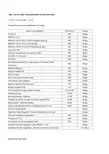
二副:Can you name some publications on board the ship? 下面列举一些海事出版物,供参考。
Standard library on board (applicable for all ships)Additional for Bulk carrierAdditional for tankersAdditional publications for Chemical Tankers三副面试问题及参考答案就船上的值班和所承担的任务分工来看,三副也是甲板部非常重要的职位。
但是,考虑到三副毕竟在船上的工作时间不会很长,经验也不会很多,所以考官对三副的问题一般不会很复杂,主要是集中在职位范围内的一些问题,如救生、消防设备的维护和保管、吃水的测量、应急反应、值班时应注意的问题等等。
也可能会问及《国际安全管理规则》(ISM)以及《公司安全管理体系》方面的知识和问题。
有些公司的三副可能还要承担一些二副的工作职责,所以,三副也应该参考一下二副的问题。
1. Can you tell me about your educational(教育)background(经历)and working experience(经验,体验)as a seaman?For example: I graduated from Weifang Maritime University in July 2007. Since April, 2007, I began my seamen career. I have worked on two ships. On the first ship, I worked as a deck cadet for 14 months. On the second ship, I worked as a 3/O for nearly a year.2. Can you tell me about your last vessel?My last ship was a general cargo sailing globally, but mainly from European(欧洲)ports to the US and Canada port.I worked on that vessel for 13 months as third officer.3. What are your responsibilities as a Third Officer?(1) To perform(指挥)sea watches and cargo watch, from 0800~1200 and 2000~2400 hours(2) To assist the Chief Officer in supervising(监督。
大副
大副面试问题及参考答案大副是甲板上仅次于船长的“第二把手”。
大副的好坏直接关系到船舶、货物和人身安全。
经验表明,船东在面试大副时也是相当严格和认真的。
主要集中在货物的配载、装卸货、货物的保管、货物单据、管理能力、协调能力等方面。
而对于特种船来说,对有关货物装卸货的有关规定等也要熟知。
此外,有关ISM/SMS及其他公约、PSC检查以及船东内外审时的提问也是一个非常重要的部分。
下面整理了一部分面试试题,供参考。
我们建议,大副不但要准备下面的一些问题,也应该看看有关船长及二副和三副的有关问题,这样才能达到融会贯通的目的。
1. Can you tell me about your educational background and working experience?A reference answer:I graduated from Jimei Navigation College in 1992. I studied there for three years. I have worked as a seamen on eight ships for nearly ten years. I have the experience of Chief Officer for two ships. I have worked both Chinese and foreign shipowners in the past ten years.2. Can you tell me the responsibilities of the Chief Officer?Under the leadership of the Master, the Chief Officer shall carry out the daily management of the deck department, and he is also responsible for cargo handling. The specific duties include:(1) watch-keeping from 0400-0800 hours and 1600-2000 hours;(2) safety of the ship and work place, safety equipment;(3) daily safety and sanitary inspection;(4) store and spare parts inventory management;(5) maintenance on deck;(6) stowage plan making;(7) supervision of the loading and unloading process;(8) cargo caring on board;(9) some other work and duties designated by the master of the vessel.3. Can you talk about the previous vessels (last vessel) you worked on board?It was an ocean-going ship, but it mainly loaded cargoes in Asia and discharged in Europe. It was an old ship about 14 years old. But the general condition of the ship was quite good because we did very good maintenance work on board.4. What types of cargoes have ever been carried on board your last vessel?I have worked on bulk carriers and general cargo vessels and I have experienced a lot of cargo handling.这是一个很重要的问题,因为大副的一个很重要职务便是货物管理。
空中乘务员英语面试(Flight attendant English interview)
空中乘务员英语面试(Flight attendant Englishinterview)空中乘务员英语面试(Flight attendant English interview) 基本句型表达基本表达式1)是什么使你决定选择这个职业,什么原因使你决定投身这个行业呢,2)我非常喜欢旅游,喜欢和人一起工作。
我非常喜欢旅游,喜欢和人打交道。
3)空中小姐的主要职责是让乘客在飞行中放松愉快。
主要的职责就是让乘客在飞行中能放松、快乐。
4)我最优秀的品质之一是待人友好,态度豁达。
我的优点之一就是待人非常友好、开朗。
5)我很宽容别人,别人告诉我这是我的长处之一。
我待人宽容,别人都说这是我的优点。
6)你认为什么是空姐的主要特征,你认为对空姐来说,主要应该具备的品质是什么,7)我会给他或她基本的急救,并要求我的同伴呼吁援助在同一时间内。
我会为他/她做基本的急救护理,同时让同伴寻求援助。
对话会话(a =申请人I =面试官)对话1我:是什么让你决定选择这个职业,答:哦,实话告诉你,我爱的天空。
我还是个小孩子的时候,就曾想象将来某一天能飞上蓝天。
现在,我觉得这一天终于来了。
我的梦想会成真。
而且我非常喜欢旅游,我喜欢与人共事。
你能用英语把自己的意思说清楚吗,答:是的,我想我的英语很流利。
上个月我拿到了中级英语培训证书。
你知道空姐的责任是什么吗,答:空中小姐的主要职责是让乘客在飞行中放松愉快。
良好的服务也很重要。
你身体好吗,我刚刚做了一次全面的体检,身体状况很好。
你有护理经验吗,是的,我有两年的护理经验,现在我在一家医院当护士。
我:你多高,你的视力如何,答:我的身高是一米六十八厘米。
我从来没有视力问题。
我:你认为你的优点和缺点是什么,我的优点之一是待人友善,态度开朗,而且我觉得我性格温和。
但有时候,我发现很难告诉别人我不喜欢他们在做什么。
乘客如果听不懂你说的话,你该怎么办,我会试着用另一种语言说,或者我会尽量使用手势和画画。
大管轮面试-英语
大管轮面试问题及参考答案大管轮是轮机部非常重要的管理人员,因此船东对大管轮的面试和挑选非常重视。
大管轮的面试一船集中在日常部门管理能力和轮机长的配合能力、服从意识,以及关于主、辅机、舵机以及甲板机械等机器设备的管理和保养等方面。
同时,还要大管轮了解《国际安全管理规则》(ISM)的相关知识。
1. What are the responsibilities of the First Engineer on board a ship?The First Engineer is under the leadership of the Chief Engineer. He is responsible for the following.(1) Day-to-day running of the Engine room.(2) Management of the Engine department personnel.(3) Safety matters in the Engine room.(4) All maintenance and repair jobs on board ship(5) The main engine and its auxiliary equipment, steering gears, emergency equipments in engine room, etc.(6) Making and implementing the PMS (Planned Maintenance System)(7) Requisition for, receipt and control of spare parts and stores(8) Supervision of the jobs of engine crew.(9) Keeping watch from 0400 to 0800 and from 1600 to 2000 except for UMS operation.2. What is your emergency position on the Muster List on your last vessel?I control and operate the main engine except for the abandon-ship and fire in engine room emergency situations.3. Can you describe an emergency situation you ever encountered on board ships?No, I have never met any emergency situation before now.4. Which machineries and space parts should be under your charge?I should be responsible for the main engine, the service pumps for main engine, steering gear, accommodation air condition, provision of refrigerator and the emergency equipments. I should also prepare maintenance reports, fuel oil and lubrication oil samples analysis, inventory report of spare parts, store and spare parts requisitions, etc.5. Describe the procedure to start a fresh water generator, boiler, emergency generator?In case of fresh water generator:(1) Check the valves to make sure that they are in the normal position(2) Open the sea water valves of condenser and supply sea water to heating chamber(3) Start the sea water ejector pump to draw out the vacuum until the heating chamber vacuum reaches 93% (about 700 mmHg)(4) Open the water heating valves and keep the heating chamber temperature around 45 degrees Centigrade(5) When the condensed water reaches a certain level, start the distilled water pump, and keep its pressure no less than 0.2MPa.(6) Start chemical liquid feed pump.In case of automatic boiler:(1) Check the water level to make sure there is normal volume of water inside(2) Open the vent valve on top of the boiler (if it is first time to raise pressure from cold condition)(3) Confirm the boiler water supply pumps are in “Auto” condition(4) Switch on the power supply(5) Put the boiler control switch in “Auto” condition(6) Automatically start the boiler, close the air vent valve while the boiler steam pressure reaches 0.02 MPa.(7) Confirm the boiler can auto stop while it pressure reaches “high limit” (e.g. 0.7MPa)In case of manual boiler(1) Check the water level to make sure there is normal volume of water inside and put the feed water pump in “Auto” position(2) Open the vent valve on top of the boiler (if it is first time raise pressure from cold condition)(3) Put the draft fan in “Manual” position, and make preventive blow to avoid any possible explosion(4) Put the fuel oil pump in “Manual” position(5) Ignite fire by pressing the manual button, if the fire “On”, put valve(6) When the steam pressure reaches to 0.1MPa, close the air vent valve(7) After making sure that everything is in order, the normal burning can be done to make the steam pressure reach required levelIn case of emergency generator(1) Check the lube oil level in the crankcase and fuel oil level in the tank all in normal level(2) Check to see if there is any leakage(3) Check the air pressure if the generator is the air-started model; or check the battery voltage to see whether it is normal if the generator is of the battery start model(4) Also make sure there aren’t any obstacles around the machine.(5) Put the test switch in “Manual” position, and manually start it after maki ng sure that above-mentioned items in order(6) If you use “Auto test” model, or “Black out” model to test the emergency generator, you must inform bridge duty officer and Chief Engineer. And you cannot carry it until you get the permit from both of them. Otherwise, you must wait(7) “Auto test” must be carried out once every month. “Blackout” test must be carried out once every 3 months6. When the main engine cannot started by the compressed air, what are the possible causes? There may be the following causes(1) Air pressure is too low(2) The turning gear is still engaged(3) There may be operational fault(4) Some of the high injection pumps are sticked(5) No fuel oil due to the fact that the fuel valve is not open or the fuel pump is not running(6) Relative locked due to some safety device actions(7) Air distributor timing has been wrongEtc.7. When main engine stops after running a while, what are the possible causes?The following reasons may lead to the problem:(1) Some of the high injection pumps are sticked(2) There is no fuel oil because valve is not open or the fuel pump is not running(3) Lube oil pressure is too low, or control air pressure is too low8. What is the purpose of taking lube oil samples for analysis?By analyzing the lube oil sample, we want to know whether the lube oil meets the stipulated standards in viscosity, TBN (total base number), flash point, water contents, mechanic impurities etc.. If impurities (i.e. metals) are found, it means something wrong with the bearing and crankshaft. If the viscosity is lower than the standard, it may mean that fuel oil may have leaked into the lube oil system. Too much fuel oil in the lube oil system can lower the flash point of the lube and also may lead to possible explosion. The important figure is TBN. If the TBN is lower than the standard, itmeans the loss of the anti-acid ability and this will lead to the moving parts corrosive in the near future.9. What are the things you need to take note during the handover (before you sign off)?The outgoing First Engineer shall prepare a set of handover notes for the incoming First Engineer and shall ask the incoming First Engineer be familiar with the note contents. One copy of the handover notes with their signatures shall be given to the Chief Engineer for file. In general the handover procedure shall include the following(1) A tour of the engine room, with view of the engines, documents and equipments(2) Discussion on current and future engine and machine’s operation problems, spare part requirement(3) Information on the maintenance work and program(4) Dry dock repair list, if there if any(5) Discussion on the junior engineers or crew’s capacity and personalities(6) Survey status and requirements(7) Store and status of the ship’s safety equipment and machines(8) Current status of the ship’s safety equipments and machines(9) Safety and environment protection procedures and any special requirement by the company and in some areas in the world(10) Disciplinary procedures and management practice in the Engine department(11) Any other matters that the outgoing First Engineer thinks necessary and importantAfter the handover, the two First Engineers should sign all the Handover Checklist as evidence and for files.大管轮也是船上特别是轮机部非常重要的职位,所以交接班非常重要。
外派船员面试英语
船员面试常用英语English For Interviewed by Ship’s owner一、个人简介1. Could you introduce yourself?您做一下自我介绍吗?My name is x x x. I am xx years old. I hold a xxx Certificate(License). I have experience of xx, xxx, xxx, I can use a computer system for management(maintenance). I suppose that my English is good enough for work. I am married(single). There are 3 people in my family, my xx, my xx and me2. Where did you graduate from?您是那里毕业的?I graduated from xxx university (college, school).3. How long have you worked on board?您做海员多久了?I have worked on board xx years.4. Which company have you served (worked for) ?您在那个公司做过?I have served xxx, xxx.5. What certificate (license) do you hold now?您现在持有什么证书?I have xxx certificate. or I hold xxx certificate. or I am the holder of xxx certificate.6. What position are you applying for? ( What job are you applying for? )您上船做什么职位?I’m applying for the xxx’s position.7. How long do you have the certificate of xxx?您持有xxx证书多久了?I hold the xxx certificate in xxxx (xx years).8. What kinds of ship have you worked on?您都做过哪些类型的船?I have worked on many ships. Like xxx ships, xxx ship and so on.9. Which classification society is your ship registered with?您服务的船是在那个船级社注册的。
大副面试中文 知识
大副面试中文知识简介本文档旨在介绍大副面试中文知识,通过提供相关背景知识和面试技巧,帮助读者在面试中获得成功。
面试准备在参加大副面试之前,准备是非常重要的一部分。
以下是一些准备工作的建议:了解大副职位要求在面试前,确保你对大副职位的要求有充分的了解。
研究相关的职位描述和要求,以便在面试中能够准确回答相关问题。
复习中文语法和文化作为一名大副,你需要具备良好的中文语法和文化知识。
复习相关的语法规则和常用词汇,了解中国文化和传统,这将有助于你在面试中展示你的语言技能和文化素养。
准备面试答案在面试中,你可能会被问到一些常见的问题,如你的优势、弱点、以及为什么想成为一名大副等。
提前准备好这些问题的答案,并确保它们简洁明了,能够突出你的优势和热情。
模拟面试通过与朋友、家人或导师进行模拟面试,可以帮助你熟悉面试过程,并提供及时的反馈和建议。
模拟面试还可以让你更好地掌握自己的表达方式和语言技巧。
面试技巧在面试中展现自己的优势并获得成功,除了准备之外,还需要一些面试技巧。
保持自信无论你在面试中遇到什么问题,都要保持自信。
自信的态度能够给面试官留下深刻印象,并让你更好地展示自己的能力和潜力。
注意语速和发音作为一名大副,良好的语音和发音是非常重要的。
在面试中,注意语速和发音的清晰度,尽量避免口头禅和模糊不清的发音。
回答问题的结构在回答问题时,应该遵循一个清晰的结构。
首先,简要回答问题,然后提供相关的例子或解释,最后总结你的回答。
这样的结构可以使你的回答更有条理和易于理解。
直面挑战面试中可能会遇到一些挑战性的问题或情况,要保持冷静并直面挑战。
如果你不确定如何回答一个问题,可以请求一点时间来思考,并给出一个更好的答案。
结论通过准备和运用一些面试技巧,你可以在大副面试中展现自己的优势并获得成功。
希望本文提供的知识和建议能够对你有所帮助。
祝你在大副面试中取得好成绩!。