
高中英语新版教材必修三课文第一单元unit 1 cultural heritage word版
Unit1 CULTURAL HERITAGE
FROM PROBLEMS TO SOLUTIONS
Economic development is necessary if we want to improve society. There
comes a time when the old must give way to the new, and it is not
possible to preserve everything from our past as we move towards the
future. Finding and keeping the right balance between progress and
protection of cultural sites can be a big challenge.
Big challenges, however, can sometimes lead to great solutions. In the
1950s, the Egyptian government wanted to build a new dam across the
Nile in order to control floods, produce electricity, and supply water to
more farmers in the area. But the proposal led to protests. Water from
the dam would likely damage a number of temples and destroy cultural
relics that were an important part of Egypt’s cultural heritage. After
listening to the scientists who had studied the problem, and citizens who
lived near the dam, the government turned to the United Nations for
help in 1959.
A committee was established to limit damage to the Egyptian buildings
and prevent the loss of cultural relics. The group asked for contributions
from different departments and raised funds within the international
community. Experts investigated the issue, conducted several tests, and then made a proposal for how the building could be saved. Finally, a
document was signed, and the work began in1960.
The project brought together governments and environmentalists from
around the world. Temples and other cultural sites were taken down
piece by piece, and then moved and put back together again in a place
where they were safe from the water. In 1961, German engineers moved
the first temple. Over the next 20 years, thousands of engineers and
workers rescued 22 temples and countless cultural relics. Fifty countries
donated nearly $80 million to the project.
When the project ended in 1980, it was considered a great success. Not
only had the countries found a path to the future that did not run over
the relics of the past, but they had also learnt that it was possible for
countries to work together to build a better tomorrow.
The spirit of the Aswan Dam project is still alive today. Perhaps the best
example is shown by UNESCO, which runs a programme that prevents
world cultural heritage sites around the world from disappearing. If a
problem seems too difficult for a single nation, the global community
can sometimes provide a solution.
Reading and writing
PROMOTING CULTURE THROUGH DIGITAL IMAGES
Lanzhou,9 August 2017. A group of researchers and scientists from China
and other countries are working together to help increase knowledge
and appreciation of China’s ancient cultural heritage. They are recording
and collecting digital images of cultural relics from the Mogao Caves,
which were a key stop along the Silk Road throughout China’s ancient
history. Nearly 5000,000 high-quality digital photographs have been
produced since the international project started in 1994.
The Mogao Caves have long been a point for different cultures and are
part of the history of many countries. Today, the caves are just as
international as they were at the time when people travelled the Silk
Road. Tourists from all over the world visit Dunhuang to see the caves,
and the Getty Museum in Los Angeles has even reproduced a copy of the
caves and paintings for people to admire in America.
By sharing so many digital photos over the Internet, the group hopes to
promote even wider interest around the world in China’s ancient history,
culture, and traditions. They also hope to further educate people about
the importance of safeguarding historic and cultural relics for future generations to understand and appreciate. As one researcher who is
working on the project explains, “ Appreciating one’s own cultural
heritage is very important for understanding oneself. Appreciating the
cultural heritage of other countries is very important for international
communication and understanding.”
Unit1Culturalheritage一词一句清单-2023-2024学年高中英语人教版
高中英语必修第二册Unit1一词一句
It's important to preserve our cultural heritage for future generations.
保护我们的文化遗产对于后代来说非常重要。
She approached the problem creatively and found a unique solution.
她用创造性的方法解决了这个问题,并找到了独特的解决方案。
His creative approach to the project brought about impressive results.
他对项目的创造性方法取得了令人印象深刻的成果。
We visited an ancient temple and experienced its tranquility and mystery.
我们参观了一座古老的寺庙,感受到了它的宁静和神秘。
The museum houses many precious historical relics.
这个博物馆收藏了许多珍贵的历史文物。
We climbed to the mountaintop and enjoyed the magnificent view.
我们爬上了山顶,欣赏壮丽的景色。
This building used to be the former office of a renowned pany.
这座建筑曾经是一家著名公司的办公地点。
The police found some clues and began investigating the case.
警方找到了一些线索,开始调查案件。
We should strive to preserve the natural environment for future generations.
我们应该努力保护自然环境,让我们的子孙后代也能享受美丽的地球。
Unit 1 Cultural Heritage(教学设计)高一英语(人教版2019必修第二册)
Unit 1 Cultural Heritage
Reading for Writing教学设计
基本信息 科目 英语 年级册次 高一必修一 Unit 1
姓名 学校
教材分析 本课教学内容选自2019人教版高中英语教材必修二第一单元Cultural Heritage的Reading for Writing板块中Write a news report部分,主要任务是写一篇新闻报道。
文化遗产是历史和文化传承的重要载体。但很多文化遗产经历了成百上千年的岁月洗礼,面临年久失修、亟待保护的危急局面,而最重要的是很多文化遗产的重要历史和文化价值还没有得到充分的认识。数字媒体等新技术的发展,给文化遗产的保护带来了新的生机和可能。本文语篇体裁是一篇有关利用数字技术制作敦煌莫高窟文物图像的新闻报道。作者认为利用这种方式,可以在世界范围内引起人们对中国历史、文化和传统的关注与了解,从而更好地增进国际间的文化交流、理解与合作。
这篇报道短小精悍、结构简明,具有比较典型的新闻内容结构和语言特征。其中内容结构包括标题(headline)、新闻导语(lead)、主体(body)、结尾(ending)。导语是第一段中的第一句,讲述了该文化遗产保护项目的概况,包括时间、地点、人物、事件等新闻要素,使读者对该新闻报道的要点一目了然。导语之后是一些支撑性细节信息。主体是第二、第三段,报道了莫高窟的重要历史文化价值和制作莫高窟文物数字时延对传承历史文化,霎时国际文化理解、交流与合作的重要意义。从写作技巧来看,本语篇引用了直接引证、背景介绍等新闻写作手法。从语篇情感来看,作者对于文物保护的了解与关注都体现在字里行间,包括语篇的题目、开始结尾段落以及对具体事件的描述。学生通过文本解读,能够了解新闻报道的写作特征,从而根据写作技巧,报道国内外发生的大小事件。
学情分析 学生对莫高窟有初步的了解,学生通过本单元第一、二课时,积累了有关文化遗产内涵及其保护文化遗产必要性的表达,通过第三课时学生学习了文化遗产保护的方法和尤其国际合作在文化遗产问题解决过程的作用,通过第四课时,学习了使用定语从句细节性得对人物和事物进行描写,通过第五课时学习了国际青年文物保护项目志愿者创造app的新闻报道,对于新闻报道的结构有初步的了解够能够,根据获取文章主要内容,了解文化遗产知识,可能的困难是对莫高窟数字化的意义理解不够深入,不能在新语境中很好地梳理归纳新闻报道的文章结构和语言特点,从而模仿结构和语言特征并恰当运用定语从句展开写作活动,需通过老师提问题、小组合作讨论等方式帮助学生梳理归纳其结构和语言特点,进而运用新闻写作常用的方法、书中的新闻笔记要点以及积累的语言进行写作。
Unit 1 Cultural Heritage(教学设计)高一英语(人教版2019必修第二册) 2
Unit 1 Cultural Heritage
Listening and Speaking 教学设计
基本信息 科目 英语 年级册次 高一必修二 Unit 1
姓名 学校
教材分析 本单元大主题围绕“文化遗产保护”,通过多模态素材呈现了中外文化遗产的历史与现状、问题和困境,以及相应的解决措施和尝试等。在了解的基础上,学生能够结合自己所学知识和兴趣特点,积极思考如何力所能及地参与文化遗产保护,并付诸行动。
本节课是一节Listening and speaking课型,内容为新人教版(2019年)必修二第一单元Cultural Heritage第一课时Listening and speaking部分,其中听力文本是关于一个国际青少年文化遗产保护项目的采访。一个记者采访了两位参与者Stephanie和Liu Bin,他们所在的项目小组郑在泰山上收集庙宇和碑刻的照片和资料,并最终完成一个有关泰山文化遗产介绍的应用软件(app)。采访围绕三个主要内容展开:Stephanie和Liu Bin所参与的国际青少年文物保护项目简介,选择泰山作为项目开展地点的原因,以及他们保护泰山文化遗产的具体做法。文本指出了保护文化遗产的重要性,以及文化遗产保护的历史和现状,并号召学生积极参与文化遗产保护活动。
学情分析 经过前面几节课的学习,学生对于文化遗产的内涵有了较深的认识,积累了相关的表达,也能运用相关词汇和定语从句语句描述事物特征,同时也能简单描述文化遗产保护的问题,提出一些文化遗产保护的方法;经过必修一听力的训练以及本单元第二课时的听力训练,大多数学生对听力材料有获取有用信息的基本能力,能够获取文本的基本大意。但学生的听力仍存在发音、词义障碍,语境猜词的意识和能力都较弱,仍会错过部分关键信息,还需要在听前通过创设语境扫清一些词汇和背景知识的障碍,听中根据书中笔记提示,做好关键信息记录,增强对关键句信息的获取能力,听后分析对话文本,获取新闻报道的语篇结构和语言特点。
Unit 1 Cultural Heritage (教学设计)高一英语(人教版2019必修第二册)
Unit 1 Cultural Heritage Listening and Speaking 教学设计
基本信息 科目 英语 年级册次 高一必修二 Unit 1
姓名 学校
教材分析 【What】本节课的教材主要包括两部分内容:听力和口语。
第一部分是听力,主要通过两个听力材料,让学生了解文化遗产保护的相关主题信息,并通过听力理解和口语交际能力来正确表达这些信息。第一个听力材料是两位学生讨论文化遗产保护的问题,主要涉及到文化遗产的定义和保护的必要性。第二个听力材料是一位学者讲解文化遗产保护的方法和挑战,主要包括保护方法和面临的问题。
第二部分是口语,学生需要根据听力材料的内容,用中文回答一些问题,展开口语表达和思维分析。学生需要结合已有的认知和生活体验,客观理性地分析文化遗产保护所面临的各种问题。
【Why】 从听力过程来看,活动1是听前活动,学生看图讨论,预测听力文本内容,基本获悉项目活动的地点是泰山,图上的中学生在拍照等。活动2至活动5是听中活动,从主旨大意和关键细节两方面检测学生对听力文本信息的理解程度,同时训练根据上下文猜测词义的听力策略。活动6和7是语言输出活动。整个听力活动体现了任务链的设计思路:从记者的采访(听力文本)到采访笔记(活动3),再到完整的新闻报道(活动6),前面的听力活动所获取的信息为完成篇简短的新闻报道提供了语言内容等方面的准备。活动7则让学生进一步就文化遗产保护项目进行探讨、发表自己的看法。
从听力思维层次来看,活动1是相关知识体验的激活与准备阶段。活动2和3分别对听力主旨大意和关键细节进行检测,活动4和5培养学生依据上下文猜测词义的听力策略,为听后表达活动进行信息、语言、策略等方面的铺垫和准备。活动6是听后书面表达活动,学生利用两次听,尤其是活动3所获取和记录的关键信息,补全新闻报道。活动7是听后口头表达活动,学生综合运用前面听力活动中获取的信息,并结合自己的相关知识和体验,就文化遗产保护项目的参与意愿和方式展开探讨,把学习活动和自己的生活实际联系起来,体现了英语学习活动观所倡导的关联性,即英语学习活动要紧密联系学生的生活经验。
Unit 1 Cultural Heritage高一英语单元写作深度指导(人教版2019必修第二册)
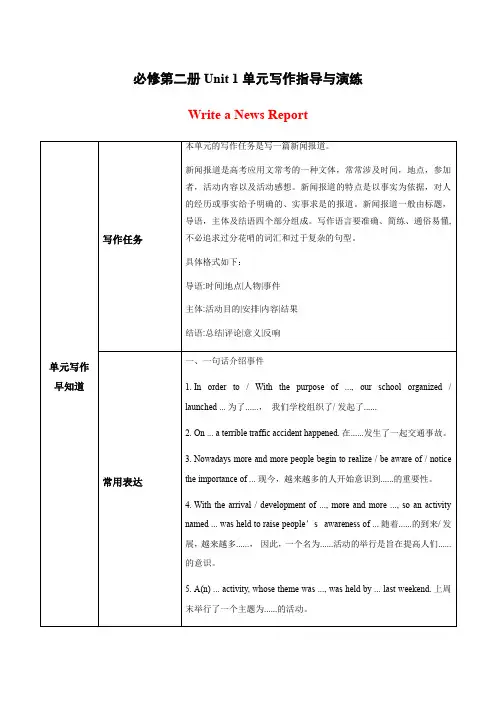
必修第二册Unit 1单元写作指导与演练
Write a News Report
单元写作早知道 写作任务 本单元的写作任务是写一篇新闻报道。
新闻报道是高考应用文常考的一种文体,常常涉及时间,地点,参加者,活动内容以及活动感想。新闻报道的特点是以事实为依据,对人的经历或事实给予明确的、实事求是的报道。新闻报道一般由标题,导语,主体及结语四个部分组成。写作语言要准确、简练、通俗易懂,不必追求过分花哨的词汇和过于复杂的句型。
具体格式如下:
导语:时间|地点|人物|事件
主体:活动目的|安排|内容|结果
结语:总结|评论|意义|反响
常用表达 一、一句话介绍事件
1. In order to / With the purpose of ..., our school organized /
launched ... 为了......, 我们学校组织了/ 发起了......
2. On ... a terrible traffic accident happened. 在......发生了一起交通事故。
3. Nowadays more and more people begin to realize / be aware of / notice
the importance of ... 现今,越来越多的人开始意识到......的重要性。
4. With the arrival / development of ..., more and more ..., so an activity
named ... was held to raise people’s awareness of ... 随着......的到来/ 发展,越来越多......, 因此,一个名为......活动的举行是旨在提高人们......的意识。
5. A(n) ... activity, whose theme was ..., was held by ... last weekend. 上周末举行了一个主题为......的活动。 二、给人的启发或影响
Unit1CulturalHeritage细则知识点清单-高一上学期英语人教版

必修二——unit 1 A 细则知识点
1. 文化遗产 / 文化遗址 cultural heriteage / cultural site(s)
2. 用创意化的方式工作去保护庙宇 work creatively to protect a temple
3. 泰山 Mount Tai
4. 研究之前宫殿的老照片 —— 前者...,而后者... study old pictures of the former palace——the former
is...,and / but the latter is...
5. 关于...的线索 a clue to sth
6. 保护...免于...——某物保存良好。——n.保存;留存 preserve sth from ...—— sth is well preserved.——
preservation
7. 自然保护区 a nature preserve
8. 推广、促销新产品 promote new products = a promotion of new products
9. 被升职为经理 be promoted to manager / get a promotion to manager
10. cypress
11. n.应用;应用程序——将知识应用于实践——将霜涂抹于面部——将某人投入于... App/application —— apply knowledge to practice /
apply the cream to your skin / apply yourself to (doing)
12. (向某个组织)申请工作/职位 apply (to an organization) for a job —applicaiton form
13. 参加 take part in = participate in
14. 旧事物给新事物让路 the old give way to the new
(完整版)人教版高中英语必修三课文电子文档
Unit 1 Festivals around the world FESTIVALS AND CELEBRATIONS
Festivals and celebrations of all kinds have been held everywhere since
ancient times. Most ancient festivals would celebrate the end of cold weather, planting in spring and harvest in autumn. Sometimes
celebrations would be held after hunters had caught animals. At that time
people would starve if food was difficult to find, especially during the cold winter months. Today’s festivals have many origins, some religious,
some seasonal, and some for special people or events.
Festivals of the dead
Some festivals are held to honour the dead or to satisfy the ancestors,
who might return either to help or to do harm. For the Japanese festival
Obon, people should go to clean graves and light incense in memory of their ancestors. They also light lamps and play music because they think
Unit1CulturalHeritage重点词汇拓展及词汇语境助记清单-2023-2024学年高中
必修第一册 Wele Unit
一、 背拓展词汇
1. register vt.&vi.登记;注册→registration n.登记;注册;挂号
adj.男(性)的;雄的 n.雄性(动)植物;男子→female adj.女(性)的;雌的 n.雌性(动)植物;女子
3. nation n. 国家;民族;国民→national adj.国家的;民族的→nationality n.国籍;民族
4. design n.设计方案vt. 设计;筹划→designer n. 设计者
5. formal adj. 正式的;正规的→informal adj. 非正式的;非正规的
6. anxious adj.焦虑的;不安的→anxiously adv.焦虑地不安地→anxiety n.焦虑;担心;害怕
7. annoy vt. 使恼怒;打扰→annoyed adj.恼怒的;生气的→annoyance n. 烦恼;气恼
8. .frighten vt. 使害怕,使受惊→frightened adj. 惊吓的;害怕的→frightening adj. 令人恐惧
9.impress vt.使钦佩;给……留下深刻的好印象vi.留下印象;引人注目→impressive adj.令人钦佩的,给人深刻印象的→impression n.印象;感想
10.concentrate vi.&vt.集中(注意力);聚精会神→concentration n. 专心,专注
11. explore vt.&vi.探索;勘探→exploration n.探测;探险
12. confident adj. 自信的;有把握的→confidence n. 信心;信任
13. organize vt. 组织;筹备;安排;组建 vi.组建;成立→organization n. 组织;团体;机构
14.improve vi.&vt.改进;改善→improvement n. 改进;改善
高中英语UNIT 1 CULTURAL HERITAGE
1
UNIT 1 CULTURAL HERITAGE
背景导入:文化遗产日是每年6月的第二个星期六,体现了党和国家对保护文化遗产的高度重视和战略远见。 目的是营造保护文化遗产的良好氛围,提高人民群众对文化遗产保护重要性的认识,动员全社会共同参与、关注和保护文化遗产,增强全社会的文化遗产保护意识。
Chinese Cultural Heritage Day
Nowadays, Hollywood movies dominate① the market and many young people take these
superhero characters as their idols②. So some people start to feel disappointed about
the local culture, because they haven't seen its essence③. As the world gets
globalized, it is in need of④ building people's sense of local cultural heritage.
The preservation of our cultural heritage is the necessary task. The culture
contains the essence of Chinese people's spirit, which has been tested by time. When
people admit our culture, we will be proud of being part of the country, so as to
enhance⑤ the unity and have the desire⑥ to make a contribution to⑦ the society.
高中英语单元素养评价(一) UNIT 1 CULTURAL HERITAGE
1
单元素养评价(一) UNIT 1 CULTURAL HERITAGE
第一部分 听力(共两节,满分30分)
第一节 (共5小题;每小题1.5分,满分7.5分)
听下面5段对话。每段对话后有一个小题,从题中所给的A、B、C三个选项中选出最佳选项。听完每段对话后,你都有10秒钟的时间来回答有关小题和阅读下一小题。每段对话仅读一遍。
1.How does Mandy want to go to the cinema?
A.On foot. B.By bus. C.By taxi.
2.Who got the driver out of the car finally?
A.Some firefighters. B.Some doctors. C.Some policemen.
3.What time will the train arrive in Shanghai?
A.At 6:00 pm. B.At 7:00 pm. C.At 8:00 pm.
4.What do we know about the cat?
A.It may be sick. B.It's in the pet hospital. C.It ate
some fish.
5.What does the boy often do now?
A.Plays basketball. B.Plays badminton. C.Plays football.
第二节 (共15小题;每小题1.5分,满分22.5分)
听下面5段对话或独白。每段对话或独白后有几个小题,从题中所给的A、B、C三个选项中选出最佳选项。听每段对话或独白前,你将有时间阅读各个小题,每小题5秒钟;听完后,各小题将给出5秒钟的作答时间。每段对话或独白读两遍。
听第6段材料,回答第6、7题。