
人教版八下英语Unit 3第5课时(B 3a-Self Check)
初中英语八年级下册unit10第5课时( B 3a- Self Check)

____
写作指导
★话题概述
本单元以“生活环境”为话题,以“谈论周围 的所有物和物品”为语言目标。最能全面体现本 单元话题及语言运用能力的作文就是“谈论自已 拥有的物品”,这也是单元测试和中考试题中经 常考到的作文话题之一。
★例题展示
每个人内心深处都有对童年时期一些事情的美好 回忆,特别是那些伴你度过童年时光的玩具,至今你 可能仍不舍得将它抛弃。它可能是一辆玩具汽车、一 个布娃娃、一辆自行车等。请你以“My Favorite Thing from Childhood”为题,写一篇80词左右的短 文,和大家分享一下你的小秘密吧。
介绍最 喜欢的 东西
★写作模板
My favorite thing from childhoo d is my teddy bear. I’ve had it for/ since... My grandma gave it to me...
陈述喜欢 的理由
I like the teddy bear so much because... It’s special to me because... I think...
grandma ma陈de述it喜fo欢r m的e理he由rself. I think I will kee
p it forever to remind me of my grandma.
The teddy bear has given me a lot of good me mories. I remember when I was young, I was scared at night because I didn’t like the dark. I held my teddy bear to feel safe. So I slept with my teddy bear every night. I
人教版八年级上册英语教案Unit 3 Section B 3a-Self Check带教学反思

5. Ask Ss to think of their best friend.
Write down two ways in which you are similar, and two ways in which you are different. Use comparatives.
教 案
教学基本信息ຫໍສະໝຸດ 学科英语学段初中
年级
八年级
单元
Unit 3
课题
I’m more outgoing than my sister.
总课时数
6
课时
Section B
(3a-Self Check)
课型
写作课
授课时间
教学目标及教学重点、难点
教学目标:
At the end of the class, the students will be able to:
1.learn to write a passage about your friends.
e comparativesto describe and compare people.
教学重点:
1.Keyvocabulary:
primary, information...
primary school,have good grades, be good with...
1. Ask Ss to read the instruction in 3b.Make sure they know what to do.
Make notes about two of your friends. One friend should be similar to you; the other friend should be different.
人教版八年级英语下-unit3-could-you-please-clean-your-room教案
Unit 3 Could you please clean your room?单元教学目标:三维目标:1语言目标:谈论做家务的词汇,及如何有礼貌的提出要求。
2 技能目标:能听懂和谈论做家务的话题;能写出重点单词和重点句型。
3 情感目标:培养学生爱劳动,分享家务的能力。
教学重点短语: do the dishes, make the bed, take out the rubbish, fold the clothes, sweep the floor, clean the living room ……句子:1. Could you please take out the rubbish?. Sure. / Sorry, I can’t. I have to finish homework first.2. Could I use your computer?Sorry. I'm going to work on it now.3. Well, could I watch TV?Yes, you can. But first you have to clean your room.教学难点:Make polite requestsAsk for permission课时划分:Period 1 Section A 1a – 2dPeriod 2 Section A 3a-3cPeriod 3 Section A Grammar focus-4cPeriod 4 Section B 1a-2ePeriod 5 Section B 3a-self checkSection A1 (1a – 2d)三维目标:1知识与技能:1〕重点单词和词组2〕使用could 做出礼貌要求和请求许可。
2.过程与方法:通过合作探究的方法结局本课的重点知识点3.情感态度与价值:学会照顾自己,培养自己的独立意识。
教学重点:谈论做家务的词汇,情态动词could的使用方法。
人教版英语八下第三单元Self Check

(interesting) than any other subject.
Ⅲ. 单项选择
1. This year they have produced ___D_
4. My cousin can run _f_a_s_te_r_____(fast) than me. She is taller than me, too.
5. Jim is___fr_i_e_n_d_l_ie_r_______ (friendly) than Tom, so Tom has more friends than Jim.
B. the bigger
பைடு நூலகம்
C. a bigger
D. bigger
3. This apple is ____D____ that one.
A. as big twice as B. as big as twice
C. as twice big as D. twice as big as
4. There are more books in our library
Who is thinner? He is thinner.
Who is stronger? stronger or thinner
He is stronger.
Which is taller? A horse is taller than a dog .
a dog
a horse
Which is heavier?
The pig is thinner than the bear. [ðæn]
人教版英语八年级下册 Unit3 Could you please clean your room教
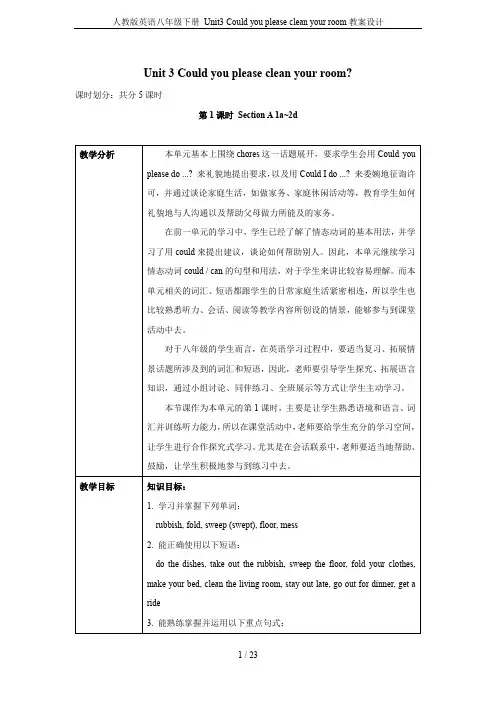
A: Could you please sweep the floor?
B: Yes, sure. Can you do the dishes?
A: Well, could you please do them? I’m going to clean the living room.
Peter
do the dishes
M
sweep the floor
M
take out the trash
P
make the bed
P
fold the clothes
P
clean the
living room
M
2. Make conversations about the chores in 1a.
7) Could you take out the rubbish, fold the clothes and do the dishes?
8) Could I at least finish watching this show?
能力目标:
通过听说训练,学会能够礼貌地提出要求或征询许可,并礼貌地回复别人的请求与征求。
Peter wantsto...
Peter’s fathersays
go out fordinner
√yes _____no
go to themovies
√yes _____no
stay outlate
_____ yes√no
get aride
_____ yes√no
Check answers.
人教版初中英语八年级上册第8单元Section B(3a-Self Check)教学教案和教学反思

1. Practice the language points and the grammar. 2. Check the answers.
教学反思
围绕本单元的话题写作时,尽量用本单元所学的语法和基本句型。可以用 cut, put, add, turn 等动副短语以及表达加工顺序的词汇。
(PPT 21-25) Step 7
Exercises (PPT 26-36)
Work on 3a. 1. Call Ss' attention to 3a.Say, Let's center on 3a.It's the recipe for a famous traditional food in China—Yunnan Rice Noodles. 2. Ask Ss to read the instructions and the words in the box. 3. Ss look through the recipe. Skip the blanks when reading. Then fill in the blanks with the words in the box. 4. Ask some Ss to give his or her answers. 5. Check the answers. Practice reading. Work on 3b. Read the instructions to the class. Ask Ss to think of a favorite food in their hometown. Think how to make it. Then make a list of ingredients. Write them on the blank lines in the box. Work on 3c. Writing practice. Ask Ss to write a recipe for their favorite food. Use 3a and 3b to help them. Show one of the good passages to other Ss. Analyze the good sentences and correct the errors. Read the instructions to the class. Group-work:Divide Ss into groups of 4. Pairwork : Make up a crazy recipe with your partner following the example sentences. Then tell another pair of Ss how to make this crazy food. The other pair draws it. Ask some groups to show their pictures and describe them to the class. Write down the process. 1. Ask Ss to read the instruction in Task 1 and then complete the task on their own. Number these instructions for making tomato and egg soup in the correct order. Then complete the instructions with the words in the box. Check answers in class. 2.Make Ss write questions and answers using the words in brackets. Call some Ss to read their sentences. Check answers.
Unit2 SectionB 3a-Self check 课件人教版英语八年级下册
素养探究 用方框中所给单词的适当形式补全短文(每词限用一次)
deep, thank, give, once, begin , whole, until, work, people, or
The Lei Feng Spirit Carrying on "It is not hard to do one good deed, but it is hard to do good deeds all your life," a great man
came out, people 61. began to know more about him than before. Now the term "Living Lei Feng" has become a name for anyone who is brave, anyone who has 62. deep love for his country, anyone who works hard, 63. or anyone who is always ready to help
Dear Sir or Madam, 引出话题
What
I am writing to you about volunteering at the library. I’m interested in computers
and teaching, and I want to volunteer as a computer teacher for people who lack
Why do you like to do that?
I’ll help to clean up the city parks.
I hope to work outside.
人教版英语八年级下册第一单元导学案(section B 3a-3b self check)
人教版英语八年级下册第一单元导学案温馨提示:此资料为人教版八年级英语第一单元Section B (3a—3b self check)导学案,按照课本顺序梳理,既有知识点的总结,又有练习,是课前预习的好帮手。
Unit1 What’s the matter? Section B ( 3a—3b self check ) 学习目标:1、复习本单元的知识点:单词、句型、短语。
2、写作业训练中,学会询问别人的症状并灵活运用should do sth. 和shouldn’t do sth.句型给对方提出建议。
掌握以下句型:1.What’s the matter ?2.What happened?3. Are you OK?4. I don’t feel well.5.I feel terrible6.You should …7. You shouldn’t … 8.I hurt myself playing soccer. I have a sore leg. 预习导学:3a Imagine you are the school nurse and a student just had an accident or a health problem . Make notes about what he \ she should and shouldn’t do.(想象你就是学校的护士,一个学生刚好出了一个事故或者存在健康问题。
列举出他应该做的和不应该做的。
)参考答案:have a fever; go to the hospital ; exerciseget hit on his head; go to see a doctor to get an X-ray; lie down and rest have a nosebleed; press the sides of her nose; play sports…3b.Write a conversation between the nurse and the student using the notes in 3a. Use the questions below to help you.(结合3a的信息,写一个关于学生和护士的对话。
人教版英语八年级下册大单元整体教学设计【新课标】Unit 3
Section B部分是对家务劳动这一主题的发展和延伸讨论,侧重表达孩子和家长在家庭事务方面的不同分工及关系。加强学生的家庭责任意识教育。老师在教学过程中要引导学生对不同观点的内容进行提取和理解,并让他们根据不同的观点进行辩论,锻炼学生的思维。
单元
学情
分析
已有
基础
八年级的学生更愿意在课堂学习过程中参与到活动中来,希望有更多的机会用英语来表达自己的观点。本单元的话题来自学生的生活经历,学生在人教版英语七年级下册Unit 4 Don' t eat in class Section B中己经学习了许多表示家务劳动的动词短语:do the dishes, help his mom make breakfast, clean his room等,为学生们的口语表达和书面表达提供了语言基础。关于could表达委婉请求和获得许可的肯定及否定回答可能会错用。因此在设计课堂教学活动时,通过设立学生的真实生活场景,将学生带入语言情境,激发学生兴趣,积极参与到课堂学习和创新之中,多次复现,击破重难点,从而达到运用掌握。
3.能够就青少年是否应当承担家务劳动发表自己的观点。运用英语熟练表达各种家务英文活,掌握陈述观点的英文词汇和列举,说明原因结果的各种连词。
4.初步了解议论文的最简单最常用的写作结构和写作的方法技巧,理清范文结构,能独立仿写范文。能与小组成员合作讨论,碰撞思维,发表观点并且给出理由,发现并改正语法及拼写错误。
人教版八年级下册英语UNIT3 SectionB 3A-Selfcheck (1)
_H_e__g_o_t_u_p_e_a_r_l_y_i_n_o_r_d_e_r_t_o__c_a_tc_h__th_e__e_a_rl_y_b_us.
6. it is not enough to _It_i_s_n_o_t__en__o_u_g_h_t_o_j_u_s_t_p_a_s_s_y_o_u_r_e_x_a_m__s.____
Let's fill in the blanks
I read two letters on the Sunday Mail magazine. Different parents have different ideas about whether young people should do chores at home.
Phrases summary 1.浪费... 2.花时间/金钱在...上 3.为了 4.为某人提供... 5.介意做某事 6.依靠;依赖 7.总是做某事 8.照顾look after 9.结果是, 10.生病 11.越……,就越……
a waste of spend...on sth. in order to do sth. provide sth for sb. mind doing sth. depend on be always doing sth take care of as a result fall ill
How to write a letter?
1. Salutation 称呼:对收信人的尊称。 常用Dear,后用名字,而Mr,Mrs,Miss后不能单独用名字,而是姓或姓与名, 如:John Smith的称呼,是Mr. Smith,Mr. John Smith或 Dear John。称 呼后用逗号。 2. Body 正文。