
2014英语七年级下册Unit6知识点讲解
Unit6 I’m watching TV
Ⅰ重点词汇
1.newspaper
n.报纸 newspaper是由news和paper组成的,news和paper均为不可数名词,而newspaper
却为可数名词。
翻译:
书桌上有一些报纸
__________________________
2.use
v.使用;运用
This kind of dictionary is for the use of students only.
这种字典是仅供学生使用的
useful adj.有用的,有用处的
The book is very useful to middle school students.
3.shop
v.购物,买东西
They shopped all the morning.
n.商店
My sister works in a clothes shop.
4.American
adj.美国的,美洲的
Which city is the American capital?
n.美国人,美洲人
Do you like Americans?
5.any
任何的,任一的,一般用于否定句和疑问句中,意思是“任何一个,任何一些”作定语时可
修饰不可数名词和可数名词,用来代替some
They didn’t have any friends here.
Come any day you like.
【注意】在表示建议,反问,请求的疑问句中,或期望得到肯定回答时,多用some
你想再来一些苹果吗?
_______________________________
6.other
adj.另外的,其他的 pron.另外的人(或物)
What other sports do you like?
你喜欢别的什么运动?
I don’t like these books. Please give me others.
【辨析】other, the other, others, the others
(1)other为形容词,意为“另外的,其他的,别的”还可以做代词,表示“(两者之中)另
一个人或物”
(2)the other 指两者中的另一个
She has a book in one hand and a bag in the other hand.
(3)others指另外的,其他的或别的人或事物,是other的复数形式,属于泛指,用作代词,
其后不加名词。
We should help others。
(4)the others指其余的或剩下的人或事物,属于特指,可以看做the other的复数形式,其后
不加名词。
These two apples are rotten, but the others are all good.
7.miss
1)怀念,思念。 I miss Miss Change every day.
2)错过,未赶上 I missed my mother very much
3) 小姐,对未婚女士的称呼 I met Miss Deng yesterday.
8.wish
v.希望,愿望,祝愿
I wish everything ready. 我希望一切准备妥当
n.希望,愿望,祝愿
Her wish to become a doctor has come true.
Please send her my good wishes when you write to her.
【辨析】wish,hope
wish和hope都有“希望”的意思,但用法有区别
【同】都可接不定式
We wish to see the film.
【不同】
1)wish可作及物动词,可接名词或代词作宾语,hope则通常接从句
Do you wish a pen or a book?
I hope that you can pass the exam.
2)wish 能接双宾语表示祝愿,hope则不能
I wish you success.
I wish to get high marks, but you hope I just pass the exam.
Ⅱ知识点详解
1.Use the information in the chart to make a conversation.
使用表格中的信息编一段对话。
句中的use „„to„„意为“用„„去„„”,后面接动词原形,构成动词不定式,表示目
的。
You can use a knife to cut the apple.
2.what time is it in Beijing?
北京现在是什么时间?
这是问时间的句型,回答的时候要用具体的时间点。
-What time is it now?
-It’s seven o’clock.
3.We are all at home now.
all意为 全部,全都,用来指三个或三个以上的人或物。在作同位语时,放在所修饰的词之
后,实意动词之前,若谓语动词是be 动词时,放在be动词之后,若含助动词或情态动词
时,放在助动词或情态动词之后,实意动词之前。
七年级下册英语第六单元知识点

七年级下册英语第六单元知识点七年级下册英语第六单元知识点篇(一):七年级英语下册1-6单元知识点复习七年级单元测试对英语教学,特别是英语交际能力培养的教学目标起着重要反拨作用。
以下是小编给你推荐的七年级英语下册1-6单元知识点复习资料,希望对你有帮助!七年级英语下册1-6单元知识点复习一Unit 1 Can you play the guitar1、can+动词原形,它不随主语和数而变化。
(1)含有can的肯定句:主语+can+谓语动词的原形+其他。
(2)变一般疑问句时,把can提前:Can+主语+动词原形+其他肯定回答:Yes,主语+can。
否定回答:No,主语+can"t.(3)含有can的否定句:主语+can"t+动词的原形+其他。
(4)含有can的特殊疑问句:特殊疑问词+can+主语+动词原形+其他2、may+动词的原形。
(may为情态动词)一般疑问句是把may提前,肯定回答是:Yes,主语 +may。
否定回答是:No,主语+mustn"t。
或please don"t。
join+某个组织,俱乐部,party,参军,党派等“加入”Join sb. “参加到某人中” join in (doing)sth “加入做......,参加某个活动” Join in=take part in +活动,比赛3、说某种语言:speak+语言4、play+球、棋、牌;play+the+乐器。
5、擅长于(做)什么:be good at +名词/动ing6、帮助某人做某事:help sb. (to ) do sth. help sb. with sth.7、我能知道你名字吗May I know your name8、想要做什么:want to do sth 例如:I want to learn about art.9、What club do you want to joinI want to join the chess club and the basketball club.10、What club does Tom want to join He wants to join the swimming club .11、He can’t play the violin or the piano. Can you help kids with swimming12、Why do you want to join the English club Because I want to learn English well.Unit 2 What time do you go to school1、what time和when引导的特殊疑问句。
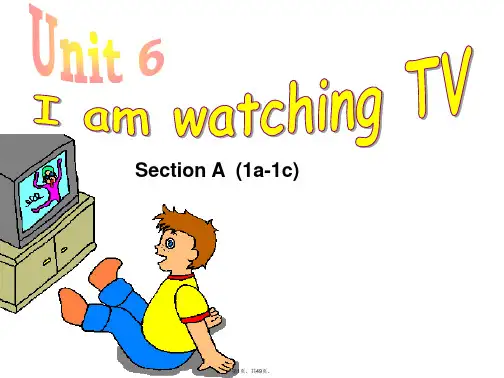
2014年新目标新人教版《Unit6-I'm-watching-TV.》七年级英语下册课件
2.如果动词是以不发音的字母“e”结尾,要去掉 “e“,
再加 ing。
Eg : write—writing take—taking have—having
3.以一个辅音字母结尾的重读闭音节,要双写末尾的辅音字母,再 加上 ing。
第17页,共49页。
What are they doing?
They are fighting.
第18页,共49页。
What are they doing?
They are talking on the phone.
第19页,共49页。
What are they doing?
They are ….
watch TV 看电视
clean 打扫
read a newspaper 看报纸
talk on the phone 电话交谈
listen to a CD 听CD
use the computer 用电脑
make soup 做汤
wash the dishes 洗餐具
exercise 锻炼
sing
唱歌
make soup 做汤
第28页,共49页。
第29页,共49页。
1b
Listen. What are these people doing? Write numbers from 1a.
a.Jenny __1_b. John ___8c.Dave and Mary ____5
第30页,共49页。
Exercises: 看图完成句子
talking on the phone
dance
What are they doing?
Unit6知识点梳理牛津译林版英语七年级下册

牛津译林版七下Unit 6 知识点梳理1.Hurry up, Eddie. 赶快,埃迪。
hurry up:“快点;赶快”。
hurry:vi. “急忙,匆忙”。
过去式:hurried。
hurry to sp. “匆忙去某地”;hurry off/away “匆匆离去”;hurry to do sth. “匆忙做某事”。
作名词,“匆忙,仓促”。
in a hurry “匆忙地,急于”。
2.I’m tired. 我累了。
tired:adj. “疲劳的,劳累的”(修饰人)。
tiring:adj. “令人困倦的;累人的”(修饰物)。
3.You complain too much. 你真会抱怨。
complain:v.“抱怨”。
complain to sb. of/about sth. “向……抱怨……”。
complain about sth. “抱怨某事”;complain to sb. “向某人抱怨”。
辨析:too much/too many/much tootoo much:“太多”,修饰动词或不可数名词。
too many:“太多的”,修饰可数名词的复数。
much too:“太”,修饰形容词或副词。
4.The bag isn’t that heavy. 这个背包没那么重。
that:adv. “那么,那样”= so。
5.I want to go riding. 我想去骑马。
go riding:“去骑马”。
ride:v. “骑马/自行车,乘”;n. “(乘车或骑车的短途旅程)”。
give sb. a ride “让某人搭便车”。
6.I want to go camping. 我想去野营。
camping:n. “野营,露营”。
go camping “去野营”。
7.One sunny day, Alice sat by a river with her sister. 在一个阳光明媚的日子里,爱丽丝和她的姐姐坐在河边。
沪教牛津版初中英语七年级下册Unit 6知识点梳理
沪教牛津版初中英语七年级下册Unit 6知识点梳理单词electricity n.电[ɪlekˈtrɪsɪti]conversation n.谈话[ˌkɒnvəˈseɪʃən]identify v.确认 rule n.规则[ruːl]anyone pron.任何人['enɪwʌn]reply v.回答[rɪ'plaɪ]foolish adj.愚蠢的[ˈfuːlɪʃ]wire n.电线[ˈwaɪə]connect v.(使)连接[kə'nekt]cable n.电缆['keɪbl]moment n.瞬间,片刻['məʊmənt]battery n.电池[ˈbætəri]cooker n.厨灶,炉具[ˈkʊkə]fridge n.冰箱[frɪdʒ]bulb n.灯泡[bʌlb]lock n.(用锁)锁上[lɒk]test v.测试[test]tidy v.使整洁,使整齐['taɪdi]touch v.触摸,碰[tʌtʃ]a packet of 一袋in a way 在某种程度上(be)connected to 连接到power station 发电站washing machine 洗衣机switch off 关(电灯、机器等)tidy up 收拾妥,整理好air conditioner 空调Unit6课文与视频Electricity all around周围的电One evening, Daisy said, "I'm going to buy a packet of sweets.一天晚上,黛西说,"我要去买一包糖果。
Does anyone want anything?"有人想要什么东西吗?"Benny, Daisy's brother, replied, "Can you get me a packet of electricity?"本尼,黛西的哥哥回答说,"你能给我带一包电吗?""Yes, I can," said Daisy. Then she went out."是的,我能,"黛西说。
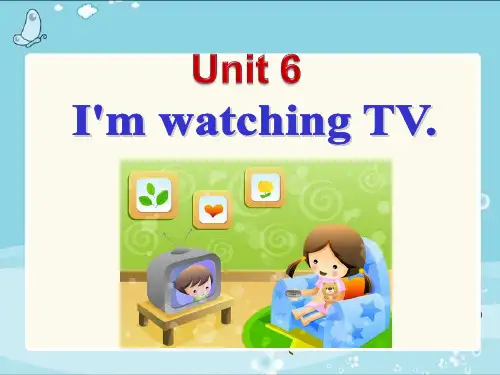
2014年人教版新目标英语七年级下册Unit6课件(79页)
exercising
1a Match the activities with the pictures.
1. watching TV _i_ 2. cleaning _d_ 3. reading a newspaper _g_ 4. talking on the phone _a_ 5. listening to a CD _h_ 6. using the computer _e_ 7. making soup _b__ 8. washing the dishes _c_ 9. exercising __f_
一般在动词原 形后+ing
go
going
ask asking
以不发音的e结 尾的, 去e, +ing
重读闭音节以 一个辅音字母 结尾的,双写 这一字母+ing
write take close get run swim put
writing taking closing getting running swimming putting
N__o_t_m__u_c_h_. _I’_m__r_e_a_d_i_n_g_a__n_e_w_s_p_a_p_e_r_. 3. 你想和我们一起去吃晚饭吗?
D__o_y_o_u__w_a_n_t__to__jo_i_n_u__s_f_o_r_d_i_n_n_e_r_?_
Grammar Focus
What are you doing?
2. Not much. (口语)没什么大事。 = Nothing much
A: What are you doing, Linda? 你在做什么事,琳达?
B: Not (Nothing) much. I’m just reading a book. 没什么大事。我在读一本书。
人教版七年级英语下册-Unit 6:知识点总结+单元测试(word版,含答案)
Unit6 I’m watching TV.【重点单词】newspaper n .报纸read a newspaper 看报纸use v.使用;运用soup n.汤make soup 做汤wash v.洗movie n.电影go to movies 看电影just adv. 只是;恰好eat out 出去吃饭house n.房子drink v..喝n.饮料tea n.茶;茶叶drink tea 喝茶tomorrow adv. 在明天 n. 明天;未来pool n. 游泳池;水池shop v. 购物 n. 商店supermarket n. 超市man n.男人;人race n.竞赛host n.主人;东道主study v./n. 学习;研究state n. 洲the United States 美国;美利坚合众国American adj. 美国的;美洲的n. 美国人;美洲人dragon n.龙Dragon Boat Festival 端午节any adj. 任何的,任一的 pron. 任何;任一other adj. 另外的;其他的 pron. 另外的人(或物)young adj. 幼小的,年轻的children n. 儿童miss v.怀念. 思念wish v. 希望delicious adj. 可口的,美味的still adv. 还.仍然living room 客厅【重点短语】1.watch TV看电视2. read a newspaper 看报纸3. talk on the phone 通过电话交谈4. listen to a CD 听CD5. a useful book 一本有用的书6. make soup 做汤7. wash the dishes 洗碟子8. go to the movies 去看电影9. at home 在家10. eat out 在外面吃11. drink tea 喝茶12.Dragon Boat Festival 端午节13. make zongzi 包粽子14. watch the boat races 看龙舟比赛15. the night before the festival 节日前的晚上16. any other night 任何其他的晚上17. his host family 他的寄宿家庭18. read a story to sb 读故事给某人19. miss sb. 思念某人miss doing sth 错过做某事20. wish to do sth希望做某事wish sb to do sth希望某人做某事hope to do sth希望做某事21. no place like home 没有地方像家一样22. in the United States 在美国23. study for a test 为一个考试而学习【重点句型】1.一What are they doing?他们在干什么?—They’re listening to a CD.他们在听光碟。
人教版英语七年级下册第六单元短语语法知识点总结
人教版英语七年级下册第六单元短语语法知识点总结-CAL-FENGHAI.-(YICAI)-Company One1Unit 6I’m watching TV,.【短语归纳】1.watch TV 看电视2. read a newspaper 看报纸3. talk on the phone 通过电话交谈4.listen to 听5. use the computer 使用电脑6. make soup做汤7. wash the dishes 洗餐具 8. kind of 有点儿【用法集萃】1.—What + be+ 主语+ doing ……正在做什么2.—主语+ be + doing sth. ……正在做某事。
2. I’d love / like to do sth. 我愿意做某事。
3. any other + 可数名词单数其他任何一个……4. wish to do sth. 希望做某事┃语法探究┃现在进行时态1.定义:现在进行时表示现在或现阶段正在进行或发生的动作或存在的状态。
2.构成:助动词be(is/am/are)+v. ing。
时间状语标志: now, at the moment, look, listen 或“It's+某一时刻”等。
3.句式结构:①肯定句:主语+ am/is/are +v. ing.②否定句:主语+ am/is/are + not +v. ing.③一般疑问句: Am/Is/Are +主语+v. ing?肯定、否定回答: Yes, I am./No, I'm not.Yes, … is./No,… isn't.Yes, … are./No, … aren't.④特殊疑问句:特殊疑问词+ am/is/are +主语+v. ing?4. v. ing的构成方法:①规则动词后加ing。
如:watch —__________ ; read —__________ ;listen —__________ ;②以不发音字母e结尾的动词去掉e, 再加ing。
人教版七年级英语下册Unit6知识点归纳
人教版七年级英语下册Unit6知识点归纳Unit 6: I'm Watching TV - Summary of Key PointsIn this unit。
we learn several ___ activities。
festivals。
and wishes。
Some of the key phrases include "watch TV," "read a newspaper," "talk on the phone," "listen to a CD," "make soup," "wash the dishes," "go to the movies," "at home," "eat out," "drink tea," "Dragon Boat Festival," "make zongzi," and "watch the boat races."We also learn about the grammar structure of ___'s current activity using "What + be + subject + doing?" and "Subject + be + doing something." nally。
we learn how to express our wishes using phrases such as "I'd love/like to do something" and "wish to do something."Finally。
2014年春人教版七年级下册unit 6 I'm_watching_TV period 2
What is she doing? She is running.
What is he doing?
He is reading a book.
What are they doing? They are swimming.
movie
house
drink
tea
2a
Listen and match the answers with the questions.
Unit 5 I’m watching TV.
The Present Continuous Tense
现在进行时态
1. 定义:表示现在正在进行的动作。 2. 构成:am( is, are) + 动词的现在 分词。
Unit 5 I’m watching TV.
3. 动词现在分词的构成规律:
1) 一般情况下,在动词原形后直接加-ing. 如: work—working (工作) do—doing(做) play—playing(玩)
running begireading swimming opening
run
begin listen
listening
paint
2d
Role-play the conversation.
Jenny: Hello? This is Jenny. Laura: Hi, Jenney. It’s Laura here. Jenny: Oh, hi, Laura. What are you doing? Laura: Not much. I’m just washing my clothes. adv. 只是;恰好 What about you? Jenny: I’m watching TV. Do you want to join me for dinner? My parents aren’t at home. We can eat out. Laura: Yeah. I’d love to. Jenny: Let’s meet at my home first. Come at half past six. Laura: OK. See you then.
牛津译林版英语七年级下册 Unit 6 知识点复习总结
江苏专版译林七下U6知识点总结1.I want to go riding. 我想去骑马。
解析:go riding为动词短语,意为“去骑马”,为“go + v.ing”结构,常指一些户外活动。
Riding,名词,意为“骑马”,相当于horse riding。
如:➢ At Christmas you can go riding to enjoy the view.在圣诞节你可以骑马欣赏风景。
➢ Riding is her favourite sport.骑马是她最喜欢的体育运动。
拓展:ride,动词,意为“骑(马、自行车等)”。
固定短语:ride a horse骑马;ride a bicycle骑自行车。
如:➢ Can you ride a horse?你会骑马吗?2.Hurry up,Eddie. 快点,埃迪解析:hurry,动词,意为“急忙,匆忙”。
hurry up意为“快点,赶快”,常用于祈使句,不能用于否定句中。
常用短语:hurry to someplace 急忙赶往某地;hurry (up) to do sth 急忙做某事。
如:➢ Hurry up, or you'll be late for class.快点,否则你上课要迟到了。
➢ She hurried to the airport.她急忙去机场。
➢ They hurried to see if everything was OK.他们急忙去看一切是否正常。
拓展:① hurry 还可作名词,意为“匆忙;仓促;急忙”,固定短语in a hurry意为“匆忙地”。
如:➢ He was in a hurry to leave.他匆忙地要离开。
② hurry off/away意为“匆匆离开”。
如:➢ Miss Zhao hurried off to look after the man.赵老师匆匆离开去照看那个男人。
3.Outdoor fun 户外乐趣解析:outdoor,形容词,意为“户外的",在句中只能作定语。