
高考英语语法情态动词和虚拟语气讲解练习含答案
情态动词的基本用法
1.shall
(1)用在第一、三人称的疑问句中,表示征求对方的意见。
►Shall Tom go there with me tomorrow?
明天汤姆可以和我一起去那里吗?
(2)用于第二、三人称陈述句中,表示说话人的命令、警告、威胁、许诺、决心等,意为“必须”。
►The school rules state that no child shall be allowed out of the school unless accompanied
by an adult.
学校制度规定,除非有成人陪同,任何孩子不准离开学校。
2.should
(1)表示责任、义务、劝告、建议,意为“(按道理)应该”。
►You should listen to your doctor's advice.
你应该听医生的建议。
(2)表示出乎意料的语气,意为“竟然,居然”。
►I am surprised that you should speak in such a way.
我很惊讶你居然用那种口气说话。
3.must
(1)表示“必须,应该”,语气强烈。强调主观看法,只有现在时形式,否定式是must
not(mustn't),表示“禁止”。must开头的问句,其否定回答要用needn't或don't have to来表达。
►—Must I hand in the paper today?
——我今天必须交作业吗?
—Yes, you must.
——是的,你必须交。
—No, you needn't/don't have to.
——不,你不需要。
(2)表示推测,意为“一定”,用于肯定句。
►At 29 Russell must be one of the youngest ever international referees.
29岁的拉塞尔想必是迄今为止最年轻的国际裁判之一。 (3)表示主语固执、偏要做他人不希望做的事,意为“偏要,非要……不可”。
►Why must you be talking so loudly while others are studying?
为什么在别人正学习的时候,你非得这么大声说话呢?
4.can与could
(1)表示能力(could常用于表示过去的能力)。
►No one could answer this challenging questions.
没人能回答这个具有挑战性的问题。
(2)表示客观或理论上的可能性。
►It can be very hot here in summer.
这里夏天有时会很热。
(3)表示请求或允许。在疑问句中could可以代替can,语气更委婉。
►Can I have a word with you? It won't be long.
我可以和你谈谈吗?不会花很长时间的。
(4)表示推测,意为“可能”,用于否定句和疑问句。can比could语气强。
►He can't be our manager. The manager has gone to Beijing.
他不可能是我们经理。我们经理已经去北京了。
(5)表示惊异、怀疑、不相信的态度(主要用于否定句、疑问句或感叹句中)。
►How could you do such a silly thing?
你怎么能做那样的蠢事呢?
(6)can的特殊用法。
can but只有;can't but不得不;cannot...too/enough 再……也不为过,越……越好。
►You can't be too careful while driving.
(=You can't be careful enough while driving.)
开车时你越小心越好。
5.may与might
(1)表示请求、许可,might比may的语气更委婉。
►—May I watch TV now?
——我现在可以看电视吗?
—Yes, you can.(Yes, please.)
——是的,你可以。
—No, you mustn't.(No, you'd better not.)
——不,你不可以。(不,你最好别看。)
(2)表示推测,意为“或许,可能”,主要用于陈述句(肯定句或否定句),疑问句用can代替。might比may语气弱。 ►The story may not be true.
这个故事可能不是真的。
(3)表示祝愿(不用might)。
►May you succeed!
祝你成功!
(4)may/might as well最好还是……,不妨。
►You may as well do it at once.
你最好马上就做这件事。
6.will与would
(1)表示请求、建议,常用于第二人称,would比will委婉。
►Will/Would you please go with me?
请您跟我一起走好吗?
(2)表示意愿、决定、允许。
►I will never do that again.
我再也不会那样做了。
(3)表示过去的习惯性动作或某种倾向,意为“总是”,通常用于第三人称。
►He would get up early when he lived in the country.
过去生活在农村时他常常早起。
7.need
表示“需要;必要”,用于否定句和疑问句和条件状语从句中。在肯定句中,常用must和have to代替。
►—Need I tell him everything that's happened to his parents?
——我有必要告诉他有关他父母发生的一切吗?
—Yes, you must./No, you needn't.
——是的,必须。/不,没必要。
【注意】 need还可以作实义动词,此时有人称和数的变化,后面可跟名词、带to的不定式或动名词等作宾语。
►You don't need to hand in your compositions today.
你们今天不必交作文。
8.dare
表示“敢”,通常用在否定句、疑问句和条件状语从句中,一般不用于肯定句。I dare say是习惯说法,意为“我想;大概”。
►I dare not face the danger bravely.
我不敢勇敢地面对危险。 【注意】 dare作实义动词时,在肯定句中要接to,在疑问句和否定句中to可省去。
►He dares to catch a snake.
他敢捉蛇。
►I do not dare (to) complain.
我不敢抱怨。
9.ought to
表示义务和责任,意为“应该”,语气比should强。
►You ought to take care of yourself.
你应该照顾好自己。
表示推测的情态动词用法比较
情态动词
适用句式 适用时态 意义
must 肯定句 一般时、进行时、完成时 一定,肯定
You must have said something to upset him.
can(could) 疑问句,否定句 一般时、进行时、完成时 可能,能够
It can't be the postman at the door. It's only six o'clock.
may(might) 肯定句,否定句 一般时、进行时、完成时 也许,可能
Liza may well not want to go on the trip—she hates travelling.
should(ought to) 肯定句,否定句 一般时、完成时 肯定或期待“应该”
The public transport in Beijing is very convenient, so there shouldn't be
any difficulty in traveling around the city.
will(would) 肯定句,否定句,疑问句 一般时、进行时、完成时 大概
This will be the house you're looking for.
“情态动词+have done”表示过去已/应发生的事
1.could have done用于肯定句,表示“本来可以做某事,而实际上未做”,用疑问或否定形式对过去发生的行为表示推测,can't have done 多用于语气强烈的否定,意为“不可能做过”。
►The accident could have been avoided.
这场事故本来是可以避免的。 2.may/might have done 表示对过去行为的推测,意为“可能做过”。might 所表示的可能性比较小,语气较委婉。此外might have done 可以表示“本可能做某事而实际上未做”。
►—I can't find my purse anywhere.
——我到处都不能找到我的钱包。
—You may have lost it while shopping.
——你可能在购物的时候弄丢了。
3.must have done 表示对过去行为的推测,意为“一定,想必”,语气十分肯定。
►It must have rained last night, for the ground is wet.
昨晚肯定下雨了,因为地面是湿的。
4.should/ought to have done 用于肯定句时,表示“过去本该做某事,而实际上未做”;shouldn't have done/oughtn't to have done则表示“过去不该做某事反而做了”(有批评,责备之意)。
►I'm not feeling well in the stomach. I shouldn't have eaten so much fried chicken just now.
我现在觉得胃不舒服,我刚才本不应该吃那么多的炸鸡。
5.needn't have done 表示“本来不必做某事而实际上却做了”。
►I actually needn't have bought so much wine—only three people came.
其实我本没必要买这么多酒,只来了三个人。
非真实条件句的虚拟语气
1.if条件句
情况 从句的谓语动词 主句的谓语动词 例句
与现在事实相反 动词的过去式(be动词一律用were) would/could/should/might+动词原形 ►If I had time, I would attend your
party.
如果我有时间,我就去参加你的宴会了。
►If I saw him now, I would be very
happy.
如果我现在见到他,我会很高兴的。
与过去事实相反 had+过去分词 would/could/should/might+have+过去分词 ►You didn't let me drive. If we had
driven in turn, you wouldn't have got so
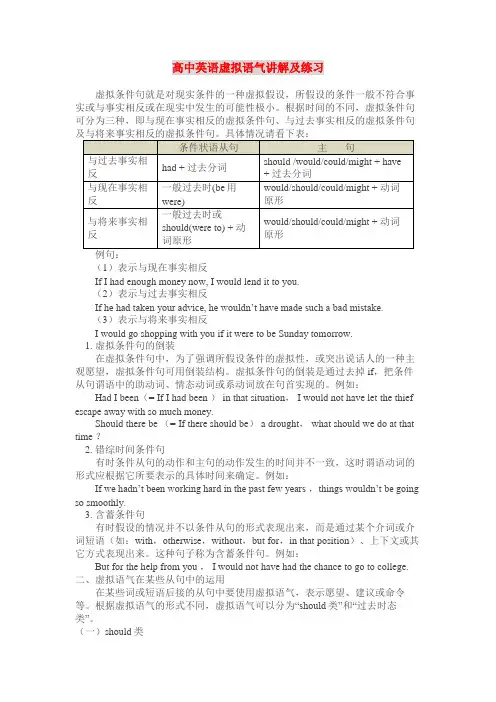
高中英语虚拟语气讲解及练习题(附答案)
高中英语虚拟语气讲解及练习
虚拟条件句就是对现实条件的一种虚拟假设,所假设的条件一般不符合事实或与事实相反或在现实中发生的可能性极小。根据时间的不同,虚拟条件句可分为三种,即与现在事实相反的虚拟条件句、与过去事实相反的虚拟条件句及与将来事实相反的虚拟条件句。具体情况请看下表:
条件状语从句 主 句
与过去事实相反 had + 过去分词 should /would/could/might + have
+ 过去分词
与现在事实相反 一般过去时(be用were) would/should/could/might + 动词原形
与将来事实相反 一般过去时或should(were to) + 动词原形 would/should/could/might + 动词原形
例句:
(1)表示与现在事实相反
If I had enough money now, I would lend it to you.
(2)表示与过去事实相反
If he had taken your advice, he wouldn’t have made such a bad mistake.
(3)表示与将来事实相反
I would go shopping with you if it were to be Sunday tomorrow.
1. 虚拟条件句的倒装
在虚拟条件句中,为了强调所假设条件的虚拟性,或突出说话人的一种主观愿望,虚拟条件句可用倒装结构。虚拟条件句的倒装是通过去掉if,把条件从句谓语中的助动词、情态动词或系动词放在句首实现的。例如:
Had I been(= If I had been ) in that situation, I would not have let the thief
escape away with so much money.
Should there be (= If there should be) a drought, what should we do at that
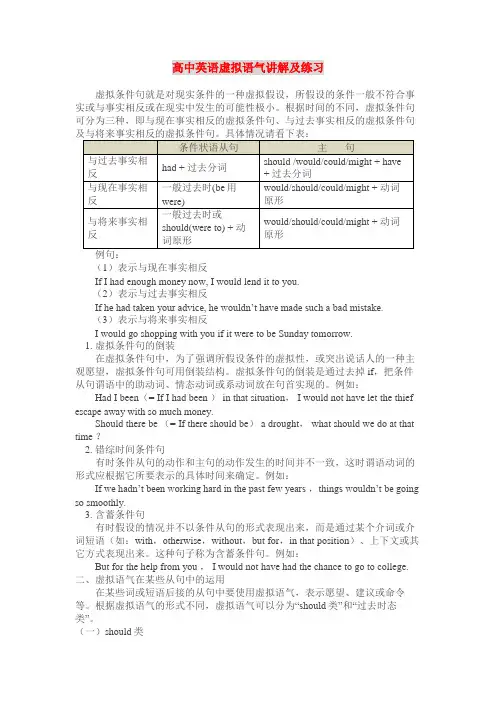
高中英语虚拟语气讲解及练习附答案解析
高中英语虚拟语气讲解及练习
虚拟条件句就是对现实条件的一种虚拟假设,所假设的条件一般不符合事实或与事实相反或在现实中发生的可能性极小。根据时间的不同,虚拟条件句可分为三种,即与现在事实相反的虚拟条件句、与过去事实相反的虚拟条件句及与将来事实相反的虚拟条件句。具体情况请看下表:
条件状语从句 主 句
与过去事实相反 had + 过去分词 should /would/could/might + have
+ 过去分词
与现在事实相反 一般过去时(be用were) would/should/could/might + 动词原形
与将来事实相反 一般过去时或should(were to) + 动词原形 would/should/could/might + 动词原形
例句:
(1)表示与现在事实相反
If I had enough money now, I would lend it to you.
(2)表示与过去事实相反
If he had taken your advice, he wouldn’t have made such a bad mistake.
(3)表示与将来事实相反
I would go shopping with you if it were to be Sunday tomorrow.
1. 虚拟条件句的倒装
在虚拟条件句中,为了强调所假设条件的虚拟性,或突出说话人的一种主观愿望,虚拟条件句可用倒装结构。虚拟条件句的倒装是通过去掉if,把条件从句谓语中的助动词、情态动词或系动词放在句首实现的。例如:
Had I been(= If I had been ) in that situation, I would not have let the thief
escape away with so much money.
Should there be (= If there should be) a drought, what should we do at that
高三英语虚拟语气与情态动词试题答案及解析

高三英语虚拟语气与情态动词试题答案及解析
1. They were abroad during the months when we were carrying out the investigation, or they
_____ to our help.
A.would have come B.could come C.have come D.had come
【答案】A
【解析】这里when引导的是定语从句,修饰前面的名词months;根据谓语动词were可知事情发生过去,or后是对过去的虚拟,所以应该用would have done,故选A。句意:在我们进行调查期间他们在国外,要不然的话他们就来帮忙。
【考点】考查虚拟语气。
2. (2014·蜀光中学月考)The weather turned out to be fine yesterday.I________the trouble to
carry the umbrella with me.
A.couldn’t have taken B.mustn’t have taken
C.needn’t have taken D.didn’t need to take
【答案】C
【解析】考查情态动词。句意为:昨天天气很好,我本不必麻烦随身带伞的。根据句意可知C项正确。needn’t have done本没有必要做而做了。
答案: C
3. ______ today, he would get there by Friday.
A.Were he to leave B.If he had left C.Did he to leave D.Had he left
【答案】A
【解析】句意:要是他明天离开,在星期五之前就会到那里。这里的were he to leave today="If"
he were to leave today, 为虚拟语气,if条件句谓语中如果有系动词were,助动词should,had可将它提到主语前面,省去if.所以选A。
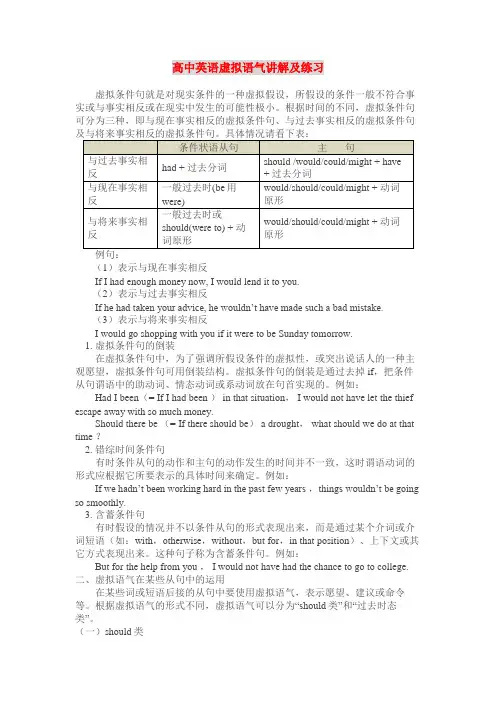
高中英语虚拟语气讲解及练习带答案
高中英语虚拟语气讲解及练习
虚拟条件句就是对现实条件的一种虚拟假设,所假设的条件一般不符合事实或与事实相反或在现实中发生的可能性极小。根据时间的不同,虚拟条件句可分为三种,即与现在事实相反的虚拟条件句、与过去事实相反的虚拟条件句及与将来事实相反的虚拟条件句。具体情况请看下表:
条件状语从句 主 句
与过去事实相反 had + 过去分词 should /would/could/might + have
+ 过去分词
与现在事实相反 一般过去时(be用were) would/should/could/might + 动词原形
与将来事实相反 一般过去时或should(were to) + 动词原形 would/should/could/might + 动词原形
例句:
(1)表示与现在事实相反
If I had enough money now, I would lend it to you.
(2)表示与过去事实相反
If he had taken your advice, he wouldn’t have made such a bad mistake.
(3)表示与将来事实相反
I would go shopping with you if it were to be Sunday tomorrow.
1. 虚拟条件句的倒装
在虚拟条件句中,为了强调所假设条件的虚拟性,或突出说话人的一种主观愿望,虚拟条件句可用倒装结构。虚拟条件句的倒装是通过去掉if,把条件从句谓语中的助动词、情态动词或系动词放在句首实现的。例如:
Had I been(= If I had been ) in that situation, I would not have let the thief
escape away with so much money.
Should there be (= If there should be) a drought, what should we do at that
高一英语情态动词虚拟语气深度辨析与语法点详解单选题50题
高一英语情态动词虚拟语气深度辨析与语法点详解单选题50题
1. You ______ be tired after such a long journey.
A. can
B. may
C. must
D. should
答案:C。解析:must用于表示肯定的推测,根据“after such a long
journey”(经过这么长的旅程),可以推断出“你一定很累”。can表示能力或可能性,在这里不符合语境。may表示可能性,语气较弱,没有must肯定。should表示应该,也不符合此处推测很累的语境。
2. I'm not sure where Tom is. He ______ be in the library.
A. can
B. might
C. must
D. would
答案:B。解析:might表示可能性,用于不太确定的推测,句中说“我不确定汤姆在哪里”,所以“他可能在图书馆”这种推测是不太确定的。can表示能力或理论上的可能性,在这里不适用。must表示肯定的推测,与前面的“not sure”矛盾。would表示过去将来或虚拟语气等,不符合此处语境。
3. ______ you pass me the salt?
A. Can
B. May
C. Must
D. Should
答案:A。解析:can在这里表示请求,用于询问对方是否有能力做某事,即“你能递给我盐吗”。May也可表示请求,但通常用于正式或礼貌的场合,这里用can更口语化、更常用。Must表示必须,不符合请求的语境。Should表示应该,也不符合题意。
4. She ______ speak three languages when she was ten.
A. can
B. could
C. may
D. might
答案:B。解析:could是can的过去式,表示过去的能力,句中说“当她十岁的时候”,是过去的时间,“她能说三种语言”,这里要用过去式could。can表示现在的能力,不符合时态要求。may和might表示可能性,与表示能力的语境不符。
高中英语虚拟语气讲解及练习附答案解析 2
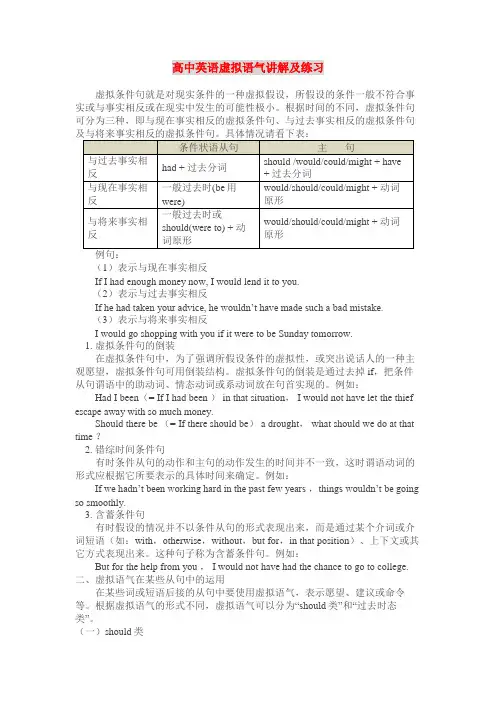
高中英语虚拟语气讲解及练习
虚拟条件句就是对现实条件的一种虚拟假设,所假设的条件一般不符合事实或与事实相反或在现实中发生的可能性极小。根据时间的不同,虚拟条件句可分为三种,即与现在事实相反的虚拟条件句、与过去事实相反的虚拟条件句及与将来事实相反的虚拟条件句。具体情况请看下表:
条件状语从句 主 句
与过去事实相反 had + 过去分词 should /would/could/might + have
+ 过去分词
与现在事实相反 一般过去时(be用were) would/should/could/might + 动词原形
与将来事实相反 一般过去时或should(were to) + 动词原形 would/should/could/might + 动词原形
例句:
(1)表示与现在事实相反
If I had enough money now, I would lend it to you.
(2)表示与过去事实相反
If he had taken your advice, he wouldn’t have made such a bad mistake.
(3)表示与将来事实相反
I would go shopping with you if it were to be Sunday tomorrow.
1. 虚拟条件句的倒装
在虚拟条件句中,为了强调所假设条件的虚拟性,或突出说话人的一种主观愿望,虚拟条件句可用倒装结构。虚拟条件句的倒装是通过去掉if,把条件从句谓语中的助动词、情态动词或系动词放在句首实现的。例如:
Had I been(= If I had been ) in that situation, I would not have let the thief
escape away with so much money.
Should there be (= If there should be) a drought, what should we do at that
新人教版高三英语复习专题练习:情态动词和虚拟语气含答案.docx
WORD 文档
1. (2018 ·浙江高考 ) — How's your new babysitter?
— We________ ask for a better one. All our kids love her so much.
A. should B. might
C. mustn't D. couldn't
解析:考查情态动词。根据 句 意“— — 你们的新保 姆 怎么样? — — 我们不能再要求更好的了,孩很都们子
喜欢她。 ”可知, couldn't 表示 “不可能 ”,符合句 意。 should 表示 “应该;应当”; might 表示
“可能 ”;
mustn't 表示 “禁止;不允许 ”。
答案: D
2. (2018 ·济南市第一次教学质量调研)If people eat natural plant poisons by mistake,
they ________ go to hospital without delay.
A. would B. can
C. may D. must
解析:考查情态动词。根据 后半句的中 without delay 可知如果人们误吃了天然植物毒,他们 “必须”马
上去医院,一刻也不能 耽误。
答案: D
3. (2018 ·烟台市第二次诊断) — I don't mind telling you wha t happened.
— You ________. I'm not asking you for it.
A. mustn't B. may not
C. can't D. needn't
解析:考查情态动词。句 意: “我不介意告诉你所发生的事情。 ”“你没必要告诉我 。我没有要求你那样
做。 ”mustn't “不可以 ”; may not “不许可 ”; can't “不可能 ”;needn't “没必要 ”。
高中英语虚拟语气讲解及练习附答案解析 3
高中英语虚拟语气讲解及练习
虚拟条件句就是对现实条件的一种虚拟假设,所假设的条件一般不符合事实或与事实相反或在现实中发生的可能性极小。根据时间的不同,虚拟条件句可分为三种,即与现在事实相反的虚拟条件句、与过去事实相反的虚拟条件句及与将来事实相反的虚拟条件句。具体情况请看下表:
条件状语从句 主 句
与过去事实相反 had + 过去分词 should /would/could/might + have
+ 过去分词
与现在事实相反 一般过去时(be用were) would/should/could/might + 动词原形
与将来事实相反 一般过去时或should(were to) + 动词原形 would/should/could/might + 动词原形
例句:
(1)表示与现在事实相反
If I had enough money now, I would lend it to you.
(2)表示与过去事实相反
If he had taken your advice, he wouldn’t have made such a bad mistake.
(3)表示与将来事实相反
I would go shopping with you if it were to be Sunday tomorrow.
1. 虚拟条件句的倒装
在虚拟条件句中,为了强调所假设条件的虚拟性,或突出说话人的一种主观愿望,虚拟条件句可用倒装结构。虚拟条件句的倒装是通过去掉if,把条件从句谓语中的助动词、情态动词或系动词放在句首实现的。例如:
Had I been(= If I had been ) in that situation, I would not have let the thief
escape away with so much money.
Should there be (= If there should be) a drought, what should we do at that
高考英语虚拟语气专项讲解及练习含答案
高中英语虚拟语气讲解及练习
虚拟条件句就是对现实条件的一种虚拟假设,所假设的条件一般不符合事实或与事实相反或在现实中发生的可能性极小。根据时间的不同,虚拟条件句可分为三种,即与现在事实相反的虚拟条件句、与过去事实相反的虚拟条件句及与将来事实相反的虚拟条件句。具体情况请看下表:
条件状语从句 主 句
与过去事实相反 had + 过去分词 should /would/could/might + have
+ 过去分词
与现在事实相反 一般过去时(be用were) would/should/could/might + 动词原形
与将来事实相反 一般过去时或should(were to) + 动词原形 would/should/could/might + 动词原形
例句:
(1)表示与现在事实相反
If I had enough money now, I would lend it to you.
(2)表示与过去事实相反
If he had taken your advice, he wouldn’t have made such a bad mistake.
(3)表示与将来事实相反
I would go shopping with you if it were to be Sunday tomorrow.
1. 虚拟条件句的倒装
在虚拟条件句中,为了强调所假设条件的虚拟性,或突出说话人的一种主观愿望,虚拟条件句可用倒装结构。虚拟条件句的倒装是通过去掉if,把条件从句谓语中的助动词、情态动词或系动词放在句首实现的。例如:
Had I been(= If I had been ) in that situation, I would not have let the thief
escape away with so much money.
Should there be (= If there should be) a drought, what should we do at that
高中英语虚拟语气讲解及练习附答案解析 4
高中英语虚拟语气讲解及练习
虚拟条件句就是对现实条件的一种虚拟假设,所假设的条件一般不符合事实或与事实相反或在现实中发生的可能性极小。根据时间的不同,虚拟条件句可分为三种,即与现在事实相反的虚拟条件句、与过去事实相反的虚拟条件句及与将来事实相反的虚拟条件句。具体情况请看下表:
条件状语从句 主 句
与过去事实相反 had + 过去分词 should /would/could/might + have
+ 过去分词
与现在事实相反 一般过去时(be用were) would/should/could/might + 动词原形
与将来事实相反 一般过去时或should(were to) + 动词原形 would/should/could/might + 动词原形
例句:
(1)表示与现在事实相反
If I had enough money now, I would lend it to you.
(2)表示与过去事实相反
If he had taken your advice, he wouldn’t have made such a bad mistake.
(3)表示与将来事实相反
I would go shopping with you if it were to be Sunday tomorrow.
1. 虚拟条件句的倒装
在虚拟条件句中,为了强调所假设条件的虚拟性,或突出说话人的一种主观愿望,虚拟条件句可用倒装结构。虚拟条件句的倒装是通过去掉if,把条件从句谓语中的助动词、情态动词或系动词放在句首实现的。例如:
Had I been(= If I had been ) in that situation, I would not have let the thief
escape away with so much money.
Should there be (= If there should be) a drought, what should we do at that