
(完整版)外研版八年级下册Module8知识点整理
外研版八年级下册Module 8知识点整理
一.重点单词
hardly adv.几乎不;几乎没sights n.[用复数]风景;名胜thirsty adj.渴的waste v.&n.浪费;滥用kilometre n.千米;公里shape n.外形;形状
human n.人wake v.唤醒;醒来somebody pron.某人;有人about adv.向四周;向各处path n.小路;路径pull v.(用手)拉,牵,扯二.重点短语
1.time off休假2.in the city centre在市中心3.be famous for因……而著名4.take up占去(时间或空间)5.point out指出;指明6.at the top of.在……的顶端7.look like看起来像8.wake sb. up唤醒某人
9.move about 四处走动10. not…any more不再
11.do sightseeing 观光12. be careful小心
13. be popular with受……欢迎
三.用法集萃
1.so...that+从句如此……以至于……
2.welcome to+地点欢迎来到……
3. hear sb. doing sth 听到某人正在做某事
4. allow sb. to do sth 允许某人做某事
5.promise to do sth.答应/许诺做某事
6.without doing sth 没做某事
7.hope to do sth希望做某事
8.the+序数词十形容词最高级第几……的
9. would like sb.to do sth. 想要某人做某事
四.重点句型
1.1 can hardly believe we're in the city centre.
我几乎不能相信我们在市中心。
2.I don't think they allow people to swim in the lake.
3.我认为他们不允许人们在湖里游泳。
4.We thought somebody was moving about.
5.我们认为有人正在四处走动。
五.语法归纳
(一)教材典句
1.I can hardly believe we're in the city centre.
我几乎不能相信我们在市中心。
2.I don't think they allow people to swim in the lake.
3.我认为他们不允许人们在湖里游泳。
4....but Lingling's uncle said that it was wrong to pull leaves off plants and that we should protect everything here.
……但玲玲的叔叔说采摘植物的叶子是不对的,我们应该保护这里的一切。
这几个句子都含有that(或省略that)引导的宾语从句。
(二)语法归纳
放在动词后面作宾语的句子称为“宾语从句”。
宾语从句可以分为三类:一类是that引导的宾语从句;一类是whether/if引导的宾语从句;
还有一类是连接代词、连接副词引导的宾语从句。
在本模块学习that 引导的宾语从句。
1.宾语从句的引导词that
当谓语动词表示肯定的概念,如“希望”“相信”“知道”或“说”时,其后面的句子一般用that引导。
that没有任何意义,只具有语法功能,目的是分区清楚后面的句子是作前面动词的宾语,多数情况下that 可以省略。
I hope (that) you will come to my birthday party.我希望你来参加我的
生日聚会。
I believe (that) we shall become good friends.我相信我们会成为好朋友。
注意:并非所有的动词后面都可接that引导的宾语从句。
常接that 引导的宾语从句的动词有:believe,expect,explain,feel,hear,hope,imagine,prefer,promise,report, say, see, tell, think, understand, warn, wish等。
【拓展】引导词that用于下列情况时不可省略:
①宾语从句的主语是that时。
He says that that is a useful book.他说那是一本有用的书。
②当从句前有插入语时。
It says,on the card,that it is made in China.卡片上说,它产于中国。
③当宾语从句中含有主从复合句时。
I'm afraid that if you've lost it,you must pay for it.恐怕如果你弄丢了它,你必须赔偿。
④当两个或多个宾语从句由并列连词连接时,除第一个从句中的that 可以省略外,其余从句中的that都不可以省略。
He said (that) the film was very interesting and that he enjoyed seeing it.他说那部电影很有趣,他非常喜欢看。
2.宾语从句的时态
(1)如果主句是现在的某种时态(包括一般现在时、现在进行时、现
在完成时),那么宾从句的时态可根据实际情况而定。
I remember he gave me a book yesterday.我记得他昨天给了我一本书。
(2)如果主句是过去的某种时态,那么宾语从句一般要用过去的某种
时态。
He told me that he would take part in the high jump.他告诉我他将参加跳高比赛。
(3)如果宾语从句表示的是客观事实或真理,即使主句是过去的某种
时态,从句也用一般现在时态。
He told me that the earth is round.(真理)他告诉我地球是圆的。
3.宾语从句中的否定转移
在主从复合句中,当主句的主语为第一人称,谓语动词是think, believe, suppose等时,要将从句的否定词转移到主句中,即主句的谓语动词用
否定形式,而从句的谓语动词用肯定形式。
I don’t think he will come. 我认为他不会来。
初中英语外研社八年级下册Module 8课件
1.我几乎不能相信我们是在镇中心。(hardly) __I _c_a_n_h_a_r_d_l_y_b__el_i_ev_e__w_e_’_r_e_i_n_t_h_e_t_o_w__n_c_e_n_t_e_r.________________ 2. 把花从植物上摘下来是错误的。(pull) __It_’_s_w_r_o_n_g__to__p_u_l_l _fl_o_w_e_r_s_o_f_f_p_l_a_n_t_s_. _______________________ 3. 别浪费你的时间玩电脑游戏。(waste) __D_o_n_’_t_w_a_s_t_e_y_o_u_r__ti_m__e_p_l_a_y_in_g__c_o_m_p_u__te_r_g_a_m__e_s_. ______________ 4. 我可以为你们指出潍坊的景点。(sights) __I _c_a_n_p_o_i_n_t_o_u_t__th_e__si_g_h_t_s_o_f_W__e_i_fa_n_g__fo_r__y_o_u_._________________
1.More and more people have realized that we shouldn’t _w__a_s_te__(浪 费) food. 2.We are looking forward to visiting the _s_ig_h__ts__(名胜) of Beijing, for example, the Summer Palace. 3.Look at those _a_n_c_ie_n_t__(古代的) buildings. They are old but beautiful. 4.It’s too dark in the room. I can _h_a_r_d_l_y__(几乎不) see anything in it. 5.It is about five _k_il_o_m__et_e_r_s(千米) from here to the airport.
外研版八年级下册英语(新)《Module8Timeoffunit2》说课稿

外研版八年级下册英语(新)《Module 8 Time off unit 2》说课稿一. 教材分析《Module 8 Time off unit 2》是人教版八年级下册英语教材的一部分,本节课的主要内容是关于假期的话题。
教材通过对话的形式,让学生掌握假期活动计划的表达方式,并能够运用所学知识进行实际交流。
本节课的主要内容包括:1.学习表示假期的词汇如:holiday, vacation, trip等。
2.学习表示假期活动的短语如:go hiking, visit relatives等。
3.学习如何询问和表达假期计划。
二. 学情分析八年级的学生已经具备了一定的英语基础,能够听懂并运用简单的英语进行交流。
但是,对于一些表示假期的词汇和短语,学生可能还需要加强记忆和运用。
此外,学生对于如何询问和表达假期计划的能力还需要进一步提高。
三. 说教学目标1.知识目标:学生能够掌握表示假期的词汇和短语,并能够正确运用。
2.能力目标:学生能够用英语询问和表达假期计划。
3.情感目标:通过学习,学生能够增强对英语学习的兴趣,提高团队合作意识。
四. 说教学重难点1.重点:表示假期的词汇和短语的掌握。
2.难点:如何用英语询问和表达假期计划。
五. 说教学方法与手段本节课采用任务型教学法,通过小组合作、角色扮演等活动,让学生在实际语境中运用所学知识。
同时,利用多媒体教学手段,如图片、视频等,激发学生的学习兴趣,提高学生的学习积极性。
六. 说教学过程1.导入:通过展示图片,引导学生谈论假期的话题,引出本节课的内容。
2.呈现:教师通过课件展示本节课的主要词汇和短语,引导学生进行学习和记忆。
3.操练:学生通过小组合作,用所学生词和短语编写对话,并进行角色扮演。
4.巩固:教师通过游戏、歌曲等形式,让学生进一步巩固所学知识。
5.拓展:学生分组讨论,制定自己的假期计划,并展示给全班同学。
6.总结:教师对本节课的内容进行总结,强调重点和难点。
Module+8+Unit+3+Grammar课件2022-2023学年外研版八年级英语下册+
Now work in pairs. Make as many sentences as possible.
2. Complete the passage with the correct form of the words and
expression in brackets.
I want to go on a trip with my family in the summer holidays, but I do not think we (1) _w_i_ll_a_g_r_e_e_ (agree) on where to go. I think that we should (2) _g_o______ (go) to the beach but Mum and Dad said they (3) _w__a_n_t_e_d__ (want) to go to the countryside. Danny is sure that the beach and the countryside (4) _a_r_e___ (be) boring. He wants to go to a big city and do sightseeing. Milly doesn't think that sightseeing (5) __i_s______ (be) interesting. She wants to stay at home and watch TV or go swimming. I told my family that we (6) h__a_d_t_o___ (have to) decide soon because the holidays start next week.
4. Complete the passage with the correct form of the words in the box.
外研版八年级英语下册Module+8+Unit+1I+can+hardly+bel

指出;指明
讲解:
point out是“动词+副词”型短语,意为 “指出;指明”。
例句:
◆ He pointed out the dangers of driving alone.
拓展:
point at意为“指着”,侧重于指的对象,通常表 示指着较近的人或物;point to意为“指向”,侧 重于指的方向,通常表示指向较远的人或物。
Tony doesn't think they are in the city centre.
2. “Then I can point out the sights of Beijing for you.” Does Lingling want them to look at something or listen to something?
Big Ben
Tiananmen Square Beijing
London
Eiffel Tower
Opera House Sydney
Paris
the Statue of Liberty
Fuji Mountain
New York
Japan
1. Look at the photo and listen. What is the conversation about?
adv. 几乎不; 注意:
几乎没
hardly 用于反意疑问句中时,附加疑问部分要用 肯定形式。
讲解: take up意为“占去(时间或空间)”。 例句: ◆ The table takes up too much room.
占去(时间 或空间)
拓展:
take up还可意为“(尤指为消遣)学着做;开始 做”,通常指开始某项工作、某个业余爱好等。 take up (doing) sth.意为“开始(做)某事”。
外研版八年级英语下册Module8 精品课件
• We came out without making any noise, and found it was just a hungry monkey looking for food.
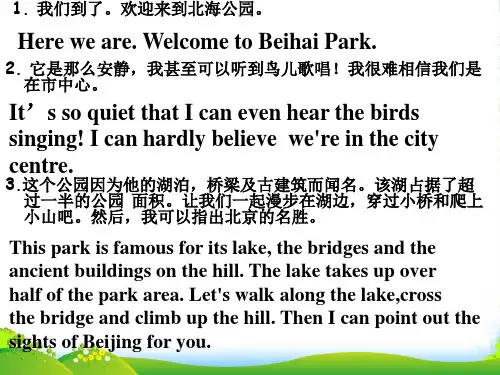
3.这个公园因为他的湖泊,桥梁及古建筑而闻名。该湖占据了超 过一半的公园 面积。让我们一起漫步在湖边,穿过小桥和爬上 小山吧。然后,我可以指出北京的名胜。
This park is famous for its lake, the bridges and the ancient buildings on the hill. The lake takes up over half of the park area. Let's walk along the lake,cross the bridge and climb up the hill. Then I can point out the sights of Beijing for you.
1. 承诺做某事 2. 和… 呆在一起 3. 玩得开心 4. 的一块神奇的陆地 5. 平方千米 6. 因… 而著名 7. 的奇怪的形状 8. 看起来像 9. 一些… 另一些
1. promise to do sth. 承诺做某事 2. stay with … 和… 呆在一起 3. have a wonderful time 玩得开心 4. a magic land of …的一块神奇的陆地 5. square kilometres 平方千米 6. be famous for 因… 而著名 7. the strange shape of …的奇怪的形状 8. look like 看起来像 9. some … others… 一些… 另一些
新外研版英语八年级下册知识点与短语
外研版英语初二下册知识点及短语集Module 1系动词 : 一是 (be,am ,is ,are ,been ,was ,were ,being ),一觉得(feel),一好像(seem),一保持 (keep) ,三变化(turn,become, get ),四起来(smell, sound ,look ,taste),后跟形容词 .1.would like =want , would like to do sth=want to do sth .想要做某事would like sb. to do sth .=want sb. to do sth想要某人做某事would you like ...?其后用some不用any .句子:Would you like to do sth .肯定回答 :Yes ,please ./sure ,thanks ./Yes ,I’d like to./Yes ,I’d love to否定回答 :No, thanks ./Sorry ,I’m afraid I can’t .2.try to do sth .尽力做某事;试图做某事;设法做某事,但不一定成功.否定式:try notto do sth.try doing sth .试着做某事,看看会发生什么情况.have a try试一试3.a bit与a little1)两者修饰动词,形容词,副词或比较级,2)a little可以直接修饰不可数名词, 相当于 a bit of4.have a try试试看, havea look 看一看have a headache 头疼 have a rest休息have a meeting开会have a good time玩得愉快have a fever发烧5.lots of =a lot of很多,大量,常用于肯定句中.既可修饰可数相当于many ,又可修饰不可数 , 相当于 much . a lot相当于very much ,多与动词连用,修饰形容词,副词的比较级 .6. 提出建议 :1)Letdo’ sth. 让我们做⋯吧. 2)Howabout /what about doing sth ?做.. 怎么样3)Why not do sth ?为什么不⋯ ?4)Would you like to do你愿意做⋯?.吗?5)Shall we do我们⋯?做⋯好吗?6)You’ d better(not) do ..你最好(不)做某事.7.Thanks for sth. =Thank you for sth.因⋯而感谢.后V+ing . Thanks to幸亏,由于,归功于 .8.leave a message留个口信 , take/have a message for sb.给某人带个口信 .9.hear from sb.=get /receive a letter from sb . 收到⋯的来信 hear about /of得悉,听说Hear out听完 hear to同意10.can’ t wait to do sth . 迫不及待做某事wait for等候⋯,后接等待的对象 ,名词或代词wait to do sth .等着做某事11.三到达 :arrive at ( 小地方 ),arrive in( 大地方 ),get to=reach 注意 : 跟home ,here ,there等副词时 ,不加介词 .12.quite相当 , 很, 相当于 very, 区别 , quite a ../quite an .. 而 very只能放在 a /an后13.with有,带有 ;和⋯一起;使用等 . 反义词 without14. 穿 :dress , 后跟人 ,dress oneself, dress sb . put on穿上,强调动作,wear ,穿着,强调状态 .15.be sure确信,相信be sure of /about sth .相信/对某事有把握16. 四个花费 :take:It takes sb. some time to do sth. /It took sb .some time todo sth .Spend :Sb. spend some time on sth ./ Sb spend some time (in) doing sth/Sb.spend money on sth .Pay:Sb. pay some money for sth.cost :sth cost sb .some money .17.四个也 :as well肯定,句末,不用逗号too,肯定,句末,逗号可有可无.either:否定句末 , also ,肯定句中,行前be后.18.proud .adj. be proud of为⋯而感到骄傲be proud to do sth .做某事很自豪 .pride. n. take pride in为⋯感到自⋯豪.;the pride of的骄傲⋯.19.How do you feel about对⋯感⋯?觉如何?与How do you like⋯?20.at first起初,开始,常位于句首或句末,反义词.at last最后,终于first of all ,首先,用作插入语,说明顺序,后接next ,then , at first ,指刚开始做某事的时候 , 暗示后来的情况有所改变.21.few /a few修饰可数名词,little /a little修饰不可数名词,有a表示有,没有a表示没有 .22.way的短语:in this way用这种方式, in the right way用正确的方法, the wayof 做 .. 的方式in the way 阻碍 , 妨碍 ; on the way to在去⋯的路上 by the way顺便说一下 .23.be afraid of害怕 , 后接名词 ,代词或动名词 be afraid to do sth .害怕做某事24.each other互相 25.be nervous about对⋯感到紧张26. 问外貌 :What+do/does /did + 主语 +look like ?问性格 :What +be +主语 +like ?27.be friendly to sb. 对某人友好 -28.be good at =do well in 擅长 , 后跟 doing sth .或名词。
八年级英语下册 Module 8 Public holidays课文详解及综合练习 外研版 试题
八年级英语下册 Module 8 Public holidays课文详解及综合练习外研版【同步教育信息】一. 本周教学内容:Module 8 Public Holidays二. 重点内容:时间状语从句三. 具体内容:课文详解1. When do most people take a vacation ? 大多数人什么时候去度假?take a vacation 意为“度假”。
知识扩展:Holiday,vacation和leave的区别这三个单词都可以译为“假期”。
单数形式的holiday 可指一,两日的短期假期,较长期的常用复数形式holidays表示,但可用单数形式holiday; vacation 主要用于美国英语,既可以表示长时间的假期,也可指一两天的短假期。
leave 主要指军人或官员的假期或病期,事假。
例如:Mr Smith is on holiday at present. 目前史密斯先生正在度假。
Where are you going for your vacation ? 你到哪里去度假?The soldiers are given two leaves each year. 士兵们一年可休两次假期。
Do you have any plans for the May Day holiday, Betty ? 贝蒂,五一你有什么打算吗?2. Making plans for the New Year 为新年做计划plan 既可以是名词也可以是动词,名词时表示“计划,规划,方案,”词组为 a plan/plans for sth/doing sth (——的计划),make plans for sth (为某事订计划),动词为“计划,打算”,词组为plan sth/ for sth/ to do sth/ on sth (on doing sth )。
例如:Do you have any plans for the summer? 这个夏天你有什么打算?We need to make plans for the future. 我们必修规划未来。
外研版八年级下册英语M8 Time off-U2课件
found a h__u_n_g_r_y_m__o_n_k_e_ylooking for food.
tomorrow
n_e_x_t__w_e_e_k_
We're going to _D_o_n_g_t_i_n_g_L_a_k_e_, the second-largest freshwater lake in China.
B. The travel plan for tomorrow
C. The experience of climbing Mount Tianzi today
D. A camping experience
Task 3
rue or false
1. Last night, they camped obny tahsemmaollulnatkaein. . 2. A noise worried Betty last night. 3. They found a hungry monkey was
We'll be back
We should _p_r_o_t_e_c_t everything here.
home.
Last night
This morning
We camped b_y__a_s_m__a_l_l _la_k_e_. During the night, a _n_o_is_e_ woke everyone up. We came out and
1. Where is it? 2. How large is it? 3. Where can you stay? 4. What animals can you see? 5. What is the most famous thing to see?
外研版初中英语八年级下册各模块知识要点
外研版初中英语八年级下册各模块知识要点Module 1 Hobbies 复要点本文主要介绍了 Module 1 Hobbies 中的重点词组和知识点。
其中,重点词组包括 tidy up、take up、a bit + adj。
/ a bit of + n。
a n of stamps / collect stamps、play the lin / the piano / the drum / the flute、play ___、listen to music、all the time、be / show /___。
next time、at the end of…、need to do sth。
start doing sth。
/ to do sth。
how often、grow vegetables、look after…、such as…、grow as a person、develop one’s interests、come out、as a result、like doing sth。
/ to do sth。
in the future、try to do sth。
/ try doing sth。
in one’s free / spare time、bring sb。
great success、be popular with…、write to sb。
all over the world、think about…、find out (about)…、dress in…、in the past、not only…but also…。
需要注意的是,有些段落存在格式错误或明显问题,需要删除或改写。
Possible revised n:The power of musicMusic has the power to make us feel a wide range of ns。
It can make us happy。
外研版八年级英语下册Module8 Unit2 We thought somebody was mo
What is special? strange shape of tall rocks, beautiful sights
Where can you sleep?
hotels or camps
Choose the most important or interesting facts about Zhangjiajie and write a passage about it.
How large is it? Where is it?
about 480 square kilometres about 400 kilometres from Changsha
What can you see? mountains, rivers, forests, many kinds of plants and animals
当谓语动词表示肯定的概念,如“希 望、相信、知道、说”时,其后面的句 子一般用that引导。that 没有任何词汇含 义,只有语法功能,目的是使读者清楚 后面的句子是宾语从句。多数情况下 that 可以省略。
例如: I hope (that) it will snow this winter. Betty thinks (that) trees can improve the air. 常接 that 宾语从句的谓语动词有: believe, expect, explain, feel, hear, hope, imagine, prefer, promise, report, say, see, tell, think, under, stand, warn, wish等。
shape 表示“形状”。例如: What’s the shape of the building? That cloud has a strange shape.