
unit6 do you like bananas教案
Unit 6 Do you like bananas?
●Teaching material analysis:
In this lesson, we will learn the positive and negative use of the verb “like”. The main
structrue of this text is “Dou you like....?”. The lesson mainly introducts some food and talks
about like and dislike.It contains three tasks : at first , we need to collect some food’s pictures
and learn their English names ; in addition, we shall pay attention to their plural forms and
master the use of like and dislike; finally it demands that students can make up dialogues with
each other about likes and dislikes after class. The main idea of this lesson remanis the present
tense.It is the expansion of the last lesson.After this class,students should master how to ask
others if he likes or dislikes something and know how to answer. They can improve their
integrated skills in the learning procedure.
●The knowledge tree:
Do you/they like salad? Yes,I/they do. /No,I/they don’t.
Does he/she like salad? Yes,he/she does./No,he/she doesn’t.
I/They like oranges. I/They don’t like oranges.
He/She likes ice cream. He/She doesn’t like bananas.
●Teaching aims:
1. Knowledge objects
(1) To grasp some new words, such as strawberry, orange, tomato, ice cream, hamburger,
salad, French fries and broccoli. Pay attention to their spelling, pronounciation and plural
forms.
(2) To master the main grammer:
Do you like..? Yes, I do. No, I don’t.
Does she/he like…? Yes, she does. No, she/he doesn’t.
2. Ability objects
(1) To use the new words and sentense structures to make a dialogue.
(2) To improve students’ integrated abilities.
3. Moral objects (1) To call students’ attention to others’ interests and enable them to care more about
classmates.
(2) To improve Sts’ communicating skills and enable them to keep their health.
●Emphasis:
1. New words learning
2. Grammar: Do you like…? Yes, I do. No, I don’t.
Does he/she like…? Yes, he/she does. No, he/she doesn’t.
●Difficulties:
1. Make a healthy diet for three meals.
2. Talk about like and dislike in English in real life.
●Aids:
A tape recorder; some pictures of food., a computer.
●Methods:
Scene teaching method, pair work, group work , discussion& survey.
●Teaching suggestion:
Adopt different opinion and classifying learning strategies, use some real food and show some pictures
to lead into our class.design some games,give students some pairwork and groupwork.
●Preview:
T: Collect some food’s pictures and prepare the listening material.
S: Preview the lesson.
●Procedures:
Step 1. Warming-up and revision (5min):
T(teacher): Show some common fruit’s pictures and let Sts guess their name in English..
S(student): Guess these friuts
T: Today I have brought one kind of fruits. Can you guess what have I brought here?
S: apple, orange, pear, banana….
T: Ask one St answer and take the banana out, and then give it to the St who answer
rightly.At last,lead into the topic “Dou you like bananas?”.
Step2. Words and grammar learning(10min):
T: Show pictures and ask Sts to read the words under the pictures after me. And tell them to
pay attention to the plural forms.
T: Do you like…(choose the food from the words we have learned just now)
S:Yes,I do/NO, I don’t
T: Write down the grammar:
Do you like…? Yes, I do. No, I don’t.
Does he/she like…? Yes, he/she does. No, he/she doesn’t.
Step3. Play game(15min):
1.St A: Do you like、、、?(use new words ),
St B: Act “like/dislike” with his/her face expression or action.
St C: Guess St B’s answer.
2.Match game:Show a picture and let Sts match the food and words in the picture.
Step4. Listenning(8min):
1. Listen to the table carefully.
2. Give the question and listen again.
3. Give the answer and listen again.
Step5. Free talk (6min):
What food do you like or dislike ? Why or why not?
Step6. Ho mework(1min):
1 Recite the new words.
2.Making up dialogues about likes and dislikes after class.
●Blackboard design:
Unit 6 Do you like bananas?
New Do you like……? the
Words Yes , I do.
I like …… flexible
No ,I don`t.
I don`t like…… information.
●Design purpose:
Warming-up can attract Sts’ attention to the class, and the games can make them study
happily. The teaching design mainly help Sts learn how to study by themselves and learn to
care more about their classmates and friends. Let Sts learn with a good emotion.
●Students’ reflection:
Students may finish these games successfully. Most of them may answer the questions
rightly as these questions are very easy and they study hard. They would study well and keep
Unit-6-Do-you-like-bananas-SectionB--教学设计
Unit-6-Do-you-like-bananas-SectionB-(2a-2c)-教学设计(总7页)
-本页仅作为预览文档封面,使用时请删除本页- Unit 6 Do you like bananas?
Section B (2a-2c)
Part 1 Teaching materials
This teaching material is the second period of Section B in Unit6
Do you like bananas, including 2a,2b and 2c.
This period is a reading part, mainly focusing on developing
students’ reading skills, their ability of judging healthy or
unhealthy food so as to adjust their own eating habits and
cultivating their text awareness .
In this period, it presents several expressions about eating habits,
which is a good foundation of next writing class; 2a is a short pre-reading activity about judging healthy and unhealthy food, which is
aimed at developing students' awareness of keeping a healthy eating
habit and prepare for the next part about eating habits; the goal of
初一上册英语第6单元句式精讲名补教案 Unit 6 Do you like bananas
本文由一线教师精心整理/word可编辑
1 / 12 初一上册英语补习班名补教案
目标提高班 名师培优精讲
【教学标题】 Unit 6 Do you like bananas?
【教学重点】
1、Unit 6重点短语及句式的掌握;
2、助动词在陈述句和疑问句中的使用。
【教学难点】
1、主语+like(don’t like)+sth句式的掌握;
2、What+询问的具体事物的名称+do/does+主语+ like/dislike句式的理解及运用。
【进门得分】
Ⅰ. 从所给单词中选出恰当的填入空白处。
like, likes, don’t, doesn’t
Sandy: What do you like to eat, Mei?
Mei: Well, I 1 salad, but I 2
like tomatoes.
Sandy: And your friend? What does he like to eat?
Mei: He 3 oranges and bananas. He
4 like hamburgers.
Bobby: And I really 5 ice cream.
【教学内容】
1. -Do you like bananas?
-Yes, I do./No, I don’t. 本文由一线教师精心整理/word可编辑
2 / 12 1)本句中的like是动词,它的意思是“喜欢”,和本单元学习的play,have,watch一样都是有实际意义的动词。当句子的谓语是实义动词时,在一般现在时中,它的一般疑问句是用助动词来构成,当句子的主语是第一人称第二人称单复数,或者第三人称复数时,用助动词do放在句子的开头,并且要大写。它的回答是:Yes, 主语+do. / No, 主语+don’t.
新目标Go+for+it版七年级英语上册教学设计新部编版:Unit+6+Do+you+like+bananas
精品教学教案设计 | Excellent teaching plan
育人犹如春风化雨,授业不惜蜡炬成灰
教师学科教案
[ 20 – 20 学年度 第__学期 ]
任教学科:_____________
任教年级:_____________
任教老师:_____________
xx市实验学校
精品教学教案设计 | Excellent teaching plan
育人犹如春风化雨,授业不惜蜡炬成灰 Unit 6 Do you like bananas?
教学内容:
本单元的核心项目是“喜欢和不喜欢(like and dislike)”。围绕着这一中心项目,课文中设计了各种食物及水果的插图和不同形式的表格,让学生进行听、说、读、写等各种学习活动。通过本单元的教学,使学生学会询问对方与了解别人喜欢与不喜欢的食物,学业会谈论自己与他人早、中、晚餐喜爱吃的食物,为其今后能在交际中恰当地表达自己的情感、灵活运用已经学过的常用功能项目、进一步学习并掌握新的语言功能奠定了坚实的基础。
教学目标:
⑴知识目标:A、学会询问对方喜欢与不喜欢的食物; B、学习并激情 些食物的词汇;
C、学会谈论自己与他人早、中、晚 餐喜爱吃的食物; D、学会营养配。
⑵能力目标:A、能准备表达喜欢和不喜欢的食物;
B、能根据具体情景对话,与他人沟通信息,合作完成任务;
C、通过听、说、读、写四项技能的训练,促进学生语言运用能力的提高。⑶情感目标:A、通过学习西文食品文化,促使学生了解西方生活方式与文化,培养跨
文化交际的意识;
B、通过开展小组活动,指导学生积极与他人合作,培养他们的合作精神;
C、通过任务型活动,使学生学会在实际生活中均衡饮食,合理配餐。
教学重点、难点:
重点:A动词like一般现在时的各种句式及一般疑问句的肯定、否定回答;
B关于各种食物的词汇;
Do you like bananas (教学设计)
设计主题
Do you like bananas ?
Section A Period one(1a-2c)
一.整体设计思路、指导依据说明
根据《诱思探究学科教学论》中“教师为引导,学生为主体,体验为红线,思维为主攻”的思想,从孩子们的兴趣出发,结合学生的认知水平,通过合作、交流的学习方式,以及任务型教学途径。师生对话,男女生对话,生生对话等对话方式结对操练句型,设置情境综合运用语言。设置问题引导学生多动脑,多思考,自己总结语言规律。
因此在设计本课时,从听、说、读、写四个方面进行设计,从认知的三个层次出发,实物图片形象感知、学习新单词;自主探究,总结语言规律,突破难点;合作学习,生生对话,体验学习;设置情境,运用语言,迁移升华。使学生实现三维目标,达到提高学生听、说、读、写四种能力的目标。
二 . 教学背景分析
教材分析
这节课是新目标七年级上unit 6 的1a-2c部分,是一节对话课。这部分内容以10个食物名称为载体,练习动词like的用法,通过句型:Do you like …? 来询问对方喜欢、不喜欢的食物。以此来训练含实义动词的肯定句、否定句、一般疑问句的用法,以及如何用yes和no做出肯定和否定回答。而名词第一次出现了可数名词和不可数名词之分。另外学生应熟练掌握交际用语:Let’s have(吃、饮)....此前在第五单元,学生已经学习了实义动词have当“有”讲时肯定句、否定句、一般疑问句的用法,以及如何用yes和no做出肯定和否定回答。
在第五单元的学习中,学生已能较好地掌握:Do you have a/an … ? Yes, I do. No,
I don’t.以及交际用语:Let’s play basketball/baseball/…. That sounds
great/interesting/…. 因此,本节课的重难点我并没有全放在句型的掌握上,而是把重点放在10个食物名称和句型Do you like…? 的掌握上,难点则是可数名词和不可数名词的区别,以及交际用语:Let’s have(吃、饮)....特别强调“have”的意思是“吃、饮”。通过本节课的学习学生了解了老师对食物的喜恶,同时老师也了解学生对食物的喜恶,有利于增加师生之间,同学之间的了解,从而增加了师生情感的交流和增强了同学间的友谊
七年级英语Unit 6Do you like bananas 人教版(新目标)知识精讲

word 1 / 20 初一英语Unit 6 Do you like bananas? 人教版(新目标)
【本讲教育信息】
一. 教学内容:
Unit 6 Do you like bananas?
(一)语言目标
谈论爱好和厌恶。
(二)语言功能
学会用英语表达自己喜欢或不喜欢的东西,询问别人是否喜欢,提出建议。
(三)重点句型
Do you like bananas? Yes, I do./No, I don’t.
I like French fries. I don’t like tomatoes.
(四)主题词表
(五)重点词汇及短语
词汇:
like, hamburgers, tomatoes, broccoli, French fries, oranges, ice cream, salad, bananas, eggs,
carrots, strawberry, apples, chicken, breakfast, lunch, dinner, fruit, vegetable.
短语: word
2 / 20 a lot of like to do sth. like doing sth.
(六)语法
1. 动词like的用法。
2. 一般疑问句的肯定、否定回答。
3. 名词复数的使用。
(七)重难点分析:
1. 可数名词和不可数名词
(1)可数名词:
①定义:是可以计数的名词。
②可数名词前可以用a,an限定。
③可数名词前可以用one,two,three…限定。
④可数名词有复数形式。
(2)不可数名词:
①定义:指不能计数的名词。
②不可数名词前不可以用a,an限定。
③不可数名词前不可以用one,two,three…限定。
④不可数名词没有复数形式。
2. 一般名词的复数形式
(1)一般在名词词尾加-s。如:banana-bananas
人教版三年级英语下册《Do you like bananas?》教学设计
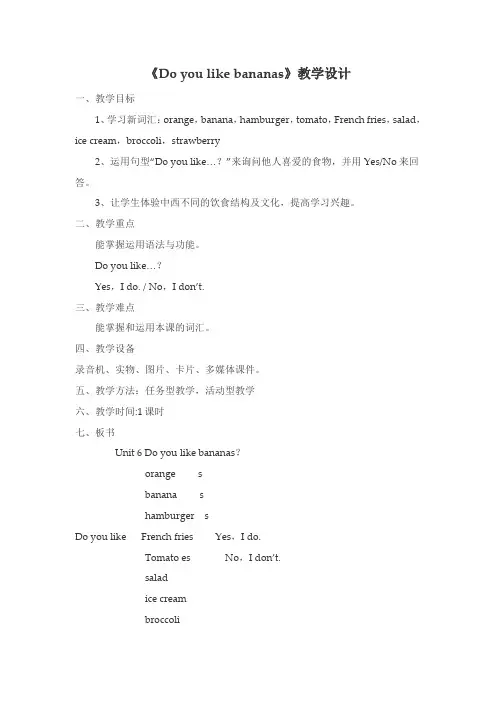
《Do you like bananas》教学设计
一、教学目标
1、学习新词汇:orange,banana,hamburger,tomato,French fries,salad,ice cream,broccoli,strawberry
2、运用句型“Do you like…?”来询问他人喜爱的食物,并用Yes/No来回答。
3、让学生体验中西不同的饮食结构及文化,提高学习兴趣。
二、教学重点
能掌握运用语法与功能。
Do you like…?
Yes,I do. / No,I don’t.
三、教学难点
能掌握和运用本课的词汇。
四、教学设备
录音机、实物、图片、卡片、多媒体课件。
五、教学方法:任务型教学,活动型教学
六、教学时间:1课时
七、板书
Unit 6 Do you like bananas?
orange s
banana s
hamburger s
Do you like French fries Yes,I do.
Tomato es No,I don’t.
salad
ice cream
broccoli strawberry ies
八、教学过程
Step1:Greetings.
T:Good morning,boys and girls.
Ss:Good morning,Teacher.
T:How are you,everyone?
Ss:I’m fine,thanks. How are you?
T:I’m OK. Thank you.
(课前问候,能拉近我与学生的距离)
Step2:Warming up.
Let students revise the chant together:
Do you like bananas优秀教学设计
《Do you like bananas?》教学设计版本人教版(Go for it)年级/册/课七年级上册Unit6
情感态
度价值
观目标To understand the different habits between Chinese and western diets
and some common expressions of preferences and dislikes.
能力
目标1. Cultivate students to have different opinions on the same thing.
2. Cultivate students' ability to classify what they have learned.教
学
目
标
知识
目标1. Know the new words of food: pear, orange, tomato, hamburger,
strawberry, ice-cream, salad, milk, bread.
2. Learn to discuss their likes and dislikes.
--Do you like···?
--Yes, I do. I like···/ No, I don't. I like···
3. Students get information about their classmates' favourite and other
things.
教学资源教材、多媒体、学生在学习、生活及课堂交流中的再生资源。
教学重点1.To master the vocabulary about food.
2.To talk about one's preferences and dislikes by using the target
languages. 教
材
解
读
教学难点1.To create language communication, drill sentence pattern.
Unit6 Do you like bananas
1 Unit6 Do you like bananas?
单元教材分析:
本课包括三部分:Section A, Section B和 Self-check.
主题: Food.
单元教学目标:
知识目标:
Main vocabulary(词汇): hamburgers, tomatoes, broccoli, French fries, oranges, ice cream, salad,
bananas, eggs, strawberry, carrots, apples, chicken, breakfast, lunch, dinner, fruit, vegetable.
Do you like hamburgers? Yes, I do. No, I don’t.
I like French fries. I don’t like tomatoes.
能力目标:
Talk about likes and dislikes.询问某人是否喜欢某种食物及回答;表达喜欢什么和不喜欢什么。
情感目标:
在平日饮食中要做到不挑食。
单元重点:语言结构: Present tense to like Yes/No questions and short answers
Affirmative and negative statements
like 的一般现在时,一般疑问句及肯、否定回答;肯定句和否定句。
单元难点:语言目标: 主要语法
Do you like hamburgers? Yes, I do. No, I don’t.
I like French fries. I don’t like tomatoes.
Main vocabulary(词汇): hamburgers, tomatoes, broccoli, French fries, oranges, ice cream, salad,
最新人教版七年级上册Unit 6 Do you like bananas
含山县河刘初中集体备课教案
1 2013—2014年度人教版七年级上册英语教案
Unit 6 Dou you like bananas?
主备人: 备课时间:2013年 月 日
成员:
The 1st period (Section A 1a—2c)
Teaching objectives:
Knowledge aims:
1.New words: hamburger, orange, ice—cream, salad, banana, strawberry, pear, bread, milk,
2. Sentence Patterns:
-----Do you like salad? ----No, I don’t./ Yes, I do.
-----Do you like oranges? ----No, I don’t./ Yes, I do.
Ability aims
1. Learn to talk about likes and dislikes.
2. Learn food names.
Emotional aims
Develop students’affection by making conversations in English and make Ss keep healthy by eating healthy foods.
Teaching keys:
1.New words: hamburger, orange, ice—cream, salad, banana, strawberry, pear, bread, milk,
2.Sentence Patterns:
-----Do you like salad? ----No, I don’t./ Yes, I do.
unit6Do_you_like_bananas教案
Unit 6 Do you like bananas
Section B 3a-3b 教学设计
课型:写作课
Learning aims【学习目标】
Knowledge aims
◆To master the key vocabulary about food.
◆To learn to talk and write about what you and he/she like(s) and dislike(s) about
food.
◆To learn how to use and ,but to connect phrases or sentences..
Ability aims
◆To get some information by making a survey .
◆To corret mistakes byworking in groups.
Emotion aim
◆Eat delicious and healthy food , have a good eating habit.
Learning importances【学习重点】
Aims 1 2 3 4 5
Learning difficulties【学习难点】
一般现在时第三人称单数作主语时,动词like的变化。
Learning steps【学习过程】
Greetings
Greet each other.
Have a free talk.
Warmming up
Game time
Show some pictures. Then ask students to guess some words about food.
Before-writing
Talk time
Show some pictures. T introduces her own eating habit.
T :For breakfast , I don’t like oranges. For breakfast , I don’t like … Ask students talk about their eating habits like that.