
中考形容词总结
形容词adj
1. 功能
定语:a beautiful girl
表语:She is beautiful.
宾补:I will make you happy.
I found it interesting. (make / find / leave / keep)
2. 位置
a. 放在名词前a pretty girl
b. 不定代词后:something different
定语 c. else放在疑问代词后:what else
d. 较长后置:a swimming pool / ten metres long
意义相反:All the people, young and old, are fond of music.
e. 多个形容词排序:限定词/ 描绘性形容词/ 大小/ 形状/ 年龄/ 颜色/ 国籍/ 材料☆the + 形(代表复数)例:The poor are losing hope.
3. 比较级别
4. 公式
☆用原级/比较级表最高级
反义词:
bad / good beautiful / ugly big / small black / white busy / free clean / dirty clever / stupid cold / hot cool / warm dangerous / safe dark / bright east / west easy / difficult far / near fast / slow
inside / outside large / small late / early left / right light / heavy long / short more / less new / old old / young poor / rich
quick / slow quiet / noisy right / wrong same / different strong / weak tall / short these / those thick / thin this / that worse / better。
中考英语形容词和副词用法总结
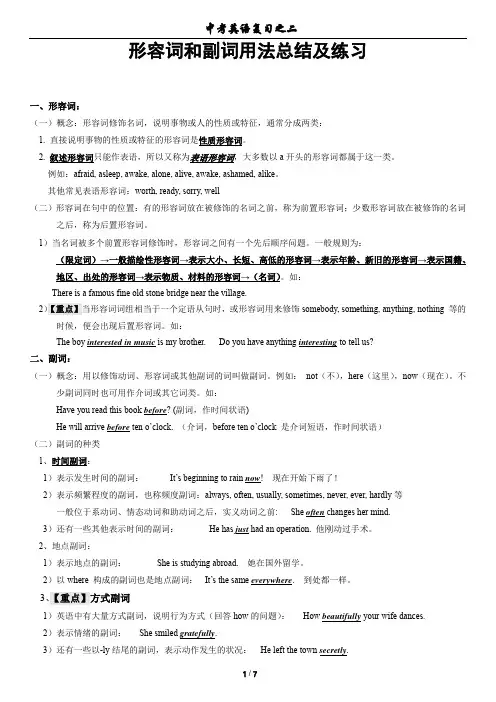
形容词和副词用法总结及练习一、形容词:(一)概念:形容词修饰名词,说明事物或人的性质或特征,通常分成两类:1. 直接说明事物的性质或特征的形容词是性质形容词。
2. 叙述形容词只能作表语,所以又称为表语形容词,大多数以a开头的形容词都属于这一类。
例如:afraid, asleep, awake, alone, alive, awake, ashamed, alike。
其他常见表语形容词:worth, ready, sorry, well(二)形容词在句中的位置:有的形容词放在被修饰的名词之前,称为前置形容词;少数形容词放在被修饰的名词之后,称为后置形容词。
1)当名词被多个前置形容词修饰时,形容词之间有一个先后顺序问题。
一般规则为:(限定词)→一般描绘性形容词→表示大小、长短、高低的形容词→表示年龄、新旧的形容词→表示国籍、地区、出处的形容词→表示物质、材料的形容词→(名词)。
如:There is a famous fine old stone bridge near the village.2)【重点】当形容词词组相当于一个定语从句时,或形容词用来修饰somebody, something, anything, nothing 等的时候,便会出现后置形容词。
如:The boy interested in music is my brother. Do you have anything interesting to tell us?二、副词:(一)概念:用以修饰动词、形容词或其他副词的词叫做副词。
例如:not(不),here(这里),now(现在)。
不少副词同时也可用作介词或其它词类。
如:Have you read this book before? (副词,作时间状语)He will arrive before ten o’clock. (介词,before ten o’clock 是介词短语,作时间状语)(二)副词的种类1、时间副词:1)表示发生时间的副词:It’s beginning to rain now! 现在开始下雨了!2)表示频繁程度的副词,也称频度副词:always, often, usually, sometimes, never, ever, hardly等一般位于系动词、情态动词和助动词之后,实义动词之前: She often changes her mind.3)还有一些其他表示时间的副词:He has just had an operation. 他刚动过手术。
中考英语形容词-副词复习
形容词的构成通常有:
1、+ful
forget—forgetful
help—helpful
wonder—wonderful use—useful
care—careful
beauty—beautiful
thank-thankful
colour ----colourful
farther/further farthest/furthest older/elder oldest/eldest
as+形容词原形+as
Tom is as tall as Mike.
There are as many students in our
school as yours.
否定 not as+形容词原形+as “和… 不一样”
注意:
中考英语专项复习 形容词和副词
①最高级前可以有序数词来修饰。例如:
Which is the first most useful
invention? 哪一个是第一个最有用途的发明?
②如果形容词最高级前有物主代词,指示代 词,名词所有格时,则不必加定冠词the。 例如:
Yesterday was my busiest day. 昨天是 我最忙碌的一天。
Which is easier, maths or English? 3、能修饰比较级的副词及短:much(…的多)、 a lot(…的多)、even(更…)、still(更…)、a bit/alittle(…一点儿)
This city is much more beautiful than
hat one
明确这两种词的基本意义以及在语句中的功能和 位置, 如形容词具有修饰和限定作用,一般用来 修饰名词,在语句中可用作定语和表语;
中考形容词和副词的用法总结

中考形容词和副词的用法总结形容词和副词都是起修饰作用的词,形容词修饰名词和代词。
副词修饰动词,形容词和其他副词或整个句子。
一形容词的构成1 本身是形容词。
如:good,happy等。
2 由名词加y构成:sun—sunny,wind—-windy,rain——rainy,flower—-flowery.3.由名词+-able,+-ent,+-en,+-al,+-less,+-ful,+-ing,+-ive,等构成,如:comfort—comfortable,differ—different,nation—national, wood—wooden, care—- careful,care—careless, excite—-exciting, act—-active.4.由名词+ly构成形容词,如:friendly,lonely, lovely,lively,likely,ugly,brotherly, motherly,fatherly,daily,weekly,monthly,yearly,early,manly,orderly,deadly,等。
5 复合形容词如:kind-hearted,warm-hearted,well-educated,good-looking,man-made,Harding-working,peace-lovin g,new-born, snow-white,duty-free.二形容词的作用1 做定语修饰名词和代词a good boy,something new,等。
2 做表语,He is happy.3 作宾语补足语I found him hard-working.4 作主语补足语He was found hard-working.(被动语态中)5 做主语或宾语(前面加the)The new replaces the old.新事物代替旧事物。
6伴随状语Tired and hot, we have to stop to have a rest.三形容词的位置1 放在所修饰的名词前,a red coat.2 放在不定代词的后面something important.3 长宽高深等形容词放在数词+名词的后面,如:five meters high/deep/wide/long, six years old,4 enough 放在形容词和副词之后,名词前后均可。
中考英语词形变化汇总

中考词形变化汇总一、名词—形容词health—healthyluck—luckysalt—saltysleep—sleepycloud—cloudyrain—rainysnow—snowywind—windyfog—foggysun—sunnyfun—funnynoise—noisyshine—shinytaste—tastyfriend—friendlylove—lovelyweek—weeklygold—goldenwood—woodenwool—woolenwest—westerneast—easternnorth—northernsouth—southerneducation—educationaltradition—traditionalmusic—musicalperson—personalculture—culturalnature—natural practice—practical medicine—medical physics—physical danger—dangerous humor—humorous beauty—beautiful cheer—cheerful delight—delightful peace—peaceful power—powerful success—successful wonder—wonderful end—endless home—homeless noise—noiseless care—careful—careless cheer—cheerful—cheerless color—colorful—colorless harm—harmful—harmless help—helpful—helpless hope—hopeful—hopeless meaning—meaningful—meaningless use—useful—useless fashion—fashionable value—valuable energy—energetic fool—foolish America—American Britain—British England—English China—Chinese Japan—JapaneseFrance—French二、动词—形容词amaze—amazed—amazingbore—bored—boringdisturb—disturbed—disturbingexcite—excited—excitingfrighten—frightened—frighteninginterest—interested—interestingrelax—relaxed—relaxingsurprise—surprised—surprisingsatisfy—satisfied—satisfyingtire—tired—tiringworry—worried—worryingscare—scaredstress—stressed—stressfulorganize—organizeddie—deadlive—alive —livingsleep—asleep—sleeplesswake—awakeact—activecreate—creativecome—comingfollow—followingsmile—smiling三、形容词—副词polite—politelysure—surelysafe—safelywide—widelytrue—truly comfortable—comfortably gentle—gently simple—simply terrible—terribly possible—possibly probable—probably angry—angrily busy—busily easy—easily happy—happily heavy—heavily healthy—healthily lucky—luckily noisy—noisily unlucky—unluckily bright—brightly calm—calmly clear—clearly correct—correctly deep—deeply different—differently excited—excitedly final—finally free—freely loud—loudly neat—neatly pleasant—pleasantly quiet—quietly quick—quickly real—really recent—recently regular—regularly sad—sadly slow—slowlysoft—softlysudden—suddenlyusual—usuallybeautiful—beautifullycareful—carefullycareless—carelesslypeaceful—peacefullysuccessful—successfullywonderful—wonderfully四、动词—名词call—callerclimb—climberdance—dancerdesign—designerdrive—driverhunt—hunterlead—leaderown—ownerorganize—organizerperform—performerplay—playerprint—printerproduce—producerread—readerreport—reporterrecord—recordersing—singerspeak—speakertravel—traveller/travelerwait—waiter—waitresswork—workerwrite—writer swim—swimmer shop—shopperrun—runnerrob—robberrub—rubberwin—winner act—actor—actress collect—collector—collection visit—visitor invent—inventor—invention direct—director—direction educate—educator—education operate—operator—operation protect—protection suggest—suggestion celebrate—celebration communicate—communication congratulate—congratulation donate—donation pollute—pollution invite—invitation organize—organization introduce—introduction achieve—achievement advertise—advertisement arrange—arrangement excite—excitement improve—improvement agree—agreement develop—development achieve—achievement move—movement punish—punishment treat—treatmentbreathe—breathdie —death grow—growth arrive—arrival choose—choice decide—decision enter—entrance marry—marriage perform—performance rob—robbery serve—service think—thought weigh—weight hike—hiking begin—beginning jog—jogging swim—swimming skate—skating shake—shaking write—writing ski—skiing walk—walking end—ending build—building cook—cooking cross—crossing turn—turning hear—hearing meet—meeting draw—drawing paint—painting train—training warn—warning spell—spellingread—reading五、名词—名词(表示人)art—artisttour—touristscience—scientistpiano—pianistviolin—violist/violinistmusic—musician六、形容词—名词kind—kindnessill—illnesssick—sicknessrich—richnesssad—sadnesscareful—carefulnesscareless—carelessnessugly—uglinesshappy—happinessunhappy—unhappinessdifferent—differencepatient—patienceconfident—confidencedifficult—difficultysafe—safetyable—abilitywise—wisdomhigh—heightdeep—depthwide—widthlong—lengthstrong—strengthwarm—warmthtrue—truthyoung—youth七、加前缀un-,im-,in-,ir-,dis-变反义词able—unablecomfortable—uncomfortablecommon—uncommonfriendly—unfriendlyfair—unfairgrateful—ungratefulhappy—unhappyhealthy—unhealthyhelpful—unhelpfulimportant—unimportantkind—unkindlike—unlikelucky—unluckyluckily—unluckilynecessary—unnecessarypleasant—unpleasantpopular—unpopularusual—unusualwelcome—unwelcomepatient—impatientpossible—impossiblepolite—impolitecorrect—incorrectregular—irregularappear—disappearcover—discoverhonest—dishonestlike—dislike八、需双写最后一个字母变现在分词的动词begin—beginningchat—chattingclap—clappingcut—cuttingdrop—droppingplan—planningrun—runningsit—sittingshop—shoppingstop—stoppingswim—swimmingwin—winning九、双写最后一个字母再加-er/-est变比较级/最高级的形容词和副词wet—wetter—wettestmad—madder—maddestsad—sadder—saddesthot—hotter—hottestslim—slimmer—slimmestthin—thinner—thinnestfat—fatter—fattestbig—bigger—biggest十、不规则形容词/副词的比较级、最高级good—better—bestlittle—less—leastfar—farther/further—farthest/furthestbad/badly/ill—worse—worstmany/much—more—most十一、复数变化不规则的名词foot—feettooth—teethmouse—micechild—childrenman—menwoman—womenfireman—firemenpoliceman—policemenpostman—postmensalesman—salesmensheep—sheepfish—fish/fishesChinese—ChineseJapanese—Japanese十二、不规则动词(一)AAA型(原形→原形→原形) 原形过去式过去分词中文cut cut cut 切,割cost cost cost 花费hit hit hit 撞,击hurt hurt hurt 伤害let let let 让put put put 放read read read 读set set set 安排原形过去式过去分词中文becomebecamebecome 成为come came come 来run ran run 跑1.原形→ew→own原形过去式过去分词中文blow blew blown 吹fly flew flown 飞grow grew grown 生长know knew known 知道原形过去式过去分词中文begin began begun 开始drink drank drunk 喝ring rang rung 打电话sing sang sung 唱swim swam swum 游泳原形过去式过去分词中文choose chose chosen 选择freeze froze frozen 冻speak spoke spoken 说原形过去式过去分词中文eat ate eaten 吃fall fell fallen 吃下1.原形→ought→ought。
中考英语语法总结:形容词

4、位于宾语之后作宾语,常与 make,leave, Everyone should make his own life colourful. keep 等动词连用
6、比较级结构可以表示最高级含义
He listens to the teacher more carefully than any other student in our class.
7、某人见过最......
It is the most interesting movie that i have ever seen.
Make me angry
The+形容词表示一类人,谓 The dead;the living;the rich;
语动词用复数
the poor
二、变化规则 变化规则 1、一般加-er;-est
例子 Long-longer-longest; short-shorter-shortest
2、以 e 结尾加 r 和 est
Our school is three times as big as theirs.
As much/many...+as 表示前后的数量相同
John earns as much money as his brother.
As+原级+as+用作比喻的名词,意为“像...... He is as busy as a bee. 一样”此结构可以构成许多习惯用语,多用 于口语
5、多音节词和部分双音节词,在词的前面加 Beautiful-more beautiful-most beautiful
more 和 most
Delicious-more delicious-most delicious
中考英语形容词汇分类汇总

中考英语形容词汇分类汇总Aable 有才干的,能干的active 主动的,活跃的academic: 形容擅长或对学术活动、态度或方法感兴趣的人;adaptable 适应性强的adroit 灵巧的,机敏的adventurous: 形容充满激情,敢于冒险,愿意接受新的想法和方法的人;advocate: 形容支持或恳求某项事业或想法的人;aggressive 有进取心的alert 机灵的amazing: 形容令人敬畏的,不可思议的人;ambitious 有雄心壮志的amiable 和蔼可亲的amicable 友好的analytical 善于分析的appreciative: 形容欣赏或表示感谢付出努力的人apprehensive 有理解力的argumentative 好争辩的aspiring 有志气的,有抱负的attractive 有魅力的audacious 大胆的,有冒险精神的awesome: 形容非常令人印象深刻,令人惊叹的人Bbad-tempered 脾气暴燥的bigmouth 多嘴多舌的bland 冷漠的bold: 形容一个自信,勇敢的人bossy 专横跋扈的brave 勇敢的brilliant 有才气的bright: 形容一个聪明、敏锐、聪明的人Ccalm: 形容内心平静、沉着的人capable 有能力的,有才能的careful 办事仔细的caring 有同情心的candid 正直的clever 机灵的,聪明的challenging: 形容喜欢考验自己的能力,挑战自己极限的人charitable 宽厚的charming: 形容令人着迷的人cheerful 开朗的childish 幼稚的collaborative: 形容喜欢与另一方一起从事某项活动或任务的人clever: 形容一个头脑敏锐、聪明的人collected: 形容镇定的人comical 滑稽的competent 能胜任的composed: 形容沉着冷静,善于控制住自己的情绪的人conceited 自以为是的concerned: 形容关心,担心他人的人confident 有信心的conscientious 认真的,自觉的considerate 体贴的constructive 建设性的contemplative 好沉思的cool: 形容帅气、镇静的人cooperative 有合作精神的courageous 勇敢的,有胆量的creative 富创造力的cultured 有教养的curious: 形容渴望学习或了解特定主题或兴趣的人Ddashing 有一股子冲劲的,有拼搏精神的dedicated 有奉献精神的demanding 苛刻的determined 坚决的devoted 有献身精神的dependable 可靠的diplomatic 老练的,有策略的distinguished: 形容有尊严、有杰出成就并受到尊重的人depressing 沉闷的disciplined 守纪律的discreet (在行动,说话等方面)谨慎的dishonest 不诚实的disorganized 无组织的dutiful 尽职的dynamic 精悍的Eearnest 认真的easy-going 随和的efficient 有效率的effective: 形容成功达到预期结果的人,工作学习效率高的人empathetic: 形容愿意分享并理解他人感受,善于将心比心,换位思考的人;energetic 精力充沛的enthusiastic 充满热情的expressive 善于表达enthusiastic: 形容对某个话题充满热情和兴奋的人experienced: 形容具有大量知识或技能的人Ffaithful 守信的,忠诚的fair: 形容公正和诚实,遵守制定的规则或标准的人;fantastic: 形容令人印象深刻的,了不起的,杰出的人flexible: 形容适应性强、能够轻松改变并适应不同的条件和环境的人;forceful (性格)坚强的focused: 形容专注于手头任务的人forgetful 健忘的fortunate: 形容非常幸运的人frank 直率的,真诚的friendly 友好的frugal 俭朴的fun: 形容有趣、愉快、有趣的人funny 有趣的,古怪的Ggenerous 宽宏大量的genteel 有教养的gentle 有礼貌的good-natured: 形容脾气好,有耐心、善良的人grateful: 形容一个表现出感恩、感激的人greedy贪婪的gullible 容易受骗上当的Hhappy 开心的hard-working 勤劳的have an inquiring mind 爱动脑筋的hearty 精神饱满的helpful 助人的,有益的helpless 无助的,没用的honest 诚实的hospitable 殷勤的humble 恭顺的humorous 幽默的hopeful: 形容一个对未来表现出积极乐观的人Iimaginative: 形容有创造力,有创造力,总是想出新的想法的人impartial 公正的inconsiderate 不顾及别人的,轻率的independent 有主见的industrious 勤奋的ingenious 有独创性的initiative 首创精神innovative: 形容一个有原创性和创造力的人,总是引入新的想法的人;inspiring: 形容激发别人灵感、创造或感受某事的未来良好愿望的人;intellective 有智力的intelligent 理解力强的inventive 有发明才能的,有创造力的invested: 形容众所周知,在工作中非常投入的人involved: 形容参与或致力于某项事业、事务的人Jjust 正直的joyful: 形容满心欢喜、欣喜若狂的人Kkind 仁慈的,和蔼的kind-hearted 好心的knowledgeable 有见识的Llazy 懒惰的,懒散的learned 精通某门学问的liberal 心胸宽大的logical 条理分明的lovely: 形容美丽的、漂亮的人loyal 忠心耿耿的Mmean 吝啬的methodical 有方法的modest 谦虚的moody 情绪化的motivated 目的明确的Nnarrow-minded 心胸狭窄的nasty 下流的,令人厌恶的nice 和蔼的,挑剔的,正派的noisy 聒噪的Oobedient 听话孝顺的objective 客观的organized: 形容做事有条理、有计划的人;open-minded 虚心的optimistic 乐观的orderly 守纪律的original 有独创性的outgoing 外向友好的Ppainstaking 辛勤的,苦干的,刻苦的passionate 充满热情的patient: 形容能容忍延误,表现出不抱怨的态度的人persevering 不屈不挠的persistent: 形容坚持不懈的人pessimistic 悲观的pleasant: 形容讨人喜欢、体贴、友善、令人愉快的人polite 有礼貌的positive: 形容乐观、自信、具有积极心态的人popular 受欢迎的practical 实际的precise 一丝不苟的prepared: 形容具有提前准备做某事或处理某事能力的人;proactive: 形容一个有动力、负责的人professional: 形容自信、熟练、熟练的人,在某专业方面具有较强能力的人;punctual 严守时刻的purposeful 意志坚强的pushy 有进取心的Personality 性格Qqualified 合格的Rrational 有理性的realistic 实事求是的reasonable 讲道理的reflective: 形容深思熟虑的人;reliable 可信赖的resolved: 形容决心做某事或完成某事的人;respectful: 形容尊重他人的人responsible 负责的romantic 浪漫的,空想的Sself-conscious 自觉的selfish 自私的selfless 无私的sensible 明白事理的sensitive 敏感的serious: 形容态度严肃或深思熟虑的人;sincere 真诚的skeptical 多疑的smart 精明的sociable 好交际的specific: 形容一个人对他们的期望是准确和清楚的人;spirited 生气勃勃的sporting 光明正大的steady 塌实的straightforward 老实的strict 严格的stubborn 顽固的固执的successful: 形容成功完成了他们打算做的事情的人supportive 助人的systematic 有系统的strong-willed 意志坚强的sympathetic确有同情心的sweet: 形容令人愉快的,善良的,对别人温柔的人sweet-tempered 性情温和的Ttalented 有才能的temperate 稳健的thankful: 形容懂得感恩的人;thoughtful 体贴人的timid 但小的,羞怯的tireless 孜孜不倦的tolerant 容忍的trustful 容易相信人的trustworthy 值得信任的Uunderstanding 理解人的ungrateful 不领情的unselfish 无私的upright 正直的Vvirtuous 善良的,贞洁的Wwarm: 热情的,友好的,并在他们的行为中表现出很多感情或热情的人;wise: 形容展示知识、经验和良好判断力的人;wise: 形容展示知识、经验和良好判断力的人;Physical Appearance 外貌►Hair 头发Straight 直(发)Curly 卷(发)Cropped 短(发)Black 黑色Auburn 红褐色Blonde 金(发)Brunette 深褐色►Height 身高Towering 人高马大Tapering 又高又瘦Lanky 瘦长的(贬义)Squat 矮胖的Dwarfish 矮小的►Shapes 身材Curvaceous 有曲线的(用于女性)Chiseled 轮廓分明的(用于男性)Rotund 浑圆的Plump 圆胖的Well-built 健美的Personality 个性Calm 冷静的Impulsive 冲动的Arrogant 傲慢的Humble 谦卑的Eccentric 古怪的Charismatic 有魅力的Extroverted 外向的Introverted 内向的Easy-going 随和的Aggressive 好胜的,咄咄逼人的Shy 害羞的Characteristics/Traits 特征Adorable 可爱的Clever 聪明的Intelligent 智慧的,理解力强的Generous 慷慨的Mysterious 神秘的,难懂的Creative 富有创造力的Flexible 灵活的,能变通的Sensitive 敏感的Moody 情绪化的Snobbish 势利的;自命不凡的Sensible 理智的Emotional 感性的Sophisticated 世故的Grumpy 性格暴躁的Humorous 幽默的Excitable 易激动的Industrious 勤奋的Style 时尚风格Flamboyant 华丽浮夸Chic 时髦雅致Eclectic 兼收并蓄Modest 简约端庄Casual 休闲。
初中英语中考语法形容词和副词总结归纳
初中英语中考语法形容词和副词总结归纳形容词和副词是中考英语考试中常见的语法知识点,下面是对形容词和副词的总结归纳:形容词:1.形容词用来描述名词的性质或特征。
一般放在名词前面,修饰名词。
2.形容词有三个级别:原级、比较级和最高级。
-原级用于描述一个人、物、事物的性质,形容词本身的形式;- 比较级用于比较两个或多个人、物、事物的性质的大小、程度等,一般在形容词前面加上"more";- 最高级用于比较三个或三个以上人、物、事物的性质的大小、程度等,一般在形容词前面加上"most"。
3. 形容词的比较级和最高级可以加上字尾"-er"和"-est",或者用"more"和"most"来表示。
4. 形容词也可以用来修饰不定代词,如"something good"、"someone nice"等。
副词:1.副词用来修饰动词、形容词、其他副词和整个句子,表示方式、程度、时间、地点等。
2. 副词的形式大多是在形容词词尾加上"-ly",但也有不规则变化的副词形式。
3. 副词有原级和比较级,形式和形容词的比较级一样,可以在副词前面加上"more"来表示。
注意事项:1.形容词和副词的比较级和最高级要根据词的性质和词尾变化,不是所有形容词和副词都可以直接加上字尾来表示比较级和最高级。
2.形容词和副词的用法、位置和修饰的词性有一定的规律,需要具体问题具体分析。
以上是对初中英语中考语法中形容词和副词的总结归纳,希望能够帮助到你。
中考英语高频词汇表之形容词
adj.似乎的;可能的
be likely to do很可能地
angry
adj.生气的;愤怒的
angrily adv.愤怒地;anger n.怒气
hungry
adj.饥饿的
hunger n.饥饿
asleep
adj.睡着的
fall asleep睡着;sleep v./n.睡觉;sleepy adj.犯困的
play n./v.玩耍;play with和某人一起玩
helpful
adj.有帮助的
help n./v.帮助;help with帮助某人某事
hopeful
adj.有希望的
hope n./v.希望;hope to do希望做某事
successful
adj.成功的
successfully adv.成功地
bad
adj.坏的;差的
bad→worse→worst
be bad for对..有害处;badly adv.严重地
good
adj.好的;优秀的
good→better→best
be good at擅长做某事
be good with擅长和某人打交道
be good to对...好的;be good for对...好
sun n.太阳;[近]clear adj.晴朗的
rainy
adj.下雨的
rain v./n.下雨/雨
cloudy
adj.乌云的
cloud n.云
windy
adj.有风的
wind n.风
snowy
adj.下雪的
snow n./v.雪/下雪
foggy
adj.有雾的
fog n.雾
中考英语语法汇总专题复习(四)形容词与副词
专题四形容词与副词一. 形容词:形容词主要用来修饰名词或代词,表示人或事物的性质、状态和特征的。
形容词在句中可用作表语、定语、补语等。
1作定语,放在名词前,something, anything, nothing, everything等复合不定代词之后;形容修饰疑问代词时,也须放在其后。
如:It’s a cold and windy day. Would you likesomething hot to drink?What else can you see? 你还能看见其它什么东西?2.作表语,放在系动词之后。
常见的系动词有be, become, get(变), turn(变), feel, look(看起来),seem, smell, sound, taste。
如:He looks happy today. Silk feels soft. 绸子摸起来很软。
Milk is able to turn bad easily in summer.3.作宾补,放在宾语之后★We are making our country strong.4.形容词的排列顺序:如:a big yellow Chinese wooden ship(一个黄色的大型中国木船)★前置形容词(作定语)的顺序为:限定描绘大长高,形状年龄和新老;颜色国籍跟材料,作用类别往后靠;①“限定词”包括:冠词、物主代词、指示代词、或数词等。
②表观点的“描绘”性形容词如:beautiful、bad、interesting、great等。
③“大长高”表示大小、长短、高低等一些词big,small, ,short, tall④表示“形状”的词如:round, square等。
⑤年龄,新旧,颜色的形容词young,old,new,white,red等⑥“国籍”指一个国家或地区的词。
Chinese,rural(乡村的)⑦“材料”的词如:wooden, woolen, stone,silk等。
中考英语形容词汇总
中考英语形容词汇总
以下是中考英语常用的形容词汇总,用于描述人、地点、物品等。
在写作或口语表达中,适当运用这些形容词可以丰富语言表达,使句子更具有生动感和准确度。
1. 激昂的 (exciting): 引人激动或兴奋的,可以用来描述一场精
彩的比赛、音乐会等。
2. 幽默的 (humorous): 有趣且引人发笑的,用于形容幽默的故事、笑话等。
3. 温柔的 (gentle): 和蔼可亲、温和的,常用来描述人的性格或
动植物的特质。
4. 充满活力的 (energetic): 精力旺盛的,用于描述充满活力的人
或场景。
5. 勤奋的 (diligent): 努力工作或研究的,用于形容勤奋的学生
或员工。
6. 勇敢的(brave): 不怕困难或危险的,常用来描述勇敢的士兵、消防员等。
7. 聪明的 (intelligent): 智力高、机智的,用于形容聪明的人或
动物。
8. 友好的 (friendly): 和善且友好的,常用来描述友好的邻居、同学等。
9. 诚实的 (honest): 诚实守信的,用于形容诚实的人或行为。
10. 热情的 (enthusiastic): 热情洋溢的,用于描述热情的演讲、活动等。
记住,适当使用这些形容词可以使你的写作更生动、具体,但注意不要过度使用或使用不恰当的形容词。
在写作时要根据实际情况选择合适的形容词,使句子更准确地表达你想要传达的意思。
希望以上内容有所帮助,祝你取得好成绩!。