
牛津译林版六年级下册英语(6B)unit2 Good habits 复习课件
unit 2
四会单词
1.habit 习惯 2.never 从不
te 迟,晚 4.finish
5.tidy干净的,整齐的
6.fast
快的(地)
7. bad 不好的,坏的
8. sleepy
困的,困倦的
9.slowly
慢速地
10.badly
差地,不好
完成
1.a good boy一个好男孩 (good是形容词,放在 名词boy前修饰名词,即adj.+n.) 以一个红色的苹果。
7.before bedtime睡觉 8.at home在家, at school在学校 at 加小地点, at 6 yearsold ,=at 6 后可加 年龄。
9.put his things in order把他的东西 有序摆放 put…in order把…摆放有序, keep…in order保持…井井有条
You shouldn't shout in the classroom
in,on,at的时间用法: in的后面跟比较长的时间段:
in April 在四月,in three days 三天内, in a week 在一周里,in the future 在未来 in也用在早中晚前:
in the morning/afternoon/evening 在早上/下午/ 晚上
we should keep the classroom quiet . 16. help his parents帮助他的父母 help 动词,帮助 。
17. have some bad habits有许多坏习惯 18. in the morning在早上/上午 19. at night在晚上 20. go to bed early睡得早
a red apple . good(反)—bad, boy(反)—girl
2.have many good habits有许多好习惯 many等同于some, a lot of, lots of many后加 名词复数。 许多的学生。 many students 。=
a lot of students =
5.go to bed late睡觉晚 late(形)晚的—late(副)晚地
反义词: early 。 用法与early 相同 。
6.brush one’s teeth刷某人的牙 (其中one’s为物主代词:his他的,her她 的,its它的,my我的,your你的,our我 们的,their他们的) brush 动词,三单 brushes tooth,复数 teeth
It was time to have lunch. 再如:
It’s time for school. 相当于 It’s time to go to school. It’s time for class. 相当于
It’s time to have a class.
6. There was a parrot show in the park. 在公园有一个鹦鹉表演。
ear, dear, hear, near, year, nearly
语法:一般现在时
1.概念:(1)表示经常性或习惯性的动作; (2)表示人或事物的特征或状态 (3)表示客观存在的事实或真理。常用于一般 现在时的标志性时间状语及短语有:
always(总是),usually(通常),often(常常), sometimes(有时),never(从来不),once a week(一个星期一次),om Sundays(在星期日), every day /week/month/year(每天、星期、月、 年)等。
(3)一般疑问句:当谓语动词是行为动词时,在句首加 do或does构成。
主语是第三人称单数时用does,其他用do,谓语动词用 原形。
谓语动词是be动词时,be动词只需要与主语位置对调, 句末用问号。
2.构成: (1)肯定句 a:be动词:主语+am/is/are+其他
I am a teacher. b:行为动词:主语+行为动词+其他
We go to school at seven. c:当主语是第三人称单数时,一般在
行为动词后加s或es
He likes singing.
Nancy has a book.
The teacher lets Tom read English
every day . 2. show sb around带某人四处转转(其 中sb为人称代词宾格) Tom 带领我参观他的房子
Tom shows me around his house .
1. go into进入 tom 进入了教室。
5. It was time for lunch. 该吃午饭的时候了。
这是It’s time for …句型的过去时表达,另外表示 “该…的时候了”还可以用 it’s time to. It’s time for …后面跟名词或动名词,
It’s time to…后面跟动词原形,两者可以互换, 如上述句子可以转化为
at a time 一次 at也用在不含day的节日前: at Christmas 在圣诞节 at Chinese New Year 在中国新年 at Spring Festival
2. It was sunny in the morning. 在早晨天气 是晴朗的. 这是用来描写天气的过去时的句型,表示天气的 形容词一般由其相对应的名词或动词变化而来。 如:sun --- sunny cloud --- cloudy wind --- windy rain --- rainy 此处以rain为例,复习几种词性的变化。 (1)rain作为名词用,是不可数:
21. feel sleepy感觉困 feel 是连系动词,后加形容词。 Tom feels hungry。 22. know well很了解 23. last night昨天晚上 过去式的标志。
24. walk fast走的快 fast 形容词,副词不变。 25.on time准时
课文中动词三单形式 1. have—has 2. get—gets 3. go—goes 4. brush—brushes 5. put—puts 6. finish—finishes 7. listen—listens 8. do—does
There is a lot of rain today. (2)rain作为动词用:
It rained yesterday./ It often rains in Londn. (3)rainy作为形容词:
It is often rainy in summer.
3. The weather became windy and cloudy. 天气变得既有风又多云了。 这里became是become的过去式,译为“变得”, 是系动词,用于修饰形容词,即系动词+ 形容词, 另外我们学过的系动词还有be、get、look 如:
9. keep-keeps 10. help—helps 11. feel—feels 12. know—knows
三.形容词变副词 1. good—
well 2. early—
early 3. late—
late
1. let sb do sth让某人做某事(其中do 为动词原形) 老师让汤姆每天读英语。
(2)否定句: 一般在谓语动词前加do(es) not 构成,动词用原
形。 be 动词后直接加not. I am a teacher. 否定句
I am not a teacher. We go to school at seven. 否定句
We don`t go to school at seven. He likes singing. 否定句 He doesn`t like singing.
lots of students .
3.get up early起的早 (early是副词,放在动词get后修饰动词,即 v.+adv.) early(形)早的—early(副词)早地 早班车
the early bus。 形容词 上学早。
Go to school early . 副词
4.in the morning在早上/上午
Tom puts the book in order .
tom keeps the book in order .
10.finish his homework完成他的家庭作 业 do one’s homework做某人的家庭作业 do his homework late做他的家庭作业晚
11.before dinner晚餐前
on后面跟的是具体的日期,一般指一天:
on Monday/Tuesday/Wednesday/Thursday 在周一/周二/周三/周四, on the second of March 在三月二日, on Mother’s Day 在母亲节, on your birthday 在你生日 on也用在某一天的早中晚:
Tom goes into the classroom . go into +地点, 2. living room客厅 3. on the floor在地板上 4. under the bed在床下 5. put…in order把…有序摆放 should+V原 (should 是情态动词,后 跟动词原形,否定后加not 。
on Friday morning在周五早上 on Saturday afternoon在周六下午
on Sunday evening在周日晚上 on Chinese New Year’s Eve 在除夕夜
at后面跟的是一个确定的时间点:
at eleven (o’clock) 在十一点 at night 在夜里 at weekends 在周末
四会单词
1.habit 习惯 2.never 从不
te 迟,晚 4.finish
5.tidy干净的,整齐的
6.fast
快的(地)
7. bad 不好的,坏的
8. sleepy
困的,困倦的
9.slowly
慢速地
10.badly
差地,不好
完成
1.a good boy一个好男孩 (good是形容词,放在 名词boy前修饰名词,即adj.+n.) 以一个红色的苹果。
7.before bedtime睡觉 8.at home在家, at school在学校 at 加小地点, at 6 yearsold ,=at 6 后可加 年龄。
9.put his things in order把他的东西 有序摆放 put…in order把…摆放有序, keep…in order保持…井井有条
You shouldn't shout in the classroom
in,on,at的时间用法: in的后面跟比较长的时间段:
in April 在四月,in three days 三天内, in a week 在一周里,in the future 在未来 in也用在早中晚前:
in the morning/afternoon/evening 在早上/下午/ 晚上
we should keep the classroom quiet . 16. help his parents帮助他的父母 help 动词,帮助 。
17. have some bad habits有许多坏习惯 18. in the morning在早上/上午 19. at night在晚上 20. go to bed early睡得早
a red apple . good(反)—bad, boy(反)—girl
2.have many good habits有许多好习惯 many等同于some, a lot of, lots of many后加 名词复数。 许多的学生。 many students 。=
a lot of students =
5.go to bed late睡觉晚 late(形)晚的—late(副)晚地
反义词: early 。 用法与early 相同 。
6.brush one’s teeth刷某人的牙 (其中one’s为物主代词:his他的,her她 的,its它的,my我的,your你的,our我 们的,their他们的) brush 动词,三单 brushes tooth,复数 teeth
It was time to have lunch. 再如:
It’s time for school. 相当于 It’s time to go to school. It’s time for class. 相当于
It’s time to have a class.
6. There was a parrot show in the park. 在公园有一个鹦鹉表演。
ear, dear, hear, near, year, nearly
语法:一般现在时
1.概念:(1)表示经常性或习惯性的动作; (2)表示人或事物的特征或状态 (3)表示客观存在的事实或真理。常用于一般 现在时的标志性时间状语及短语有:
always(总是),usually(通常),often(常常), sometimes(有时),never(从来不),once a week(一个星期一次),om Sundays(在星期日), every day /week/month/year(每天、星期、月、 年)等。
(3)一般疑问句:当谓语动词是行为动词时,在句首加 do或does构成。
主语是第三人称单数时用does,其他用do,谓语动词用 原形。
谓语动词是be动词时,be动词只需要与主语位置对调, 句末用问号。
2.构成: (1)肯定句 a:be动词:主语+am/is/are+其他
I am a teacher. b:行为动词:主语+行为动词+其他
We go to school at seven. c:当主语是第三人称单数时,一般在
行为动词后加s或es
He likes singing.
Nancy has a book.
The teacher lets Tom read English
every day . 2. show sb around带某人四处转转(其 中sb为人称代词宾格) Tom 带领我参观他的房子
Tom shows me around his house .
1. go into进入 tom 进入了教室。
5. It was time for lunch. 该吃午饭的时候了。
这是It’s time for …句型的过去时表达,另外表示 “该…的时候了”还可以用 it’s time to. It’s time for …后面跟名词或动名词,
It’s time to…后面跟动词原形,两者可以互换, 如上述句子可以转化为
at a time 一次 at也用在不含day的节日前: at Christmas 在圣诞节 at Chinese New Year 在中国新年 at Spring Festival
2. It was sunny in the morning. 在早晨天气 是晴朗的. 这是用来描写天气的过去时的句型,表示天气的 形容词一般由其相对应的名词或动词变化而来。 如:sun --- sunny cloud --- cloudy wind --- windy rain --- rainy 此处以rain为例,复习几种词性的变化。 (1)rain作为名词用,是不可数:
21. feel sleepy感觉困 feel 是连系动词,后加形容词。 Tom feels hungry。 22. know well很了解 23. last night昨天晚上 过去式的标志。
24. walk fast走的快 fast 形容词,副词不变。 25.on time准时
课文中动词三单形式 1. have—has 2. get—gets 3. go—goes 4. brush—brushes 5. put—puts 6. finish—finishes 7. listen—listens 8. do—does
There is a lot of rain today. (2)rain作为动词用:
It rained yesterday./ It often rains in Londn. (3)rainy作为形容词:
It is often rainy in summer.
3. The weather became windy and cloudy. 天气变得既有风又多云了。 这里became是become的过去式,译为“变得”, 是系动词,用于修饰形容词,即系动词+ 形容词, 另外我们学过的系动词还有be、get、look 如:
9. keep-keeps 10. help—helps 11. feel—feels 12. know—knows
三.形容词变副词 1. good—
well 2. early—
early 3. late—
late
1. let sb do sth让某人做某事(其中do 为动词原形) 老师让汤姆每天读英语。
(2)否定句: 一般在谓语动词前加do(es) not 构成,动词用原
形。 be 动词后直接加not. I am a teacher. 否定句
I am not a teacher. We go to school at seven. 否定句
We don`t go to school at seven. He likes singing. 否定句 He doesn`t like singing.
lots of students .
3.get up early起的早 (early是副词,放在动词get后修饰动词,即 v.+adv.) early(形)早的—early(副词)早地 早班车
the early bus。 形容词 上学早。
Go to school early . 副词
4.in the morning在早上/上午
Tom puts the book in order .
tom keeps the book in order .
10.finish his homework完成他的家庭作 业 do one’s homework做某人的家庭作业 do his homework late做他的家庭作业晚
11.before dinner晚餐前
on后面跟的是具体的日期,一般指一天:
on Monday/Tuesday/Wednesday/Thursday 在周一/周二/周三/周四, on the second of March 在三月二日, on Mother’s Day 在母亲节, on your birthday 在你生日 on也用在某一天的早中晚:
Tom goes into the classroom . go into +地点, 2. living room客厅 3. on the floor在地板上 4. under the bed在床下 5. put…in order把…有序摆放 should+V原 (should 是情态动词,后 跟动词原形,否定后加not 。
on Friday morning在周五早上 on Saturday afternoon在周六下午
on Sunday evening在周日晚上 on Chinese New Year’s Eve 在除夕夜
at后面跟的是一个确定的时间点:
at eleven (o’clock) 在十一点 at night 在夜里 at weekends 在周末
合集下载
牛津译林版Unit2Goodhabits课件

but
Tip:使用连接词,如:and, but, also,too…,表达更流畅。
I never waste time. I often finish my homework on time. And I never go to bed late at night.
I do sports and drink a lot of water every day. I always wash my hands before eating. I have my meals on time, too.
I always help my parents. I also sweep the floor at school. I am a good student.
Ending(结尾):I think I can be Top good habit Star. Do you think so?…
协作创作
Beginning(开头):Hello, I’m… I…
I never waste time. I often finish my homework on time. And I never go to bed late at night.
I do sports and drink a lot of water every day. It makes me strong and healthy. I always wash my hands before eating. It is important to keep clean. I have my meals on time, too.
I always help my parents . I usually sweep the floor at school. I always help my parentsand
Tip:使用连接词,如:and, but, also,too…,表达更流畅。
I never waste time. I often finish my homework on time. And I never go to bed late at night.
I do sports and drink a lot of water every day. I always wash my hands before eating. I have my meals on time, too.
I always help my parents. I also sweep the floor at school. I am a good student.
Ending(结尾):I think I can be Top good habit Star. Do you think so?…
协作创作
Beginning(开头):Hello, I’m… I…
I never waste time. I often finish my homework on time. And I never go to bed late at night.
I do sports and drink a lot of water every day. It makes me strong and healthy. I always wash my hands before eating. It is important to keep clean. I have my meals on time, too.
I always help my parents . I usually sweep the floor at school. I always help my parentsand
六年级下册英语课件-Unit2 Good habits(第1课时) |译林版(三起) (共18张PPT)

Tip:注意升调 降调 以及重读
六年级下册英语课件-Unit2 Good habits(第1课时) |译林版(三起) (共18张PPT)
六年级下册英语课件-Unit2 Good habits(第1课时) |译林版(三起) (共18张PPT)
Tip: Cooperate actively(积极合作) 选一个角色,小组尝试复述。可一起说,也可分角色说。加油~!
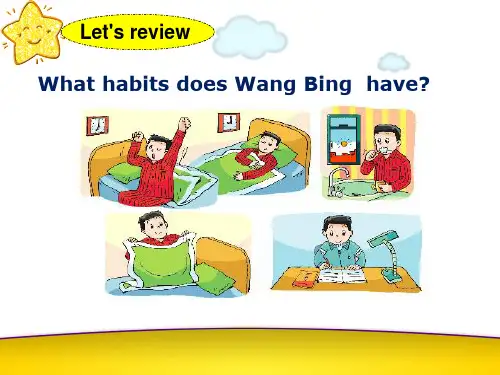
Wang Bing is a good boy. He has many good habits. Liu Tao is a good boy, too. But he has some bad habits.
He should/ shouldn’t…
六年级下册英语课件-Unit2 Good habits(第1课时) |译林版(三起) (共18张PPT)
六年级下册英语课件-Unit2 Good habits(第1课时) |译林版(三起) (共18张PPT)
What should/shouldn’t Liu Tao do?
Tip: Think deeply.(深入思考)
六年级下册英语课件-Unit2 Good habits(第1课时) |译林版(三起) (共18张PPT)
六年级下册英语课件-Unit2 Good habits(第1课时) |译林版(三起) (共18张PPT) 六年级下册英语课件-Unit2 Good habits(第1课时) |译林版(三起) (共18张PPT)
六年级下册英语课件-Unit2 Good habits(第1课时) |译林版(三起) (共18张PPT)
I uas.ufainlliyshfeinsishhohmoemweowrokrekaeralyrly . bI.alpwuatsysthpiuntgtshiinngosrdinerorder .
新译林版小学英语六年级下册Unit2《Goodhabits》课件

The boy is doing badly/well at school.
The man is singing badly/well.
Look and circle:
I go to school early/late in the morning.
The woman gets up early/late.
Read and find
I We They He He always usually often sometimes never have breakfast finish our homework do their homework feels sleepy goes to bed on time. before dinner. in the evening. in the morning. late.
Unit 2 Good habits
Story time & Grammar time
Good habits
Listen carefully
Speak loudly Read loudly
仔细地听
大声地讲 大声地读 认真地写
Write carefully
Watch and answer:
What habits do I have?
go to bed early at night.
Play a game
Tip: 你还能再想出一些好习惯吗? 小组内讨论,将纸条上的内容拼成一个好习惯。 请在小组内讨论,说一说,再 先在小组内读一读,再以自己小组的方式展示。 写下来吧!
请分别从四个信封中选出一张纸条。
Our good habits
E.g. I always
牛津译林版六年级英语下册Unit2 Good habits 课件 2

Did you go to bed late last night, Liu Tao?
Ouch!
Yes, but I’m not sleepy. I can walk fast.
-1-142- -
You shouldn’t go to bed late,LiuTao.
-13-
1G.eWt htoatknhoawbimtsedo Wang Bing and Liu Tao have?
tidy: not messy
1A.Wskhaantdhaanbswitserdo Wang Bing and Liu Tao have?
e f
a does his homework late at night
b gets up early
c
a
d
c goes to bed late d helps his parents
I get up early, never go to bed late.
从不
8:00 pm B12:I0f0i完npmi成sh my work before nine o’clock!
habits习惯
I often put my things in order. 把…放整齐
I keep my room clean and tidy.
试着找出Mike的故事书和你的 书在语言组织上的不同点。
He gets up early in the morning and never goes to bed late.
-2-
WangBing is a good boy. He brushes his teeth in the He has many good habits. morning and before bedtime.
六年级英语下册课件-Unit 2 Good habit-译林版
Let’s learn
or /ɔ:/
Tip: Find and discuss.
摘下or字母组合发/ɔ:/的苹果。
morning
forty
doctor
corn
actor
or
world
work more pork
Let’s read
or
corn more
forty pork morning
Let’s think
Why is Tina so angry?
Why is Tina so angry?
Why isΒιβλιοθήκη Tina so angry?Tina is s_h_o_w_i_n_g her friends a_r_o_u_n_d her house.
Bobby’s bedroom is messy and dirty .
I always get up early. I often read before bedtime. I usually finish my work late and go to bed late.
Think and write
(写写你的习惯,至少三个)
What habits do you have?
4. What does Tina say to Bobby ?
You should put your books and toys in order .
Listen and repeat
Tip: Imitate the pronunciation and
intonation.模仿语音语调。
Try to read
I always __________.
I usually __________. I often ___________. I sometimes _______. I never ___________.
英语六年级下牛津译林版unit 2 good habits课件(22张)
Unit 2 Good habits
Sound time& Cartoon time
Let's review!
There’re many rooms in the house. What are they? Can you say?
你还记得你学 过的房间类的 单词吗?
快速说出你所知道的房间类单词。
Look and read.
(摘苹果)
forty
pork more
north
morning
Tip:你看词能读吗? 如果你会读苹果上 的单词,苹果就被 你摘下来了。里面 有生词呀!
or /ɔ:/
Listen and write.
(挂灯笼)
born form
horn sorb
Tip:你听音能写吗? 快速拿出你的本子, 写下你听到的单词。 如果你能写出听到的 单词,请把它们挂到 树上吧。听到的单词 都是没学过的呀!
我只提示首字母呀!
b
bedroom
k
kitchen
b
bathroom
rooms
d
dining-room
s
sitting-room living room
s
study
Let's predict!
看到这些图片,你想说些什么?你能 提出哪些问题?提出问题可比回答问 题难呀!下面这些词也许对你有帮助。 小组内先讨论讨论吧。
Tip: 先看问题,再读短文,画关键句,回答问题,读文检查。
1. What bad habit does the pig have? He does not wash himself.
2.Why don’t the rabbit and the cow want to play with the pig? Because the pig is dirty. 3.What should the pig do? He should brush his teeth and take a bath every day. 4.Who makes the pig clean? The elephant does. 5.Do the rabbit and the cow play with the pig finally? Yes, they do.
Sound time& Cartoon time
Let's review!
There’re many rooms in the house. What are they? Can you say?
你还记得你学 过的房间类的 单词吗?
快速说出你所知道的房间类单词。
Look and read.
(摘苹果)
forty
pork more
north
morning
Tip:你看词能读吗? 如果你会读苹果上 的单词,苹果就被 你摘下来了。里面 有生词呀!
or /ɔ:/
Listen and write.
(挂灯笼)
born form
horn sorb
Tip:你听音能写吗? 快速拿出你的本子, 写下你听到的单词。 如果你能写出听到的 单词,请把它们挂到 树上吧。听到的单词 都是没学过的呀!
我只提示首字母呀!
b
bedroom
k
kitchen
b
bathroom
rooms
d
dining-room
s
sitting-room living room
s
study
Let's predict!
看到这些图片,你想说些什么?你能 提出哪些问题?提出问题可比回答问 题难呀!下面这些词也许对你有帮助。 小组内先讨论讨论吧。
Tip: 先看问题,再读短文,画关键句,回答问题,读文检查。
1. What bad habit does the pig have? He does not wash himself.
2.Why don’t the rabbit and the cow want to play with the pig? Because the pig is dirty. 3.What should the pig do? He should brush his teeth and take a bath every day. 4.Who makes the pig clean? The elephant does. 5.Do the rabbit and the cow play with the pig finally? Yes, they do.
牛津译林版六年级下册英语《Good habits》PPT(第二课时)
拓展:作动词,意为“写,记”。 eg:I’ll put it in my diary.我将会把它记在我的日记本里。 put sth.back为固定词组,意为“把某物放回原处”。 eg:please put the books back on the shelf.请把书放回原处。
Words
a lot of
We usually finish our homework before dinner.
They often do their homework in the evening.
He sometimes feels sleepy in the morning.
She never
goes to bed
3. We often eat a turkey at Christmas.(对画线部分提问)
What doyou often do at Christmas?
Exercise
4. The Dragon Boat Festivales before Teachers’ Day.(同义 句转换)
Teachers’ Day es after the Dragon Boat Festival. 5. I watched a film last Sunday. (对画线部分提问) What did you go last Sunday?
Unit 2
Good habits
第二课时
Words
show [ʃəʊ]
作动词,意为“展示”。 eg:The king shows his clothes to them.
国王展示了他的衣服给他们看。 小练习:汉译英:展示你的外套 _sh_o_w__y_o_u_r_c_o_a_t
Words
a lot of
We usually finish our homework before dinner.
They often do their homework in the evening.
He sometimes feels sleepy in the morning.
She never
goes to bed
3. We often eat a turkey at Christmas.(对画线部分提问)
What doyou often do at Christmas?
Exercise
4. The Dragon Boat Festivales before Teachers’ Day.(同义 句转换)
Teachers’ Day es after the Dragon Boat Festival. 5. I watched a film last Sunday. (对画线部分提问) What did you go last Sunday?
Unit 2
Good habits
第二课时
Words
show [ʃəʊ]
作动词,意为“展示”。 eg:The king shows his clothes to them.
国王展示了他的衣服给他们看。 小练习:汉译英:展示你的外套 _sh_o_w__y_o_u_r_c_o_a_t
新译林版小学英语六年级下册Unit2《Goodhabits》课件
人称代词
频度副词
动词
时间/地点
Make sentences with always, usually, often, sometimes, never :
Monday have 7:00 breakfast go to school have lunch go home Tuesday Wednesday Thursday Friday
2.登陆 ,完成老师布置 的口语作业。
Which is good?
Which is bad?
You usually finish your homework early.
Let’s review
Good habits
He gets up
, .
he goes to bed
He pHale Waihona Puke ts his order.in
He brushes and before
in the morning .
He finishes dinner.
before
10:30
He also help He also do home. at
. He goes to bed .
10:00
He
at
does his homework
.
He feels sleepy in .
Let’s find 提示:early, late, well, fast这些词前 面是什么词?
Read and find
I We They He He always usually often sometimes never have breakfast finish our homework do their homework feels sleepy goes to bed on time. before dinner. in the evening. in the morning. late.
译林版英语六下Unit 2《Good habits》ppt课件1
Did you go to bed late last night, Liu Tao?
Ouch!
Yes, but I’m not sleepy. I can walk fast.
-12-14-
You shouldn’t go to bed late,LiuTao.
-13-
Let’s repeat
Wang Bing and Liu Tao are good boys.
-10-8-8-
-11-9-
1.What habits do Wang Bing and Liu Tao have?
Did you go to bed late last night, Liu Tao? Ouch!
Wang Bing and Liu Tao
are friends. Wang Bing
自读课文,找出还有哪些练习中没有提到的习惯。
habits?
brushes his teeth in the morning and before bedtime.
b. gets up early f. puts his things in order e. finishes his homework early Task : 1、自读课文,划 He sometimes 出没提到的习惯。 feels ….in the
1.What habits do Wang Bing and Liu Tao have?
8:00 pm
B
完成
12:00 pm
I get up early, never go to bed late.
从不
I finish my work before nine o’clock!
Ouch!
Yes, but I’m not sleepy. I can walk fast.
-12-14-
You shouldn’t go to bed late,LiuTao.
-13-
Let’s repeat
Wang Bing and Liu Tao are good boys.
-10-8-8-
-11-9-
1.What habits do Wang Bing and Liu Tao have?
Did you go to bed late last night, Liu Tao? Ouch!
Wang Bing and Liu Tao
are friends. Wang Bing
自读课文,找出还有哪些练习中没有提到的习惯。
habits?
brushes his teeth in the morning and before bedtime.
b. gets up early f. puts his things in order e. finishes his homework early Task : 1、自读课文,划 He sometimes 出没提到的习惯。 feels ….in the
1.What habits do Wang Bing and Liu Tao have?
8:00 pm
B
完成
12:00 pm
I get up early, never go to bed late.
从不
I finish my work before nine o’clock!
译林版英语六年级下册Unit2 Good habits 复习(课件)
1.
2.
3.
4.
5.
6.
What are their habits?
Listen and choose
1. Su Hai and Su Yang get up at ______ in the morning. a six o’clock b six thirty c seven o’clock
a
b
c
Discuss
Do you know more about habits? Can you give some advice(建议)?
Summarize
Look and circle
1.
2.
3.
The children are running The old man is walking
in the morning.
Let’s say
Use the adverbs(副词) to make a sentence.
பைடு நூலகம்
1.
2.
3.
run walk sing
4.
5.
6.
do get up go
badly early slowly late well fast
Summarize
I can use “early”, “late”, etc correctly, fluently. I cannot use “early”, “late”, etc correctly
1.
I know some good habits and bad habits.
2.
Storytime
good habits bad habits
Storytime