
现在完成时和动词过去式与过去分词表
现在完成时
现在完成时:表示过去发生的动作或状态一直持续到现在,或过去发生的动作跟现在有关系。
现在完成时的句子结构:主语(人,物)+ have / has + 动词过去分词
例如:I have seen the film.我已经看过这部电影了。
He has done his homework. 他已经做了作业。
They have drunk the milk. 他们已经喝了那些牛奶了。
一般疑问句:Have you seen the film Yes, I have. / No, I haven’t.
Has she gone home Yes, she has. / No, she hasn’t.
注意:1.现在完成时不能出现过去的具体时间。
(因为出现过去的时间就是过去式)
如yesterday, last week, 3 days ago等,
例如不能说I have ridden horses last year.
应该说I rode horses last year.或者I have ridden horses.
2.现在完成时往往同表示不确定的过去时间状语连用
如already已经(肯定句中),yet还,已经(否定,疑问,句末),just刚刚, before之前, recently最近, still仍然, lately近来, ever曾经He has already finished his homework. 他已经完成作业了。
Have you ever swum in the sea 你曾经在大海里游过泳吗They haven’t found their child yet.他们还没找到他们的孩子。
Have you read the book before你有看过这本书吗
常用动词过去式与过去分词表(背熟)。
动词过去式、过去分词、现在分词

动词一、五种基本形式:英语中实义动词和系动词有五种基本形式,原形、现在式(用于第三人称单数)、过去式(用于过去时态)、过去分词(用于各种完成时态)和现在分词(用于各种进行时态)。
1、第三人称单数构成与名词由单数变复数二、动词时态定义:时态是谓语动词所表示的动作或情况发生时间的各种形式。
四类:一般时态、进行时态、完成时态和完成进行时态。
每一类时态都对应四种时间:过去、现在、将来、过去将来。
常用8种时态:一般现在时,一般过去时,一般将来时,现在进行时,过去进行时,现在完成时,过去完成时和过去将来时。
1、一般现在时常见频度副词有:always(总是,一直),often, usually, never, sometimes等地球围绕着太阳转:The earth moves around the sun.表客观存在的真理或科学事实。
公交车来了:Here comes the bus.以here, there等开始的倒装句,表示动作正在进行。
2、一般过去时有确定的时间状语,如:yesterday, two days ago, last+年/月/星期,the other day, just now, in the old days, the day before yesterday(前天),this morning/afternoon, at the age of+过去年龄段,when引导的状语从句(过去),at+过去时间点,in+过去的年份等。
3、一般将来时常用时间副词:tomorrow, soon,(today, tonight)时间状语短语:next year/week/month, in a few days, in the future等。
构成:will/shall+动词原形,be going to+动词原形,表示打算和预测。
特殊情形:be to+动词原形,表示按计划或安排即将要发生的动作;有时也表示命令、禁止或可能性。
W动词的时态(二)现在完成时、过去进行时、过去将来时、过去完成时

动词时态1.现在完成时定义:用来表示之前已经发生或完成的动作或状态,而对现在产生了影响: 动作或状态发生在过去,但它的影响现在还存在。
也可表示持续到现在的动作或状态。
时间标志:for, since, so far, ever, never, just, yet, till/until, up to now, in the past few years, recently, …-----模糊的时间状语动词形式(结构标志):have/has(助动词)+done(动词的过去分词形式)1)现在完成时强调动作的完成Where have you been since I saw you?自我上次见你之后,你到哪里去了?Technical innovation has brought about tremendous changes to the plant.技术革新已给该厂带来巨大变化。
2)现在完成时表示从过去持续到现在的状态Give me something to eat ,please. I haven’t eaten anything since yesterday.给我点吃的。
我从昨天开始就没有吃任何东西了。
3)现在完成时与特定词语照应这些词包括:since(自从),so far (迄今为止),as yet(迄今为止),over the past···(在过去的······时间里)等等So far we haven’t drawn any conclusion on this matter.至今我们还没有就这件事情得出任何结论。
Over the years, a large number of overseas students have studied at the university.多年以来,有大量国外留学生在那所大学就读。
语法复习-谓语动词的时态+语态(共83张PPT)

现在 过去 将来
一般
进行时
完成时
一般现在时: 现在进行时:
原形(do)
am/is/are doing
第三人称单数形
式(does)
现在完成时: have / has done
一般过去时:
一般过去式 (did)
过去进行时: 过去完成时: was / were doing had done
一般将来时:
1)will do
drop, fit, nod, dig, forget, regret, rid】 • 4)以 y 结尾的动词,直接加 ing • 5)以ie结尾的动词,把ie改为y ,再加ing
动词的ing形式
• run_____ • swim____ • sit ____
• stop_____ • have_____ • dance_____ • organize____
②③不适合语法填空中填 动词的适当形式。
一般将来时的用法
1. He will graduate from Harvard University next year.
2. I am going to buy a new laptop this winter. 3. The car is going to turn over. 5. I am to take over the job. 6. The conference is about to begin.
过去 将来
现在
将来
现在 过去 将来
一般
进行时
完成时
一般现在时: 现在进行时:
原形(do)
am/is/are doing
第三人称单数形
式(does)
八大时态讲解(共26张PPT)

0 一般过去将来时:
He was sixty-eight. In two years he would be seventy.
I knew you would agree.
0 现在英进行语时的: 动词时态(进行) What are you doing?
算;
如:I am going to listen to music. (我打算听音乐) will /shall 表示未事先思考或为计划过的意图
如:It will be Christmas soon .(很快就圣诞节了)
4. 现在进行时态( The Present Continuous Tense )
5、我们离开广州六年了。
We have left Guangzhou for 6 years . ×
We have been away from Guangzhou for 6
years .
3.常见句型
1) 主句(现在完成时)+since 从句(一般过去时).
2) It is +一段时间+ since 从句(一般过去时).
has gone to
He said had seen this morning, …ago, etc
that he _________the film many 如果明天不下雨,我们将去野营。
He has borrowed the pen for three days .
times. 现在进行时态( The Present Continuous Tense )
was /were going to +动词原形
现在完成时

五.比较延续动词与瞬间动词 延续动词表示经验、经历;瞬间动词表示行为的结果, 不能与表示一段时间的状语连用。 He has finished the work. 他已完成了那项工作。 (表 结果) 结果) I’ve known him since then. 我从那时起就认识他了。 (表经历) 表经历) 注意延续性动词和短暂性动词的用法 1. 短暂性动词与短暂性时间(时间点)连用。如: 短暂性动词与短暂性时间(时间点) He joined the Party three years ago. 他入党三年了。 (他三年前入党的) 他三年前入党的) 2. 用“It is/has been+时间段+since…”句型。如:It 用“It been+时间段+since…”句型。如:It is/has been three years since I bought the book. 这本 书我买了三年了。(从买这本书起到现在已三年了) 书我买了三年了。(从买这本书起到现在已三年了)
表示时间段的短语有: 表示时间段的短语有: for+一段时间(for for+一段时间(for 2 years), since+从句(since he since+从句(since came here), since+时间点名词( since last year, since+时间点名词( since 5 days ago),how long; for a long time等。 time等。 非延续性动词也称终止性动词、瞬间动词, 非延续性动词也称终止性动词、瞬间动词,表示 不能延续的动作, 不能延续的动作,这种动作发生后立即结束。 如:open, die, close, begin, finish, come, go, move, borrow, lend, buy等。 buy等。 非延续性动词在肯定句中与表示时间点的状语连 用,如:two 用,如:two years ago; at 5 o'clock;例:He died o'clock;例 5 years ago.
英语的16种时态归纳
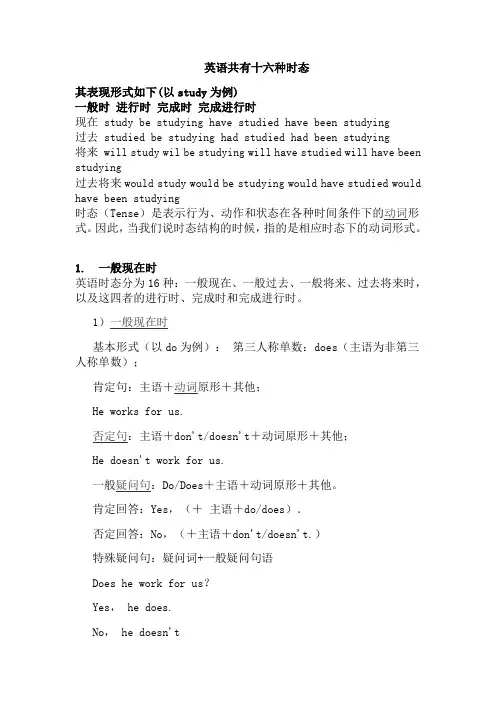
英语共有十六种时态其表现形式如下(以study为例)一般时进行时完成时完成进行时现在 study be studying have studied have been studying过去 studied be studying had studied had been studying将来 will study wil be studying will have studied will have been studying过去将来would study would be studying would have studied would have been studying时态(Tense)是表示行为、动作和状态在各种时间条件下的动词形式。
因此,当我们说时态结构的时候,指的是相应时态下的动词形式。
1. 一般现在时英语时态分为16种:一般现在、一般过去、一般将来、过去将来时,以及这四者的进行时、完成时和完成进行时。
1)一般现在时基本形式(以do为例):第三人称单数:does(主语为非第三人称单数);肯定句:主语+动词原形+其他;He works for us.否定句:主语+don't/doesn't+动词原形+其他;He doesn't work for us.一般疑问句:Do/Does+主语+动词原形+其他。
肯定回答:Yes,(+主语+do/does).否定回答:No,(+主语+don't/doesn't.)特殊疑问句:疑问词+一般疑问句语Does he work for us?Yes, he does.No, he doesn'tWhat does he do for us?He works for us.用法:A) 表示现在发生的动作、情况、状态和特征。
B) 习惯用语。
C) 经常性、习惯性动作。
例:He always helps others. (他总是帮助别人。
现在完成时、一般过去时、过去完成时
现在完成时一、基本结构肯定形式:主语+助动词have/has + done(动词的过去分词),如:I've written an article. 我写了一篇文章。
否定形式:主语+have/has+ not+ done(动词的过去分词),如:He hasn't changed a little so many years. 这么多年他一点也没变。
一般疑问句:把have或has提到主语前面。
如:Have you been to Beijing? 你去过北京吗?二、基本用法现在完成时表示发生在过去的、对现在仍有影响的动作,或表示开始在过去,并且一直延续到现在,甚至还可能延续下去的动作。
①表示发生在过去且对现在仍有影响的动作时,时间状语有:already, yet, just, once, twice, ever, never, three/many times, before,recently(最近), so far,these days…等。
如:I have never seen such fine pictures before. 我以前从来没有看过这么好的画。
He has just gone to England.他刚去英国。
②表示发生在过去,一直延续到现在,甚至还可能延续下去的动作或状态时,谓语动词由表示持续动作或状态的延续性动词充当。
句中的主要时间状语有:for+一段时间:for four weeks/two years…;since+(过去的)时间点:since 1990,since last year/month/week…, since two weeks ago和since引导的从句(一般过去时)等。
如:◆辨析since 与forsince 后的时间状语是一个时间点,表示“从某时间开始”;for引导的是一个时间段,表示“已持续了多长时间”。
I have been away from my hometown for thirty years.我离开家乡有30年了。
现在完成时态
用法一,表示动作发生在过去, 但对现在造成了某 种影响或结果,不能是具体过去时间; 用法二, 与already, yet; never, ever; just, before等此类副词连用时, 常强调动作完成; 用法三,表示从过去开始, 但一直持续到现在的动 作或状态, 常与 for, since 等表示时间的状语连用。 其中, for指一段时间; since指一个时间点。
I, finish, homework I have finished my homework. I haven’t finished my homework.
Have you finished your homework? Yes, I have. / No, I haven’t.
练习(用现在完成时)
2.am/is/are going to +v原形
一般过去时
过去进行时
过去(与现在无 关)
过去某一时间, 在进行
1.v-ed(规则动词) 1.v-ed(规则动词) 2.不规则动词
was/were+v-ing 2.不规则动词
was/were+v-ing
判断下列句子的时态
1.She works in a factory. 一般现在时 2.I was doing my homework at this time 过去进行时 yesterday. 3.We are going to have a picnic this 一般将来时 Sunday. 4.They held a sports meeting last week.
o’clock.
since 5. Mike has been in hospital _____ October.
时态和语态(一般现在时;一般过去时;现在完成时;过去完成时)
时态和语态
一般现在时/一般过去时 现在进行时/过去时行时 现在完成时/过去完成时
动词时态的进行体(现在时行时/ 过去进行时)
1.现在进行时、过去m/is/are+现在分词
过去进行时
2.现在分词的构成形式:
was/were+现在分词
用法
例句
They are having an English class now.
3.Your experiment report is being typed (type) now and it will be finished soon.
4.It is reported in the newspaper that several new subway lines are being built(build)
表示按计划、安排要做 的动作,常与表示将来
Are you staying in Guangzhou 下周你将待在广州吗?
next
week?
的时间状语连用
I am taking my daughter to go to kindergarten. 我将带我女儿去幼儿园。
They were talking about the accident 表示过去某一时刻或某 when I walked into the classroom. 一阶段正在进行的动作 我进教室的时候他们正在讨论那场事
表示现在(说话人说话 他们正在上英语课。
时)正在发生的动作或 We are waiting for you
存在的状态
now.
我们正在等你。
现在 进行时
表示现阶段正在发生的 动作,说话时该动作未
George is writing a novel. 乔治正在写一部小说。
动词过去分词不规则变化表(现在完成时)
动词过去式与过去分词不规则变化(初中版)动词原形+过去式+过去分词(1) AAA型(动词原形、过去式、过去分词同形)cost(花费)cost costcut(割)cut cuthit(打)hit hithurt (伤害)hurt hurtlet(让)let letput(放)put putread (读)read readspread (伸展/ 传播)spread spread(2) AAB型(动词原形与过去式同形)beat(跳动)beat beaten(3) ABA型(动词原形与过去分词同形)become(变成)became becomecome(来)came comerun(跑)ran run(4) ABB型(过去式与过去分词同形)dig(挖)dug dugget(得到)got gothang(吊死)hanged hangedhang(悬挂)hung hunghold(抓住)held heldlay (产卵) laid laidshine(照耀)shone shonesit(坐)sat satwin (赢)won wonmeet(遇见)met metkeep (保持)kept keptsleep(睡)slept sleptsweep(扫)swept sweptfeel(感觉)felt feltflee (逃跑) fled fledsmell(闻)smelt smeltleave(离开)left leftbuild(建设)built builtlend(借出)lent lentsend (传送) sent sentspend(花费)spent spentsink (沉下) sunk /sank snuk /sunken lose (丢失)lost lostburn (燃烧)burnt burntlearn(学习)learnt /learned learnt /learned mean(意思是)meant meantcatch(抓住)caught caughtteach(教) taught taughtbring(带来)brought broughtfight (战斗) fought foughtbuy(买)bought boughtthink(想)thought thoughthear (听见)heard heard sell(卖)sold soldtell(告诉)told toldsay(说)said saidfind(找到) found foundfeed ( 养) fed fedhave/has(有) had hadmake(制造) made madestand(站)stood stoodsmell (闻)smelled /smelt smelled /smelt stick (粘贴 /刺) stuck stuckspell (拼写) spelt/spelled spelt/spelled spit (吐唾沫)spat spatunderstand(明白) understood understood(5) ABC型(动词原形、过去式与过去分词三者不同形)begin(开始)began begundrink(喝)drank drunkhide (躲藏)hid hiddenring(铃响)rang rungsing (唱)sang sungswim(游泳)swam swumblow(吹)blew blowndraw (画)drew drawnfly(飞)flew flowngrow(生长)grew grownknow(知道)knew knownthrow(投掷)threw thrownshow(出示)showed shownbreak(打破)broke brokenchoose(选择) chose chosenforget(忘记) forgot forgotten (forgot) freeze (结冰/凝固)froze frozenspeak(说)spoke spokenwake(醒)woke wokedrive(驾驶)drove driveneat(吃)ate eatenfall(落下)fell fallengive(给)gave givenrise(升高)rose risentake(取)took takenmistake(弄错) mistook mistakenride(骑)rode riddenwrite(写)wrote writtendo(做)did donego(去)went gonelie(平躺)lay lainsee(看见)saw seenwear (穿)wore wornbe ( am, is, are )(是)was, were been。