
新人教版高中英语必修三Unit_2_Healthy_eating精品ppt课件
人教版2017高一英语必修三Unit2课文_PPT课件

人教版2017高中英语—PPT课件—unit 2 Healthy eating
----readingAnalysis of Teaching Material
Analysis of the students
Analysis of teaching methods
❖Analysis of teaching aims
❖Analysis of teaching aids
❖Analysis of teaching procedure❖Analysis of the students
❖Analysis of teaching methodscontents
❖Analysis of teaching methods❖Analysis of Teaching Material
❖Analysis of teaching aims❖Analysis of Teaching Material
•
The content of my
lesson is from New
SeniorEnglish For
China's Students book3
Unit 2 ——Healthy
Eating
---reading
backAnalysis of Teaching Material
•age
•knowledge
•
interestAnalysis of the students
•
Communicative methodAnalysis of teaching methods
•knowledge aim: develop Ss’ basic skills of reading,such as predicting, skimming,
scanning …
•ability aim: encourage Ss to practice, participate, and co-operate in the classroom
activities.
人教版新课标高一英语Book3unit2Healthyeating情态动词归纳

语法归纳之情态动词
情态动词有 can (could), may (might), must, have to, shall (should, will (would), dare
(dared), need (n eeded), ought to等。情态动词无人称和数的变化;不能单独使用,必须与其后的动词 原形构成谓语。
一、 can, could
1) 表示能力(体力、知识、技能)。
Can you lift this heavy box?(体力)
Mary can speak three Ian guages.知识)
Can you skate?(技能)
此时可用be able to代替。Can只有一般现在时和一般过去式;而 be able to则有更多的时 ^态。
I ' ll not be able to come this after noon.
当表示经过努力才得以做成功某事”时应用be able to,不能用Can。如:
He was able to go to the party yesterday eve ning in spite of the heavy rain.
2) 表示请求和允许。
---- Can I go now?
——Yes, you can. / No, you can ' t.
此时可与may互换。在疑问句中还可用could,might代替,不是过去式,只是语气更委婉, 不能用于肯定句和答语中。
----Could I come to see you tomorrow?
——Yes, you can. ( No, I 'afnaid no t.)
3) 表示客观可能性(客观原因形成的能力)。
They' ve cha nged the timetable, so we can go by bus in stead.
This hall can hold 500 people at least.
必修3+unit+2++Healthy+eating+(人教新课标必修三第2单元)词汇教学
Where there is a will, there is a way. English is a bridge to the world. 1 三元整合教学模式英语学科导学稿(学生版)
一、课题:Healthy eating (人教新课标必修三第2单元)
二、课型:Words
三、教学目标:
1、能正确朗读本单元所有单词。
2、能正确拼读本单元重点词汇(46个,见注)。
3、熟悉本单元(13个)单词的词性、词形变化及了解其实际词义。
4、能在语境中正确运用本单元重点词汇和词组。
注:26个重点词汇
1) diet
2) energy
3) bone
4) fibre
5) digestion
6) bean
7) cucumber
8) mushroom
9) lemon
10) balance
11) fat
12) ham
13) mutton
14) sign
15) curiosity
16) lie
17) research
18) customer
19) competition
20) weakness
21) strength
22) amount
23) debt 24) glare
25) limit
26) benefit
27) sigh
28) item
29) packet
30) tin
31) research
32) roast
33) ought
34) slim
35) rid
36) glare
37) combine
38) calmly
39) gently
40) raw
41) discount
42) consult
43) digest
44) poisonous
45) carrot
46) spy
13个需要关注词性、词形变化的单词
1) combine
2) curiosity
book3 unit2 healthy eating
1 Unit2 Health eating
制作人:李玲 审稿人:张荣华 时间:2012/2/13
教师寄语:An apple a day keeps the doctor away.
词汇检测
I. Key words
1. n./vi. 日常饮食, 节食
2. vt. 平衡;权衡 n.天平;平衡
3. vt./vi. 油煎;油炸
4. v.aux. 应当;应该
5. vi.变细;减肥 adj.苗条的;纤细的
6. adj.生的;未加工的
7. n.顾客;消费者 8. n.折扣
9. n.缺点;虚弱;弱点
10. vt.咨询;请教;商量 11. n.债;债务
12. vi.怒目而视;闪耀 n.怒视;眩目的光
13. vi. 叹息;叹气 n.叹息;叹息声
14. vi.&vt.&n.消化,吸收;文摘,摘要,消化力;领悟
15. n.好奇心 adj.好奇的
16. vi.&n.说谎;谎话;谎言 n.说谎者
17. n.力;力量;强项;长处 vt.加强;强化
18. vt.&n.界限;限度;限制;限 adj. 有限的
19. n.&vt&vi.利益,好处;有益于;有助于;受益 2 adj.有利的;有益的
高中英语-高一英语必修三Unit2_Healthy_eatingAqAPHH

高一英语必修三 Unit2 Healthy eating
PENG YI(彭 燚)
(吴中)
(一)教学内容分析
COME AND EAT HERE (1) 是一篇介绍“健康饮食”的文章,包括传统饮食习惯的改变。教材通过讲述王鹏和雍慧开饭店的不同风格、经营的不同菜肴以及顾客对不同食品的不同反应,反映了现代人对饮食的关注和对时尚的追求。这篇文章有别于惯常的说明文,让学生读起来引人入胜,学生在趣味盎然的故事情节中轻松学习健康饮食的知识,领悟膳食平衡对身体健康的作用。
(二)教学目标
根据新颁布的普通高中《英语课程标准(实验稿)》关于阅读课主要教学目标的具体描述,结合本课教学内容,具体从语言知识、语言技能、情感态度和文化意识三个方面制定如下教学目标。
1. 语言知识目标:
通过一些词:如 energy-giving food body-building food protective food等使学生了解健康的饮食习惯是健康的保证。
2. 语言技能目标:
a)使学生学会克服生词障碍,通过略读,寻找文章的主题句,理清文章的总体框架与脉络;通过查读,捕捉文章的重要细节,理解作者的写作意图。
b) 使学生学会运用各种猜词技巧,猜测部分生词在具体的语言环境的含义。
c) 使学生能够运用所学知识,用英语为自己所熟悉的一个人设计一份“healthy diet”,并阐明设计的依据。
d)让学生预测本故事的结局,并表演出来,提高学生的学习兴趣。
3.情感态度与文化意识目标:
a)使学生学会审视自己、审视食物,提高养成健康饮食习惯的意识。
b)使学生懂得:健康是做好一切事情的根本。要想有强健的体魄,除了合理安排好一天的生活以外,还需要有科学、卫生的饮食习惯,每天一定量的体育活动和体力劳动。青少年必须有健康的身体,长大以后才能成为一位具有现代科学文化,适合时代要求的合格劳动者。
c)使学生学会关心他人,体贴他人,并养成较强的合作意识。并培养学生遇到困难,要勇敢面对的能力。
2021高考一轮人教版英语 必修3 Unit 2 Healthy eating
三言 两语
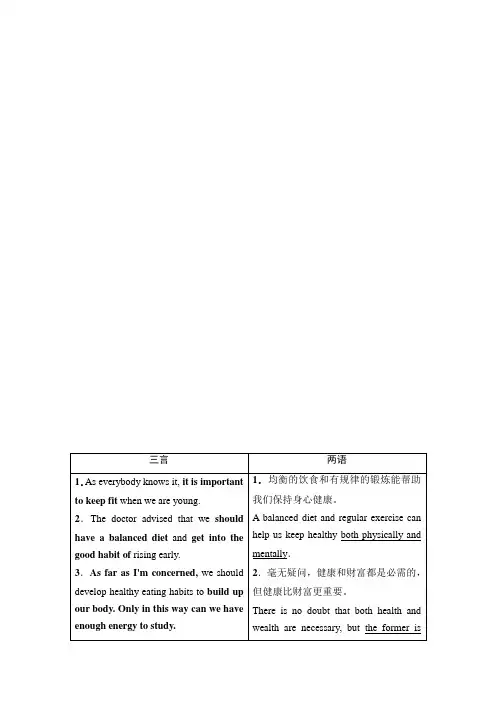
1.As everybody knows it, it is important
to keep fit when we are young.
2.The doctor advised that we should
have a balanced diet and get into the
good habit of rising early.
3.As far as I'm concerned, we should
develop healthy eating habits to build up
our body. Only in this way can we have
enough energy to study. 1.均衡的饮食和有规律的锻炼能帮助我们保持身心健康。
A balanced diet and regular exercise can
help us keep healthy both physically and
mentally.
2.毫无疑问,健康和财富都是必需的,但健康比财富更重要。
There is no doubt that both health and
wealth are necessary, but the former is
more important than the latter.
[单词 拼写应用]
核
心
单
词 1.diet n.日常饮食
vi.节食
2.balance vt.平衡;权衡
n.天平;平衡
3.slim vi.变细;减肥
adj.苗条的;纤细的
4.lie n.谎话;谎言
vi.说谎
5.customer n.顾客;消费者
6.consult vt.咨询;请教;商量
7.raw adj.生的;未加工的
8.debt n.债;债务
9.sign n.牌示;标记;符号
10.glare vi.怒目而视;闪耀
n.怒视;炫目的光 [语境运用] 用所给词的适当形式填空
必修3 Unit 2 Healthy eating 情态动词(2)
第1页 版权所有 不得复制
年 级 高一 学 科 英语 版 本 人教实验版
内容标题 必修3 Unit2 Healthy eating:情态动词(2)
编稿老师 林静
【本讲教育信息】
一、教学内容
必修3 Unit 2 Modal verbs (2) 情态动词(2)
ought to / ought not to /have to / don‘t have to / mustn‘t /need/needn‘t / 情态动词+ have
done
二、知识精讲
(一)ought to/ought not to
ought to意为“应该,应当”,是情态动词,没有人称和时态的变化,与should同义,语气较强。
例:
You ought to obey your parents.你应该听父母的话。
You oughtn‘t/ought not to blame him.你不应该责备他。
—Ought I to go? 我该去吗?
—Yes,you ought to. 是的,你应该(去)。
1. 表示职责和义务
She ought to look after her children better.
她应该把自己的孩子照顾得好一些。
Humans ought to stop polluting nature.
人类应该停止污染大自然。
2. 表示建议和劝告
We really ought to buy a car, oughtn‘t /shouldn‘t we?
我们真该买辆车了,是吗?
You ought to obey your parents.
你应该听父母的话。
3. 表示猜测,可能性较大
He ought to be here soon – he left home early.
他应该快到了——他很早就出门了。
The seats ought to be enough for all the guests.
Book3 unit2 Healthy eating
Book3 unit2 Healthy eating
Part B
Part1 考纲词汇
1. n. 天平,余额 v. 平衡;权衡
2 vt油煎
3 vt变细;苗条的adj
4女主人,女主持人n
5好奇心n adj. 好奇的
adv. 好奇地
6生的,未加工的adj
7 醋n
8谎言,说谎n
9折扣n
10顾客,消费者n
11 缺点,虚弱n adj.虚弱的
v.(使)变弱,(使)减弱
12强项,力量n
vt. 加强,巩固 ___ 13咨询,商量vt
14 sign n. _________________
15 叹息;叹气 n. vi. ___________
16窥视;间谍n.v
17限制;界限n.vt
有限的adj. _____________
18 利益;有益于n.v
adj. 有益的
19. n.糖 vt.在„„中加糖 __
20消化;摘要v. n.文摘
21 lemon ___________
22 cooperation _________
23联合v
24 n.日常饮食vi.节食_________
Part 2.重点短语
1被放过,做坏事不受惩罚
2说谎
(完整版)高中英语必修三-课文详解Book3-unit2
必修3 Unit 2-课文详解 杨磊译注 1
必修三 Unit 2 Healthy Eating健康饮食
I. Vocabulary
diet n.日常饮食 vi.节食
spaghetti n.意大利式细面条
muscle n.肌肉;(食用)瘦肉
protective adj.保护的;给予保护的
cucumber n.黄瓜
eggplant n.茄子
mushroom n.蘑菇
peach n.桃子
lemon n.柠檬
balance diet 平衡膳食
barbecue vt. & n.烧烤;烤肉
mutton n.羊肉
kebab n.(印)烤腌羊肉串
roast adj.烤制的 vt.烤;烘
stir-fry vt.用旺火炒(或煎、煸)
ingredient n.(烹调用的)材料;原料 bacon
n.熏咸肉;腊肉
sugary adj.含糖的;甜的
sign n.牌示;标记;符号;迹象
lose weight减肥;体重减轻
slim
vi.变细 adj.苗条的;纤细的
curiosity n.好奇心
hostess n.女主人;女主持人
raw adj.生的;未加工的
vinegar
n.醋
get away with被放过;(做坏事)不受惩罚
tell a lie 说谎
customer n.顾客;消费者
discount
n.折扣
win…back赢回;重新获得
put on weight增加体重 strength n.强项;长处;力量
consult vt.咨询;请教;商量
digest vi. & vt.消化 n.摘要
poisonous adj.有毒的
obesity n.过度肥胖
vitamin n.维生素
protein n.蛋白质
新人教版高中英语必修3Unit2 Healthy eating教案2
word
1 / 6 Unit 2 Healthy eating
The Third Period
Contents: Reading (We are what we eat)
Teaching Aims:
1.Improve Ss’ reading skills and abilities.
2. Learn how to read about the Argumentative Writing (types of the article).
3.Talk about problems and solutions.
Teaching procedures:
Step 1. Warming up and Pre-reading
Today we’ll learn the topic on “what we eat〞. Before we start the reading,
I’d like you to answer some questions.
1. Which of the following gives you the most energy: a banana, a soft drink
or a bar of chocolate?
2. How many meals do you have every day? Which meal do you think is the most
important? Why?
3. How much water do you drink every day?
4. What kind of snacks do you take?
Teach the new word: snack (an amount of food smaller than a meal; something
eaten informally between meals like candies, fruit and so on.)