
高中英语《人教版必修三Unit1Festivals and celebrations》优质课教案、教学设计
1 Module3 Unit1 Festivals and
Celebrations
Ⅰ. Teaching aims: Teaching and Learning
Designs
1. Knowledge aims
①. Get students to learn the useful new words and expressions in this
part: beauty, harvest, starve, origin, religious, ancestor, Mexico, feast, bone,
belief, poet, arrival, gain, independence, gather, agriculture, award, rooster,
admire, energetic, Easter, clothing, Christian, custom, take place, in memory
of, dress up, play a trick on, look forward to, day and night, as though, have
fun with
②. Let students learn about history and basic knowledge of festivals
both in and out of China.
2. Ability aims
①. Develop students’ reading ability and let them learn different reading
skills.
②. Enable students to talk about festivals and celebrations.
3. Emotional aims
①. Stimulate students’ love for their own national culture and customs.
②. Develop students’ sense of cooperative learning.
Ⅱ. Teaching methods:
1. Task-based teaching method
2. Discussion to get the students to understand the text easier.
3.co-operative teaching method 2 Ⅲ. Teaching Aids:
Multi-media and text books
Ⅳ. Teaching important and difficult points
1. Important points
①. Let students learn more about history and basic knowledge of
festivals.
②. Get students to learn different reading skills.
2. Difficult points
①. Develop students’ reading ability.
②. Enable students to talk about festivals and celebrations.
Ⅴ. Teaching procedure
Step1 Pre-reading activities for interest
Activity 1. Appreciating a micro video--- to let the students enjoy a video
about spring festival and answer one question: What’s it about ?
[设计说明]
播放庆祝狗年的春节视频,轻松愉快的音乐,给学生创造了良好的
学习氛围,激发了他们的学习
兴趣,由此导入本课的话题—节日。
Activity 2. Brainstorming:
Can you name some other festivals around the world? Enjoying some
beautiful and typical pictures of festivals around the world. Meanwhile, ask
the students to talk them about freely 3
[ 设计说明]
通过对精美、有趣的节日图片的自由讨论,营造有利于学生积极参
与,主动求知的宽松的学习环境,从学生的生活经验和已有的知识出发,
给他们提供充分的活动和交流的机会,能较快的帮助学生进入今天学习
的内容,使学生对古今中外的节日有一个大体上的了解,并激发学生对
所学内容的兴趣。
Step 2 : While-reading activities for comprehension
1. skimming:
Skim Paragraph 1 and sub-heading to complete the following questions.
Festivals of all kinds have many
:
Some
;
Some
; Some for .
The passage lists kinds of modern festivals
Namely: ;
;
[设计说明] 4 快速浏览第一自然段和每一自然段哦哦副标题来概括文章大意,使学生对文章的结构、内容和作者的写作意图有一个整体印象,训练学生
概括篇章大意及从总体上把握全文的能力。
2. Scanning
Scan the passage and fill in the table.
Kinds of Festivals Names of Festivals Countries
Festivals of the Dead
Festivals to Honour
People
Harvest Festivals
Spring Festivals
[设计说明]
运用表格形式可将课文内容化繁为简,易于学生对课文内容的理解
和掌握,使其对所读内容有更清晰、更直观的印象。
3. Detailed reading
Task 1. Read para.2 and compare the festivals of the dead in Mexico ,
Japan and china.
What things are similar and what things are different?
The Chinese ,Japanese and Mexican festivals of the dead all have
customs to the dead. T he Chinese and Japanese
. However, there are some differences . The
Mexicans, eat food. But the Chinese and Japanese do not do. 5 Task 2: Harvest Festivals
1. Are harvest festivals always happy events?
Harvest festivals are always happy events because people are
(thankful) that food is gathered for the winter and (农
活) is over.
2. How do people celebrate the festivals (key verbs)?
Task3: Spring Festivals
1. How do Chinese people celebrate Spring Festival ?
2. What does Easter celebrate?
3. How to celebrate Easter?
4. Appreciating a micro video about Easter celebration.
[设计说明]
学生在掌握了全文脉络的基础上设计一些细节性、推理性问题及填空题,把学生引导到整合文章细节上来,不仅能让学生在有限的时间里更好的理解文章,也能培养学生的阅读技巧,提高阅读能力.同时给学生展示
复活节庆典的视频,使学生更加直观的体验国外节日。
4. Summary:
The passage is mainly about different and the of
celebrations and also the why people celebrate them all over the
world.
[设计说明] 6 老师进一步疏理课堂内容,针对整节课作出简要总结。通过总结,
可以提醒学生从哪些方面检测自己课堂所学,以利于课后的巩固。
5. Discussion
Should Chinese students celebrate western festivals like Christmas or
Valentine’s Day ?
[设计说明]
以小组为单位,讨论中国学生是否应该过西方的节日,各小组选出代表与对方小组代表进行辩论。在这一环节中,老师把主动权完全交给了学生,学生们讨论异常热烈,既巩固了课堂所学,又使课堂所学得以升华,培养了学生的发散思维及创新能力,并实现了阅读写作的巧妙
结合。
Ⅵ: Homework
1.Write a composition on your discussion.
2.Create a festival with your partners.
Name
Date
What to celebrate?
How to celebrate?
Logo(标志)
【新教材】1.4-Reading-for-Writing-教学设计-人教版高中英语必修第三册
普通高中英语(2019版)必修第三册
Unit 1 Festivals and Celebrations 教学设计
Period 4 Reading for writing
该板块的活动主题是“写你的节日经历”( Write about your festival experience从活动标题可知,该板块延续了前一板块的话题,但语言输出形式的要求有所不同。听说板块( Listening and Talking):要求学生就各自的过节经历进行口头交流,写作板块的最终目的是要将交流的内容转化为文字,完成一篇有关节日经历的文章。一般来说,人们大多会在日记、博客日志或旅行攻略中介绍自己独特的节日经历,因此该板块选取了一篇关于“那达慕大会”的日记供学生阅读和模仿写作。通过阅读和学习这篇日记,学生不仅能够了解我国蒙古族“那达慕大会”这一传统节日,还能从文中感受到蒙古族人民的性格特色、娱乐精神及其浓厚的文化氛围,这也有助于培养学生的文化意识,让学生学会欣赏和珍惜多姿多彩的民族文化。
1. Read the diary about "Naadam Fair", master the content elements of the festival and the features of
the text language;
2. Can deeply understand the plot of the story according to the cause, process and result of the story, and
find out the impact of the rock on different passers-by and their emotional and behavioral reactions to
understand in detail;
3. Able to deeply discuss and reflect on the impact of social development and changes on traditional
高中英语人教版必修3第一单元Unit1-Festivals-and-celebrations说课稿+文档.doc

Book3(高中英语人教版必修3第一单元)
Unit1 Festivals and celebrations《节日与庆典》
我说课的内容是高一英语必修3 Unit1阅读 Festivals and celebrations ,这是一节综合技能课,我说课内容包括以下几个部分:教材分析、学情分析、说教法、学法以及教学程序和教学反思。
一.教材与学情分析
1.教材内容、地位和作用
本单元以”节日”为话题。本文的题目是Festivals and Celebrations.这一部分是本单元主题的重要体现形式。
本篇阅读主要介绍古今中外节日的种类、由来、以及人们的活动和习俗。使学生不仅增进了对我国传统节日的理解,而且对外国的节日也有所了解和感悟,提高学生的文化素质,进而拓展社会文化背景、增加跨国文化知识。
2.学情分析
由于本单元是安排在春节过后,寒假开学时的第一个单元,学生并对所学相关内容作了很好的铺垫,并有一定的生活积累,而且对“节日”这个话题既熟悉又比较感兴趣,因此可以激发学生的求知欲 ,更深层次的理解本课内容。但由于学生基础薄弱,课文也涉及到西方文化,学生学习和理解有一定难度。
二.课程标准与教学目标
新课程标准对这一课的要求是:通过介绍古今中外节日的种类、由来、以及人们的活动和习俗,使学生掌握阅读技巧,提高阅读能力。
根据《新课程标准》的要求和学生实际情况,确定了以下三维教学目标:
知识与技能目标: 熟悉中外节日,培养学生猜词能力,通过略读,找读、细读等方法,提高阅读能力和技巧 。
过程与方法目标:通过对课文的阅读,教师引导,学生自主探究与合作学习, 熟悉中外节日、掌握词汇,提高阅读能力。
情感、态度与价值观目标:在熟悉中外节日的基础上,提高学生的文化素质,进而拓展社会文化背景、增加跨国文化知识。
三. 教学重点和难点
重点:1.熟悉中国和其他国家的节日。(阅读)
2.分析整理课文中的细节内容。(详细阅读)
高中英语 Unit1 Section Ⅰ 新人教版必修第三册
1
UNIT 1 FESTIVALS AND CELEBRATIONS
主题
语境人与社会——节日与庆祝
UNIT 1 FESTIVALS AND CELEBRATIONS
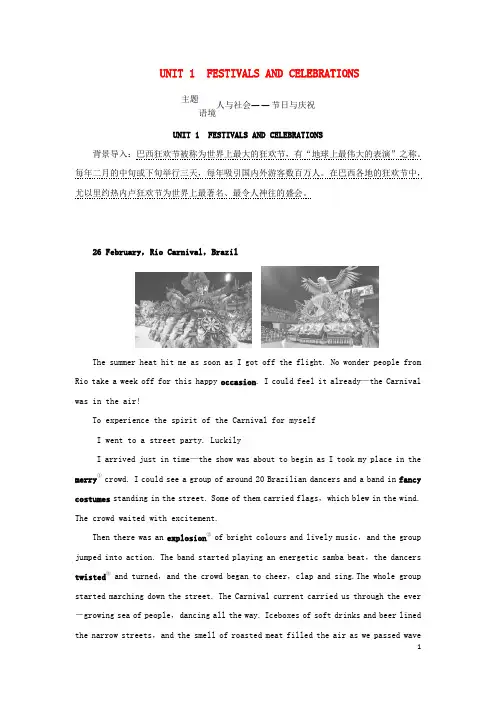
背景导入:巴西狂欢节被称为世界上最大的狂欢节,有“地球上最伟大的表演”之称。每年二月的中旬或下旬举行三天,每年吸引国内外游客数百万人。在巴西各地的狂欢节中,尤以里约热内卢狂欢节为世界上最著名、最令人神往的盛会。
26 February,Rio Carnival,Brazil
The summer heat hit me as soon as I got off the flight. No wonder people from
Rio take a week off for this happy occasion. I could feel it already—the Carnival
was in the air!
To experience the spirit of the Carnival for myself
I went to a street party. Luckily
I arrived just in time—the show was about to begin as I took my place in the
merry① crowd. I could see a group of around 20 Brazilian dancers and a band in fancy
costumes standing in the street. Some of them carried flags,which blew in the wind.
The crowd waited with excitement.
Then there was an explosion② of bright colours and lively music,and the group
新人教版高中英语必修三Unit1Festivals and Celebrations单元分析讲义
Unit 1 Festivals and celebrations单元分析
本单元主题:人与社会——社会与文化
单元内容分析
本单元从呈现不同节日和庆祝活动入手,引导学生思考人们为何要庆祝节日,通过回顾节日的产生、发展和变化,展示不同国家和民族各具特色的节日习俗、庆典仪式、欢聚活动以及特色食品等,启发学生思考和探究节日的丰富内涵。学习不同国家和民族的节日,不仅能拓宽学生的视野,增加文化积累,促进语言表达,同时还能增强学生的文化认同感,充分认识文化差异,培养学生的跨文化交际能力,增进国际理解。
以下为教材各部分教学内容简要分析及教学活动实施建议:
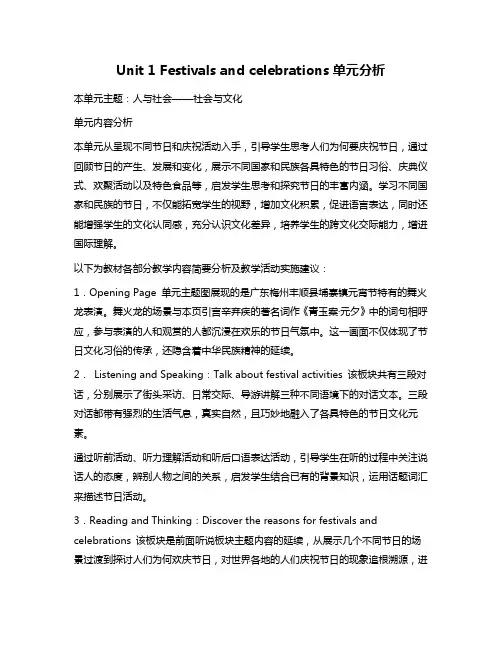
1.Opening Page 单元主题图展现的是广东梅州丰顺县埔寨镇元宵节特有的舞火龙表演。舞火龙的场景与本页引言辛弃疾的著名词作《青玉案·元夕》中的词句相呼应,参与表演的人和观赏的人都沉浸在欢乐的节日气氛中。这一画面不仅体现了节日文化习俗的传承,还隐含着中华民族精神的延续。
2. Listening and Speaking:Talk about festival activities 该板块共有三段对话,分别展示了街头采访、日常交际、导游讲解三种不同语境下的对话文本。三段对话都带有强烈的生活气息,真实自然,且巧妙地融入了各具特色的节日文化元素。
通过听前活动、听力理解活动和听后口语表达活动,引导学生在听的过程中关注说话人的态度,辨别人物之间的关系,启发学生结合已有的背景知识,运用话题词汇来描述节日活动。
3.Reading and Thinking:Discover the reasons for festivals and
celebrations 该板块是前面听说板块主题内容的延续,从展示几个不同节日的场景过渡到探讨人们为何欢庆节日,对世界各地的人们庆祝节日的现象追根溯源,进而谈论节日的传承与发展变化,目的在于启发学生的深层思考,体会节日文化的内在实质,感悟世界各国人民共同的精神追求和美好愿望。
新课标新教材人教版必修第三册高中英语Unit1SectionⅠ教学案
- 1 - Unit 1 FESTIVALS AND CELEBRATIONS
1.An optimist stays up until midnight to see the new year in. A pessimist stays
up to make sure the old year leaves.
乐观者等至深夜,为的是看到新的一年。悲观主义者等着,只为送别旧岁。
2.The object of a New Year is not that we should have a new year. It is that
we should have a new soul.
我们过新年的目的并不是为了迎接新的一年,而是迎接一个全新的自我。
3.May your happiness last forever and your holidays last forever.
愿你幸福永驻,假期长存。
4.Feeling the relentless passage of time, my heart gives birth to new hope. Let's
embrace the New Year and go to the future!
感受岁月无情流逝,心中又升腾起新的希望。让我们拥抱新年,共赴未来!
5.The breeze sent my blessings, and the bright moon brought my greetings.
清风送去了我的祝福,明月带来了我的问候。
6.In this brilliant and happy Spring festival, I wish you all the best!
在这辉煌快乐的新春佳节,祝您一切顺心如意!
THE VALUE OF TIME
To realize the value of one year:
Ask a student who has failed a final exam.
高中英语_ ReadingFestivals and Celebrations教学设计学情分析教材分析课后反思
教学学案设计
阅读材料 Festivals and celebrations
1.整体设计思路、指导依据说明
教学设计理论依据:
英语教学是一种动态教学或者活动教学,教学过程是交际活动的过程。只有从组织教学活动入手,大量地进行语言实践,使英语课堂交际化,才能有效地培养学生的英语交际能力。《高中英语课程标准》要求我们要改变以往过分强调英语单词和语法知识的简单传授的倾向,加强对学生实际语言能力的培养。因此,本节课各个环节的教学设计都要突出体现以下几种新理念:
1、 任务型教学模式(task-based teaching method)
2、 以学生为主体,重视体验参与
3、 突出交际性,注重读写的实用性
4、正视个体差异,多用积极的正面评价
2.教学背景分析
一、 教材分析:
本课是高中英语必修三第1单元,课题是Festivals and
celebrations。这是一节阅读课。在本单元中处于中心地位。内容介绍了世界各地不同主题的节日和庆祝活动。我在本课的教学中将淡化语言点和语法知识的简单传授,采用任务型教学法和小组合作探究学习法,扩大课堂语料输入量和学生的语料输出量,主要锻炼学生的听说与阅读能力。 二、学生情况分析:
高中生具有以下两个特点:
1、 他们已经初步具备了略读、跳读等阅读技巧以及确定主题句,预测材料内容等阅读微技能,形成了基本的阅读策略。但是很多学生英语基础相对较弱,语言交际能力相对较差。
2、 很多学生求知欲旺盛,思维活跃,好胜心强,但学习缺乏主动性,有畏难心理。因此,教师要通过精心设计使他们感兴趣的活动,用活动教学的方法来调动学生的学习积极性,在师生互动,生生互动的过程中完成教学任务并达到目标。
3.教学目标分析
1、 认知目标(知识目标):
⑴ 词汇和语言点
⑵理解课文大意,用所学词汇复述课文,并用所学词汇与学生交流沟通
2、 智力目标(能力目标)
在运用语言的过程中培养学生观察、分析、思维与自学能力,加强记忆力,提高英语综合运用能力,激发创造能力
必修三课文原文
.
. Book 3 Unit 1 Festivals around the world Reading Festivals And Celebrations
FESTIVALS AND CELEBRATIONS
Festivals and celebrations of all kinds have been held everywhere since ancient
times.Most ancient festivals would celebrate the end of cold weather, planting
in spring and harvest in autumn. Sometimes celebrations would be held after
hunters had caught animals.At that time people would starve if food was difficult
to find, especially during the cold winter months. Today's festivals have many
origins, some religious, some seasonal, and some for special people or
events. Festivals of the Dead Some festivals are held to honour the dead or to
satisfy the ancestors, who might return either to help or to do harm. For the
Japanese festival Obon, people should go to clean graves and light incense in
Unit1FestivalsandCelebrations课文语法填空高中英语人教版
Unit 1 Festivals and Celebrations Reading and Thinking
WHY DO WE CELEBRATE FESTIVALS?
Festivals (celebrate) all around the world. They have wide range of
origins, such as the seasons of the year, religions, famous (figure), and important events.
Every festival has (it) different customs and unique charms. However, no matter
different they may seem, all over the world, the spirit of
sharing joy, gratitude, love, or peace is mon in all festivals.
Of all the traditional festivals, the harvest festival can be found in almost every culture. This
important (agriculture) festival takes place after all the crops have been gathered in. People
celebrate to show that they are grateful the year’s supply of food. In ancient Egypt, the
新人教版高中英语教材必修三 Unit 1 Festivals and Celebrations 课文翻译-中英对照版
1 Unit 1 Festivals and Celebrations
Reading and Thinking
WHY DO WE CELEBRATE FESTIVALS
我们为什么庆祝节日?
Festivals are celebrated all around the world. They have a wide range of
origins, such as the seasons of the year, religions, famous figures, and important
events. Every festival has its different customs and unique charms. However, no
matter how different they may seem, all over the world, the spirit of sharing joy,
gratitude, love, or peace is common in all festivals.
世界各地都庆祝各种节日。节日的由来五花八门,比如时节、宗教、著名人物及重要事件。每个节日都有其不同的习俗和独特的魅力。然而,无论它们多么迥异,在世界各地,分享快乐、感恩、友爱或和平的精神存在于所有节日之中。
Of all the traditional festivals, the harvest festival can be found in almost
every culture. This important agricultural festival takes place after all the crops
have been gathered in. People celebrate to show that they are grateful for the
人教版高中英语必修三Unit1FestivalsandCelebrations笔记重点大全(带答案)
人教版高中英语必修三Unit1FestivalsandCelebrations笔记重点大全
单选题
1、The digital age ________ us to find friends ________ the same interests.
A.enabled ; to shareB.enabled ; sharedC.enables ; sharingD.enable ; share
答案:C
考查时态及非谓语动词。句意:数字时代使我们能够找到志趣相投的朋友。根据句子结构,第一空考查谓语动词,第二空考查非谓语动词。根据句意,此句描述一般事实,故用一般现在时。主语The digital age是单数,谓语动词用单三,第一空填enables;friends与share是主谓关系,故用现在分词,作定语,故填sharing,故选C。
2、It took the workers ______ the factory a long time to adapt themselves ______ the new rules.
A.belonging to; forB.belongs to; to
C.belonged to; forD.belonging to; to
答案:D
考查非谓语动词和固定短语。句意:这家工厂的工人花了很长时间才适应了这些新规定。分析句子结构可知,已有谓语动词took,空处需填非谓语动词做定语,workers和belong to为逻辑主谓关系,需用现在分词形式,排除B项和C项;adapt oneself to为固定短语,意为“适应”。故选D。
3、There was an interesting illustration in the book that I was reading ________ what his hometown was like in his eyes.