
牛津深圳版英语八上Unit 2《Numbers》(Period 4)ppt课件
广州沪教牛津版八年级上册英语Unit 2 Numbers--基数词和序数词知识点总结
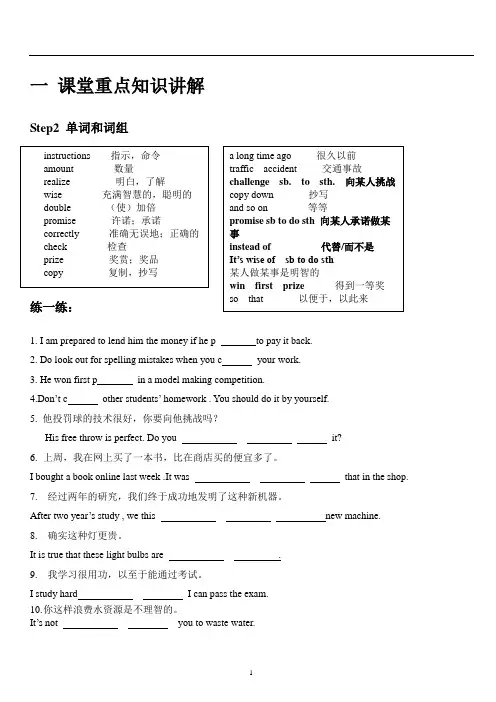
1 一 课堂重点知识讲解
Step2 单词和词组
练一练:
1. I am prepared to lend him the money if he p to pay it back.
2. Do look out for spelling mistakes when you c your work.
3. He won first p in a model making competition.
4.Don’t c other students’ homework . You should do it by yourself.
5. 他投罚球的技术很好,你要向他挑战吗?
His free throw is perfect. Do you it?
6. 上周,我在网上买了一本书,比在商店买的便宜多了。
I bought a book online last week .It was that in the shop.
7. 经过两年的研究,我们终于成功地发明了这种新机器。
After two year’s study , we this new machine.
8. 确实这种灯更贵。
It is true that these light bulbs are .
9. 我学习很用功,以至于能通过考试。
I study hard I can pass the exam.
10. 你这样浪费水资源是不理智的。
It’s not you to waste water.
Numbers 基础达标(含答案)---2024-2025学年八年级上册 沪教版(2024)
2024
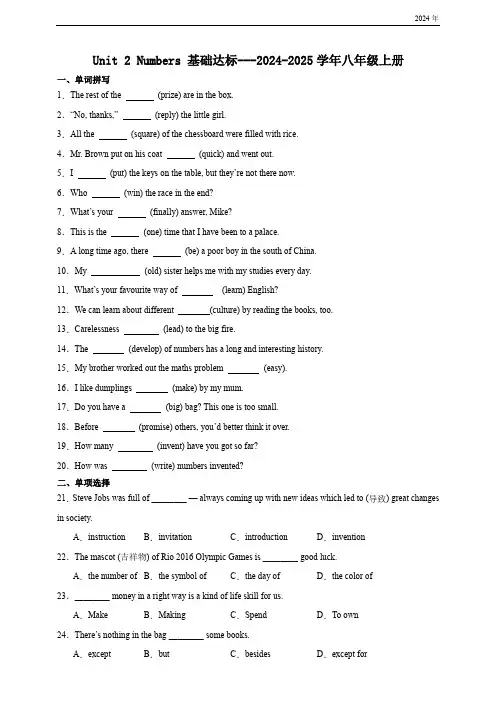
Unit 2 Numbers 基础达标---2024-2025学年八年级上册
一、单词拼写
1.The rest of the (prize) are in the box.
2.“No, thanks,” (reply) the little girl.
3.All the (square) of the chessboard were filled with rice.
4.Mr. Brown put on his coat (quick) and went out.
5.I (put) the keys on the table, but they’re not there now.
6.Who (win) the race in the end?
7.What’s your (finally) answer, Mike?
8.This is the (one) time that I have been to a palace.
9.A long time ago, there (be) a poor boy in the south of China.
10.My (old) sister helps me with my studies every day.
11.What’s your favourite way of (learn) English?
12.We can learn about different (culture) by reading the books, too.
13.Carelessness (lead) to the big fire.
(完整版)深圳牛津版英语最新八年级(上)课文(带翻译)
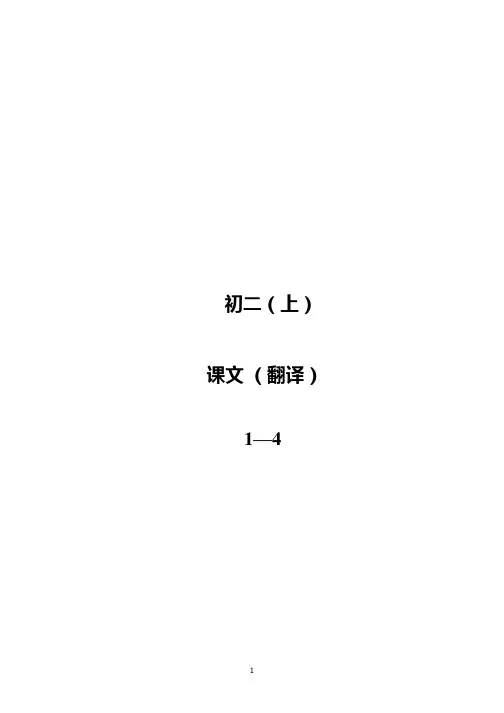
初二(上)
课文 (翻译)
1—4
Unit 1 Look it up! 查阅
这里是两篇来自百科全书的文章。
Here are two articles['ɑːtɪk(ə)l]文章 from an encyclopaedia [ɪn,saɪklə'pidɪə]百科全书.
达芬奇·莱昂纳多
Da Vinci, Leanardo
达芬奇·莱昂纳多(1452-1519)是意大利画家、发明家、音乐家、工程师和科学家。
Leanardo da Vinci (1452—1519) was an Italian painter['peɪntə]画家,
inventor[ɪn'ventə]发明家, musician [mjuː'zɪʃ(ə)n]音乐家, engineer [endʒɪ'nɪə] 工程师and scientist.
达芬奇出生在农村。从很小的时候, 他就表现出极大的智慧和艺术能力。随着年龄的增长, 他学会了做很多不同的事情。他的画是非常有名的, 其中一副, 《蒙娜丽莎》, 也许是世界上最有名的画作。他还有许多发明。例如, 他的笔记本里有一些关于飞行器的有趣的图纸。
Da Vinci was born in出生于 the countryside['kʌntrɪsaɪd]农村.From an early age从早期开始, he showed great intelligence[ɪn'telɪdʒ(ə)ns] 智慧and artistic ability[ɑː'tɪstɪk] [ə'bɪləti]艺术才能.As当;随着 he grew older, he learnt to do many different things.His
paintings['peɪntɪŋ]画作 are very famous, and one, the Mona Lisa, is perhaps the most
深圳牛津版牛津英语八年级上8A U2 Numbers课文填空及综合阅读

U2课文填空练习
A
The king and the rice
A long time ago, there was a king in India. The 1.__________ (king)favourite game
was chess. One day, a wise old man came to the palace and the king challenged him
2__________ a game. The king promised the old man, "You can have any prize
3__________you win the game.The old man said, "If I win the game, I'd like one
grain 4.__________rice 5.__________the first square of the chessboard, two for the
6.__________(two), four for the third, and then double the amount 7.__________
each of the rest 8.__________ the 9__________ (square).'
"Is that all?" asked the king. "Wouldn't you like gold 10.__________
silver instead?”
No, just rice,”11.__________ (reply)the old man.
The king and the old man played the game 12__________ a long time.
13._________(final), the old man14.__________(win).15__________
(完整版)深圳牛津版英语最新八年级(上)课文(带翻译) 2
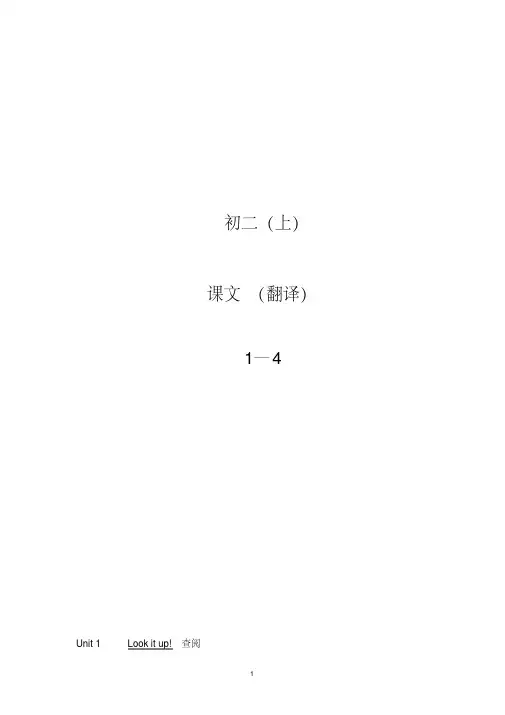
1 初二(上)课文(翻译)1—4 Unit 1 Look it up! 查阅
2 这里是两篇来自百科全书的文章。Here are two articles['ɑ?t?k(?)l]文章 from an encyclopaedia [?n,sa?kl?'pid??]百科全书. 达芬奇·莱昂纳多Da Vinci, Leanardo 达芬奇·莱昂纳多(1452-1519)是意大利画家、发明家、音乐家、工程师和科学家。Leanardo da Vinci (1452—1519) was an Italian painter['pe?nt?]画家, inventor[?n'vent?]发明家, musician [mju?'z??(?)n]音乐家, engineer [end??'n??] 工程师and scientist. 达芬奇出生在农村。从很小的时候,他就表现出极大的智慧和艺术能力。随着年龄的增长,他学会了做很多不同的事情。他的画是非常有名的,其中一副,《蒙娜丽莎》,也许是世界上最有名的画作。他还有许多发明。例如,他的笔记本里有一些关于飞行器的有趣的图纸。Da Vinci was born in出生于 the countryside['k?ntr?sa?d]农村. From an early age从早期开始, he showed great intelligence[?n'tel?d?(?)ns] 智慧and artistic ability[ɑ?'t?st?k] [?'b?l?ti]艺术才能. As当;随着 he grew older, he learnt to do many different things. His paintings['pe?nt??]画作 are very famous, and one, the Mona Lisa, is perhaps the most famous painting in the world. He also had many inventions[?n'ven?(?)n]发明. For example, his notebooks['n??tb?k]笔记本include[?n'klu?d]包括some interesting drawings['dr??(r)??]绘画 of flying machines [m?'?i?n]飞行器. Dinosaurs['da?n?s??]恐龙
深圳牛津版英语八年级上课文带翻译
深圳牛津版英语八年级上课文带翻译
TTA standardization office【TTA 5AB- TTAK 08- TTA 2C】
初二(上)
课文 (翻译)
1—4
Unit 1 Look it up! 查阅
这里是两篇来自百科全书的文章。
Here are two articles['ɑ?tk()l]文章 from an encyclopaedia [n,sakl'pid]百科全书.
达芬奇·莱昂纳多
Da Vinci, Leanardo
达芬奇·莱昂纳多(1452-1519)是意大利画家、发明家、音乐家、工程师和科学家。
Leanardo da Vinci (1452—1519) was an Italian painter['pent]画家, inventor[n'vent]发明家,
musician [mju'z()n]音乐家, engineer [end'n] 工程师and scientist.
达芬奇出生在农村。从很小的时候,他就表现出极大的智慧和艺术能力。随着年龄的增长,他学会了做很多不同的事情。他的画是非常有名的,其中一副,《蒙娜丽莎》,也许是世界上最有名的画作。他还有许多发明。例如,他的笔记本里有一些关于飞行器的有趣的图纸。
Da Vinci was born in出生于 the countryside['kntrsad]农村. From an early age从早期开始,
he showed great intelligence[n'teld()ns] 智慧and artistic ability[ɑ?'tstk] ['blti]艺术才能. As当;随着 he grew older, he learnt to do many different things. His paintings['pent]画作 are
2021秋牛津深圳版英语八上Unit2《Numbers》word单元教案
2021秋牛津深圳版英语八上Unit2《Numbers》word单元教案
-- 基础教案
一、Key words:
1. number n.数字 Choose a number between ten and one hundred.
v. 给...编号 Number the pages from one to ten.
【辨析】常考短语:a number of & the number of
a number of “若干”或“许多”, a small/large number of少量;大量
There are a number of ants on the ground.
The number of “...的数量”, The number of the apples is 40.
注意:尽管两个短语后面都接复数名词,然而
a number of.. 作主语时,谓语动词要用复数 e.g. A number of students are playing.
the number of... 作主语时,谓语动词要用单数 e.g. The number of the students is 50.
2. check v.检查,核实 Please check your answers after finish doing homework.
有用短语:check in : 在旅社登记住宿;报到;签到
Have you checked in at the hotel yet?你在旅社登记住宿了吗?
The friends we had invited did not check in until Saturday.我们邀请的朋友直到星期六才到达。
Module2Unit4课文原文及翻译牛津深圳版八年级英语上册
沪教版八年级英语上册课文原文及翻译Module 2 Unit 4
Module 2 Science and technology
Unit 4 Inventions
Reading
Great inventions
Great inventions change the world. They help people live a better
life.The following are three of the most important inventions in
history.The wheelThe wheel is perhaps the greatest invention in
history.After its invention, travelling became faster and more
comfortable.A few thousand years ago, people started to use wheels on
carriages.In the early 19th century, the first trains began to carry
passengers.At the start of the 20th century, cars became
popular.Without the wheel, we would not have these inventions.The
telephoneAlexander Graham bell invented one of the first practical
telephones in 1876.Since then, people have been able to speak to each
other over long distances.Today millions of people across the world
牛津深圳版英语八上Unit 2《Numbers》单元教学设计
牛津深圳版英语八上Unit 2《Numbers》单元教学设计
一. 教材分析
牛津深圳版英语八上Unit 2《Numbers》的主题是数字,通过学习本单元,学生将能够掌握基数词和序数词的用法,以及如何用英语表达电话号码、年龄、价格等。教材内容主要包括对话、词汇、语法和综合任务等,旨在培养学生的听说读写技能,提高他们的语言运用能力。
二. 学情分析
八年级的学生已经具备了一定的英语基础,能够听懂简单的日常会话,并能用英语进行简单的交流。但在本单元的学习中,他们可能对一些特殊情境下数字的表达方式以及语法规则还不够了解,因此需要在教学中进行针对性的指导。
三. 教学目标
1. 能熟练运用基数词和序数词描述物品数量、顺序等。
2. 能用英语正确表达电话号码、年龄、价格等。
3. 提高学生的听说读写技能,培养他们运用英语进行交流的能力。
4. 培养学生的合作意识和跨文化交际能力。
四. 教学重难点
1. 重点:基数词和序数词的用法,以及如何用英语表达电话号码、年龄、价格等。
2. 难点:特殊情境下数字的表达方式,以及相应的语法规则。
五. 教学方法
1. 任务型教学法:通过设定各种真实的任务,引导学生参与课堂活动,提高他们的实践能力。
2. 情境教学法:创设各种生活情境,让学生在实际语境中学习、运用数字。
3. 合作学习法:鼓励学生分组讨论、合作完成任务,培养他们的团队精神。
六. 教学准备
1. 教学课件:制作包含图片、动画、视频等多媒体资源的课件,帮助学生直观地理解数字。 2. 教学材料:准备与数字相关的实物,如卡片、骰子等,用于课堂活动。
3. 电话号码、年龄、价格等数据:收集一些真实的电话号码、年龄、价格等数据,用于课堂练习。
七. 教学过程
1. 导入(5分钟)
利用图片、动画等引导学生关注数字,激发学生的学习兴趣。教师提问:“Can you count in English? What are your favorite numbers?”,让学生回答,从而自然引入本课的主题。
牛津深圳版英语八年级上册知识讲义 重点单词( Module 1 Amazing things Unit 2 Numbers (2))
初中英语 重点单词(Module 1 Unit 2 Numbers (2))
知识梳理:
一、单词领读
copy v. 抄写;誉写 correctly adv. 准确无误地;正确地
hundred n. 百 answer n. 答案
thousand n. 千 show v. 给……看
million n. 百万 traffic n. 交通
large adj. 大的;宽广的 accident n. 事故
add v. 加;增加 different adj. 不同的
subtract v. 减 mark n. 记号;痕迹
multiply v. 乘 stick n. 棒;棍
divide v. 除以;分;分开 develop v. 发展
equal v. 等于 lead v. 导致
二、重点单词
1. large adj. 大的;宽广的
【用法】
large, big, great, huge的用法区别,这些词均含“大的”之意。
large 含义广,指体积,面积,容量,数量以及程度等方面的大,具体或抽象意义均可用。 She was holding a large box.
她提着一只大箱子。
big 较口语化,多指体积,重量或容量方面的大,有时也用于描写抽象事物。 This shirt isn't big enough. 这件衬衣不够大。
great 可指具体东西的大,但更常指事物的重要,人的行为,品格的伟大等,带一定的感情色彩。 A great scholar is not always a
very wise man.
伟大的学者未必是极聪明的人。
huge 含义广,强调体积或容积的庞大,也可用于引申意义。 Huge waves were breaking on the
shore.
巨浪拍打着海岸。
【考题链接】
The experts think that India’s population may be _________ than China’s _________2020.