
茶艺英文-表演版
关于茶艺英语

茶艺英语Englishfor TeaArt第一篇茶具介绍Chapter 1Introduction ofTeaUtensil第一节烧水器皿(WaterHeatingDevices )一、基本句型(Sentence patterns )炭炉(charcoal stove、)用炭炉烧水古雅有趣.Using the charcoal stove toheat up water isamusing , and full of classic elegance、电磁炉(induction cooker、)用电磁炉烧水卫生、方便、快捷。
Usingtheinduction cooker to heat upwaterisclean ,convenient,and quick、电随手泡。
(instant electrical kettle、)电随手泡就是茶艺馆中使用最普遍得烧水器具。
This instantelectrical kettle isthe most monly used heatingutensil in teahouses、酒精炉具组合(alcohol heating set)酒精灯(alcohol burner)陶壶(pottery kettle)酒精炉具组合用于加热酒精灯。
这就是陶壶,用于装水。
alcohol heating set has a alcohol burner,using for heatingupwater,andapottery kettle,used as the water container、酒精炉具组合美观、方便,使用于茶艺表演.Thealcohol heating set is pleasing to the eye and easytouse ,and thus issuitable for tea ceremony performance、玻璃煮水器组合(glass heaterset )玻璃器皿晶莹剔透,便于观察其中汤色得变化,最适合用于煮黑茶、普洱茶、奶茶。
茶艺英语大全
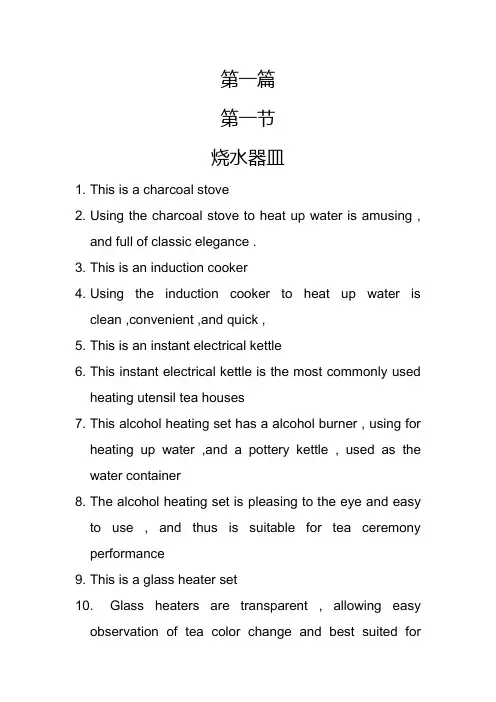
第一篇第一节烧水器皿1. This is a charcoal stove2. Using the charcoal stove to heat up water is amusing ,and full of classic elegance .3. This is an induction cooker4. Using the induction cooker to heat up water isclean ,convenient ,and quick ,5. This is an instant electrical kettle6. This instant electrical kettle is the most commonly usedheating utensil tea houses7. This alcohol heating set has a alcohol burner , using forheating up water ,and a pottery kettle , used as the water container8. The alcohol heating set is pleasing to the eye and easyto use , and thus is suitable for tea ceremony performance9. This is a glass heater set10. Glass heaters are transparent , allowing easyobservation of tea color change and best suited forbrewing dark tea , pu’er tea , and milk tea.1. 这是炭炉2. 用炭炉烧水古雅有趣3. 这是电磁炉4. 用电磁炉烧水卫生、方便、快捷5. 这是电随手泡6. 电随手泡是茶艺馆中普遍的烧水器7. 这是酒精炉具组合,这是酒精灯,用于加热。
有关茶艺的英文介绍作文
有关茶艺的英文介绍作文"英文,"Tea, a beverage steeped in tradition and culture, holds a special place in my heart. From the serene tea gardens of China to the bustling streets of India, tea has wovenitself into the fabric of daily life across the globe. As an enthusiast of the art of tea, or 茶艺(chá yì) as it's known in Chinese, I find immense joy in not just sipping a cup but also in the intricate rituals and ceremonies that surround it.Tea culture encompasses a wide array of practices, from the Japanese tea ceremony to the British afternoon tea. Each culture has its unique way of preparing, serving, and enjoying tea, reflecting its values and customs. For instance, the Chinese Gongfu tea ceremony emphasizes precision and mindfulness, with each movement carefully choreographed to bring out the best flavors of the tea leaves. On the other hand, the British tradition ofafternoon tea is a more relaxed affair, often accompaniedby scones, clotted cream, and lively conversation.Personally, one of my favorite aspects of tea cultureis the symbolism attached to it. In many cultures, tea is not just a beverage but a symbol of hospitality, friendship, and respect. For example, in China, serving tea to guestsis a sign of respect and gratitude, while in Morocco, the elaborate tea ceremony is a gesture of hospitality and welcome.Furthermore, the variety of teas available is staggering, each with its own unique flavor profile and health benefits. From the robustness of black tea to the delicate floral notes of green tea, there's a tea for every mood and occasion. I often find myself reaching for a soothing cup of chamomile tea before bed or indulging inthe rich flavors of Earl Grey tea during a leisurely afternoon.In addition to its cultural significance and delicious flavors, tea also boasts a myriad of health benefits. Greentea, for instance, is packed with antioxidants that can boost metabolism and improve heart health. Herbal teas like peppermint and ginger are known for their soothing properties, making them ideal for alleviating digestive issues or simply unwinding after a long day.Overall, the world of tea is a rich tapestry woven with history, culture, and flavor. Whether I'm savoring a cup of oolong tea in a tranquil garden or sharing stories over a pot of chai with friends, the beauty of tea never fails to captivate me."中文,"茶,一种充满传统和文化的饮料,在我的心中有着特殊的地位。
茶艺翻译英语作文

茶艺翻译英语作文Tea art is a traditional Chinese cultural activity that involves the preparation and serving of tea in a highly skilled and artistic manner. It is not just about making a cup of tea, but also about the aesthetics, etiquette, and philosophy behind the whole process.When it comes to tea art, the first thing that comes to mind is the elegant and graceful movements of the tea master. The way they pour the tea, hold the teapot, and serve the cups is like a beautiful dance that mesmerizes the audience.The tea ceremony is not just a performance, but also a way to communicate with the guests. Through the serving of tea, the host expresses their respect, hospitality, and sincerity to the guests, creating a harmonious and pleasant atmosphere.In addition to the visual and social aspects, the tasteand aroma of the tea are also crucial in tea art. The tea master carefully selects the tea leaves, controls the water temperature, and brews the tea to perfection, ensuring that every sip is a delightful experience for the guests.Tea art is not just a cultural practice, but also a way of life. It embodies the spirit of tranquility, harmony, and mindfulness, encouraging people to slow down, appreciate the moment, and find inner peace in the midst of a hectic world.。
茶艺翻译英语作文

茶艺翻译英语作文The Art of Tea。
Tea, as a traditional Chinese beverage, has a history of over 4,000 years. It is not only a daily drink, but also a symbol of Chinese culture. The art of tea, also known as tea ceremony, is a way to appreciate the taste, aroma, and the whole experience of drinking tea.The tea ceremony is not just about making and drinking tea, but also about the atmosphere and the spirit of harmony. It is a way to calm the mind and find inner peace. In the traditional tea ceremony, there are strict rules and procedures to follow, such as preparing the tea utensils, boiling the water, brewing the tea, and serving the tea. Each step requires patience, concentration, and respect for the tea and the guests.The art of tea is not only about the tea itself, but also about the environment in which it is enjoyed. The tearoom is usually designed to create a peaceful and tranquil atmosphere, with simple and elegant decorations. The host of the tea ceremony will pay attention to every detail, from the arrangement of the tea utensils to the choice of tea leaves, in order to create a harmonious and enjoyable experience for the guests.There are many different types of tea in China, each with its own unique flavor and aroma. Some of the most famous types of Chinese tea include green tea, black tea, oolong tea, white tea, and pu-erh tea. Each type of tea has its own brewing method and specific tea utensils, which adds to the complexity and beauty of the tea ceremony.In addition to the traditional Chinese tea ceremony, there are also many other tea cultures around the world, such as the Japanese tea ceremony, the English afternoon tea, and the Moroccan mint tea. Each tea culture has its own customs and traditions, but they all share the same spirit of hospitality, respect, and appreciation for theart of tea.The art of tea is not only a way to enjoy a delicious and healthy beverage, but also a way to connect with nature, culture, and people. It is a way to slow down andappreciate the simple pleasures of life. In today's fast-paced world, the art of tea can serve as a reminder to take a break, relax, and enjoy the present moment.In conclusion, the art of tea is a beautiful and meaningful tradition that has been passed down through generations. It is a way to appreciate the beauty of nature, the richness of culture, and the warmth of human connections. Whether you are a tea lover or not, the art of tea is something that everyone can learn from and appreciate. So, next time you have a cup of tea, take a moment to savor the taste, aroma, and the whole experienceof the art of tea.。
有关茶艺的英文介绍作文

有关茶艺的英文介绍作文英文:Tea art, also known as the Chinese tea ceremony, is a traditional practice that has been passed down for centuries in China. It involves the preparation and presentation of tea in a way that is both aesthetically pleasing and spiritually fulfilling. As a practitioner of tea art, I have come to appreciate the beauty and complexity of this ancient practice.The first step in the tea art process is the selection of the tea leaves. Different types of tea require different water temperatures and brewing times, so it is important to choose the right leaves for the occasion. Once the leaves have been selected, they are carefully measured and placed into a teapot or gaiwan (a small lidded bowl).Next, hot water is poured over the leaves and allowed to steep for the appropriate amount of time. During thistime, the tea master may perform a series of movements and gestures that are designed to enhance the flavor and aroma of the tea. These movements may include swirling the tea pot, tapping the lid, or gently stirring the tea with a bamboo whisk.Once the tea has been brewed, it is poured into small cups and presented to the guests. The tea master may also offer snacks or sweets to accompany the tea, such as dried fruit or pastries. Throughout the ceremony, the tea master will engage in conversation with the guests, discussing topics such as the history of tea, the health benefits of tea, and the cultural significance of the ceremony.In addition to its aesthetic and spiritual qualities, tea art is also a form of hospitality. By serving tea to guests, the tea master is expressing his or her respect and appreciation for the guests' presence. This aspect of tea art is particularly important in Chinese culture, where hospitality is highly valued.中文:茶艺,也被称为中国茶道,是中国传统文化中已经流传了数百年的一种实践。
介绍茶艺的英文短文作文
介绍茶艺的英文短文作文英文,Tea, a beverage cherished for its soothing aroma, rich history, and diverse cultural significance, has captivated enthusiasts worldwide for centuries. As an avid tea lover and practitioner of the art of tea, I am excited to delve into the fascinating world of tea culture.Tea culture encompasses various aspects, from cultivation and processing to preparation and consumption. Among the most captivating facets of tea culture is the traditional Chinese tea ceremony, known as 茶艺(chá yì). Rooted in ancient Chinese customs and philosophy, the tea ceremony embodies harmony, respect, and mindfulness.In a traditional 茶艺, the host meticulously prepares and serves tea to guests, following a series of precise movements and rituals. Each step is imbued with meaning and symbolism, reflecting the reverence for nature and the pursuit of inner peace. From rinsing the teaware to brewing the tea with precision, every gesture is performed withgrace and intention.One of the essential elements of 茶艺 is the selectionof teaware, which includes teapots, tea cups, and tea trays. These utensils are chosen not only for their functionality but also for their aesthetic appeal and cultural significance. For example, Yixing clay teapots are prizedfor their porous nature, which enhances the flavor of thetea over time. Similarly, delicate porcelain tea cups are admired for their elegance and ability to showcase thecolor and clarity of the tea liquor.The art of brewing tea is another highlight of the 茶艺. Different types of tea require specific brewing techniquesto unlock their full flavor potential. For example, greentea is best brewed at lower temperatures to preserve its delicate taste, while oolong tea benefits from multiple infusions to reveal its complex layers of flavor. The mastery of brewing techniques requires practice and patience, as the slightest variation in temperature or steeping time can profoundly impact the taste of the tea.Beyond the technical aspects, 茶艺 is also about creating a convivial atmosphere and fostering meaningful connections among participants. As the fragrance of teafills the air and conversations flow freely, barriers dissolve, and bonds are strengthened. Whether enjoyed in a tranquil tearoom or amidst the hustle and bustle of daily life, the tea ceremony offers a moment of respite from the chaos of the world.In conclusion, 茶艺 is more than just a ritualistic practice; it is a profound expression of culture, philosophy, and human connection. Through its time-honored traditions and rituals, 茶艺 invites us to slow down, savor the moment, and appreciate the beauty of simplicity. As I continue to explore the art of tea, I am reminded of the words of Lu Yu, the revered Chinese tea master: "Tea tempers the spirit and harmonizes the mind, dispels lassitude and relieves fatigue, awakens thought and prevents drowsiness."中文,茶,一种以其芳香、丰富的历史和多样化的文化意义而受人喜爱的饮料,几个世纪以来一直吸引着全球的爱好者。
英文版功夫茶演示 PPT
The gongfu tea ceremony or kung fu tea ceremony, also known as the Chinese tea ceremony, is a Chinese cultural activity involving the ritualized preparation and presentation of tea. It is probably based on the tea preparation approaches originated in Fujian and Guangdong. The original term gongfu cha (工夫茶) literally means "making tea with effort". Sometimes '功' instead of '工' is used thus 功夫茶. Today, the approach is used popularly by teashops carrying tea of Chinese or Taiwan origins, and by tea connoisseurs as a way to maximize the taste of a tea selection, especially a finer one.
Байду номын сангаас
• 95 °C for Oolong (乌龙) tea
• 100 °C for compressed teas, such as Pu-erh tea (普洱)
茶艺作文英语作文
茶艺作文英语作文The Art of Tea。
Tea, a beverage that has been enjoyed for centuries, holds a special place in the hearts of people all over the world. The art of tea, also known as tea ceremony, is a traditional practice that has been passed down through generations and is an integral part of many cultures. The tea ceremony is not just about drinking tea, but it is away of life, a form of art, and a means of connecting with others.The history of tea dates back to ancient times, and it has been an important part of many cultures for thousandsof years. In China, the tea ceremony is a highly respected tradition that has been practiced for over 1,000 years. Itis a way of showing respect, hospitality, and appreciation for the beauty of nature. In Japan, the tea ceremony, known as chanoyu, is a spiritual practice that emphasizes harmony, respect, purity, and tranquility.The art of tea is not just about the preparation and consumption of the beverage, but it is a holistic experience that involves all the senses. The ceremony typically takes place in a tranquil setting, such as a traditional tea house or a peaceful garden, and is often accompanied by beautiful music, incense, and flower arrangements. The preparation of the tea is a meticulous process that requires skill, precision, and attention to detail. The tea is carefully measured, whisked, and poured with grace and elegance.The tea ceremony is not just about the tea itself, but it is also about the connection between the host and the guests. It is a way of bringing people together, fostering a sense of community, and creating a space for meaningful conversations and connections. The act of serving and receiving tea is a gesture of kindness, generosity, and respect. It is a way of showing appreciation for the company of others and creating a sense of harmony and balance.The art of tea has many benefits for both the body and the mind. Tea is known for its many health benefits, including its antioxidant properties, its ability to improve digestion, and its calming effects. The tea ceremony itself is a form of meditation that encourages mindfulness, relaxation, and self-reflection. It is a way of finding peace and serenity in a busy and hectic world.In today's fast-paced and technology-driven world, the art of tea provides a much-needed antidote to the stresses of modern life. It offers a way to slow down, to be present in the moment, and to appreciate the simple pleasures of life. The tea ceremony is a reminder to take time for oneself, to savor the beauty of nature, and to cultivate a sense of inner peace and well-being.In conclusion, the art of tea is a timeless tradition that has been cherished for centuries. It is a practicethat brings people together, fosters a sense of community, and promotes mindfulness and well-being. The tea ceremony is a beautiful and meaningful way to connect with others, to find peace and tranquility, and to appreciate the beautyof life. So, let's take a moment to slow down, to enjoy a cup of tea, and to savor the simple pleasures of the art of tea.。
茶艺作文英语作文
Tea art,a profound aspect of Chinese culture,has been cherished for thousands of years.It is an elegant art form that combines the preparation and presentation of tea with a variety of cultural elements such as aesthetics,philosophy,and social interaction.The History of Tea ArtThe practice of tea art dates back to the Tang Dynasty618907AD,where it began as a simple ritual of tea preparation.Over time,it evolved into a sophisticated art form that was appreciated in the royal courts and among the literati.The Song Dynasty9601279 AD saw the introduction of more intricate tea ceremonies,including the famous tea frothing technique.The Process of Tea ArtTea art involves several steps,each of which is performed with a sense of mindfulness and grace.The process typically begins with the selection of highquality tea leaves, followed by the preparation of the tea set,which includes a teapot,cups,and a tea tray. The tea master then warms the teapot and cups with hot water,a step known as preheating the vessel.Next,the tea leaves are measured and placed into the teapot.Hot water is then poured over the leaves,allowing them to steep for a specific amount of time.The tea master carefully controls the temperature and steeping time to extract the optimal flavor from the tea.After the tea has steeped,it is poured into individual cups,often with a graceful pouring technique that creates a visual spectacle.The tea is then served to the guests,who are encouraged to appreciate the aroma,color,and taste of the tea.Cultural SignificanceTea art is not just about the physical act of making tea it is also a reflection of Chinese philosophy and values.The process of tea making is seen as a meditative practice, promoting tranquility and mindfulness.It embodies the principles of harmony,respect, and purity,which are central to Chinese culture.Modern Tea ArtIn contemporary times,tea art has spread beyond China and is practiced in various forms around the world.It has become a way for people to connect with their cultural heritageand to find solace in the busy modern world.Tea ceremonies are often held in tea houses, where guests can experience the art of tea making in a serene and traditional setting.ConclusionTea art is a beautiful and meaningful tradition that offers a unique window into Chinese culture.It is a practice that encourages us to slow down,appreciate the simple pleasures in life,and connect with others over a shared experience.Whether you are a tea enthusiast or simply curious about this ancient art form,exploring tea art can be a deeply enriching experience.。