
新版人教版教材高中英语必修2-unit4-History and Traditions Section 2-3重点词汇短语语法
Unit4 History and traditions Section 2-3重点词汇短语句型Section21.charge用法详解(1)vt.给......充电Before use,the battery must be charged.电池使用前必须充电。
(2)vt.收费;要价Charge sb.(money)for sth. 因某事向某人收费。
We won’t charge you for delivery.我们送货不收取你的费用。
(3)vt.控告;职责;谴责Charge sb. with(doing)sth. 因做某事而谴责/控告某人He was charged with murder.他被指控犯有谋杀罪。
(4)n.要价,收费admission charges 入场费free of charge 免费Delivery is free of charge.免费送货。
(5)n.【U】主管;掌管take charge of 主管;掌管in charge of 负责/主管in the charge of 负责/主管in the charge of=in one’s charge 由......负责/主管He took charge of the farm after his father’s death.他在父亲去世后掌管了农场。
I’m leaving the school in your charge.我这就把学校交给你掌管。
特别注意表示“因......控告......”的短语:accuse ...... of......2.announce用法详解(1)vt.宣布;宣告(决定,计划等);(尤指通过广播)通知announce sth.(to sb.)(向某人)宣布某事announce that......宣布......;通知......It is announced that...... 据宣布......They officially announced the news to the reporters. 他们正式向记者发布了这条新闻。
It is announced that there will be a celebration on National Day. 据宣布,国庆节要举行庆祝会。
(2)vt.声称;宣称;郑重地说She announced that she’d given up smoking.她宣称她已戒烟。
(3)(以信件,声音,信号等)通知,告知,播报Footsteps announced his return.听到脚步声,就知道他回来了。
词语积累(1)announcement n.通知make an announcement 宣布;下通知(2)announcer n. 广播员;播音员特别注意表示“向某人宣布某事”用announce sth. to sb. 或announce to sb. sth. 而不用announce sb. sth.3.amount用法详解(1)n.数量;数额a large amount of time/money 大量的时间/钱(修饰不可数名词)huge amounts of 大量的(修饰不可数名词)the amount of...... ......的数量(做主语,谓语用单数)The server is designed to store huge amounts of data.该服务器是为存储大量数据设计的The amount of sleep we need varies from person to person.我们对睡眠的需求量因人而异。
(2)vt.合计;共计amount to 合计;等于;相当于;意味着His earnings are said to amount to 300,000 per year.据说他每年的酬金合计为30万英镑。
Her answer amounted to a complete refusal.她的答复等于完全拒绝。
4.Her anser amounted to a complete refusal.她的答复等于完全拒绝。
4.fix用法详解(1)vt.使固定;安装fix one’s eye/attention on 集中目光/注意力于He fixed a shelf to the wall.他把架子装在墙上。
Fix your eyes on the road and we will be much safer.眼睛盯住公路,这样我们就更安全些。
(2)v.决定,确定(日期,时间,数量等)(=set)Has the date of the next meeting been fixed?下次会议的日期确定了没有?(3)vt.修理;校准;校正The car won’t start-can you fix it?这辆小汽车发动不起来了-你能修理一下吗?特别注意表示“集中目光/注意力于”的短语:focus/concentrate one’s eye/attention on5.approach用法详解(1)vt.&vi.(在距离或时间上)靠近,接近We heard the sound of an approaching car/a car approaching.我们听见一辆小汽车驶近的声音。
Winter is approaching.冬天就要来临了。
(2)vt.着手处理;对付What’s the best way of approaching this problem?什么是处理这个问题的最佳方式?(3)n.接近;方法;途经,其后常接介词toThe job market has changed and our approach to finding a job must change as well.就业市场变了,我们找工作的途经也要改变。
All the approaches to the palace were guarded by troops.通往宫殿的所有道路都有军队守卫。
归纳拓展at the approach of ...... 在......快到的时候易混辨析approach/way/means/method6.box用法详解(1)vt.打,拳击;把......装箱,把......装盒box one’s ears=box sb. in the ear 打某人耳光The oranges were boxed and sent off quickly.橘子被装入箱子中,然后很快便运走了。
I’ll box your ears if you say that again.如果你再说那样的话,我就打你耳光。
(2)n.盒子;箱子;包厢;专席;《口》电视机He has eaten a whole box of chocolates.他吃了一整盒巧克力。
They have reserved a box for us in the theatre.他们在剧院为我们预定了一个包厢。
What’s on the box tonight?今晚有什么电视节目?(3)n.一掌,一拳She gave him a box on his ears.她打了他一耳光。
归纳拓展box ......in 围困......词语积累boxer n.拳击手7.ensure用法详解ensure v.保证;担保;确保ensure sb. sth. 保证某人某物ensure sth. for sb. 保证使某人得到某物Preparedness ensures success.有准备,成功就有保证。
What can you do to ensure that you will stay healthy?你有什么办法保证你会健康永驻吗?This medicine will ensure you a good night’s sleep.这药能保证能让你睡一夜好觉。
This arrangement will ensure a large income for you.这个安排保证将给你带来一大笔收入。
特别注意表示“保证”的短语:make sure8.attend to用法详解(1)照料,照顾(=take care of);关怀Mother will attend to the baby while I go to the dance.我去跳舞时母亲照看孩子。
Are you being attended to,Sir?先生,有人接待你吗?(2)处理,对付(=deal with)I have some urgent business to attend to.我有一些急事要处理。
(3)注意;专心于We must attend to our work now.现在我们必须专心于我们的工作。
易混辨析attend to/attend词语积累attendance n.出席;参加;到场attend 出席;参加;上学;听课9.Position用法详解(1)vt.安装;安置;使处于position oneself ......就位/站立......Large television screens were positioned at either end of the statium.体育场的两端安装了大型电视屏幕。
(2)vt.确定......的位置,找到......位置Can you position them?你能找到他们在哪里吗?(3)n.(坐,立的)姿态,姿势;放置方式Make sure that you are working in a comfortable position.(4)n.处境;地位;状况put......in a difficult position 使......陷于困境This put him and his colleagues in a difficult position.这使他和他的同事陷于困境。
归纳拓展名词转化动词lunch vi.用午餐plant vt.立稳;竖立;安放bottle vt.用瓶装;把......装入瓶中box vt.把......装箱(盒)cup vt.使成杯状,把......放入杯内特别注意position 表示“处境;状况”,后接where 或in which 引导的定语从句,并在从句中坐状语。
10.eager用法详解eager adj. 热切的;渴望的;渴求的be eager for 渴望得到be eager for sb. to do sth. 渴望某人坐某事be eager to do sth. 渴望做某事She is eager for her parents’ approval.她渴望得到父母的赞同。
人教版新教材高中英语必修第二册:Unit 4 History and traditions 精品教学课件
(2) Facing the puzzling situation,the chief manager looked puzzled . (puzzle)
◆单句写作
(3) People have long puzzled over/ abou(t 苦苦思索)how the Egyptians moved such huge
新教材 高中英语 必修第二册 Unit 4 HISTORY AND TRADITIONS
◆单句语法填空 (1) The terrible accident resulted from careless driving. (2)[词汇复现]The accident resulted in heavy losses because many cultural relics were destroyed. (3) He studies very hard. As a result,he now speaks brilliant English. (4) He has a preference for literature as a result of the influence from his mother. ◆句型转换 (5) His failure resulted from not working hard enough. = __N_o_t_w_o_r_k_i_n_g_h_a_r_d_e_n_o_u_g_h__re_s_u_lt_e_d_i_n_h_i_s_f_a_il_u_r_e_. _______________________________
puzzle over/about 苦苦思索
crossword puzzle 填字游戏
◆词语积累
puzzlement n. 迷惑,困惑
Unit 4 History and Traditions高中英语人教版(2019)必修第二册
Located (locate )to the east of the Temple of Confucius, this was the historical home of the descendants of Confucius where they managed sites and ceremonies in Qufu. Kong Family Mansion Today it is a museum.
other building in the city can be taller than it.
WX::AOWnha,iittd,hyaioot’usmmreesipasnecwat.hnTehreeatxS’sphaarkleietstslpesebiaoritenlwikawesmfhryoicmhoh?mWmethoeawtana–ncSsotirnsactofiodmredn-ecuetp–honCi-noAngvfoudnc.iiufsfaenrdent frSohamkestpheaere,m5._e_a_tw_n_oi_no_fg_t_h_oe_gf_r_eta_ht_ee_st_im_n_i_nd_di_sv_in_id_h_ius_t_aor_ly_w_! oI rredalsly. wSaontmtoeviisdit itohemUKs– I’m
3. He lived _o_ve_r__20_0_0__ye_a_r_s__ago.
Xiao Kong
1. Confucius has _o_v_e_r_3__m_i_ll_io_n__descendants. 2. He was a great _ed_u_c_a_t_o_r and had many ideas about_e_d_u_c_a_ti_o_n____. 3. He was _on_e__o_f _th_e__gr_e_a_t_es_t_m__in_d_s__in history.
人教版(2023) 必修第二册 Unit 4 History and Traditions L

人教版(2023)必修第二册Unit 4 History and Traditions Listening and Talking课件(共20张PPT 内嵌音频)(共20张PPT)新人教版高中英语必修二Unit4 History and TraditionsListening and TalkingWhat he sawWhat he ateHis feelingsHis commentsIf you plan to travel in Pingyao on the coming(即将到来的)Labour Day(劳动节)/May Day. Which aspects(方面)do you want to ask Paul Where he wentWhat he didLead-inMing Qing Street明清一条街Lead-inThe city wall古城墙平遥古城有六座城门,南北各有一座,东西分别有两座,东西门外均筑有附属的瓮城,形如乌龟的头尾和四足,问当地人,形似乌龟,故有“龟城”之称。
Lead-inAncient Government Street古县衙Lead-inRishengchang Bank日昇昌记Lead-inTemples likeZhengguo temple 镇国寺Shuanglin temple 双林寺Lead-inFoods in Ping Yao炒碗托(a kind of wheaten(小麦的) food面食)Shanxi beef with Shanxi aged vinegar/ v n ɡ (r)/山西老陈醋Millet / m l t/ cold cake黄米凉糕Sweet rice 甜米Backpacker Paul is talking to a receptionist at an international hostel inPingyao, China.A BackpackerA receptionistA backpacker is a person who goes travelling with a backpack.Pre-listeningMing-Qing StreetAncient Government OfficeQiao Family CourtyardWang Family CourtyardRishengchang BankMount Mianthe city wallZhengguosi TempleShuanglin TempleListen to the conversation and tick the places mentioned.While-listeningListen and complete the sentences to describe how the speakers felt.I had expected something different. Paul sounded__________________It was like walking into history. Paul sounded _______It wasn’t as big as I had expected. Paul sounded _______Some of the snacks there are amazing. Xiao Yan sounded__________________I had no idea there would be so many tourists. Paul sounded__________________Wow, I can’t believe you didn’t see the wall. Xiao Yan sounded__________________disappointedamazedsurprisedsurpriseddisappointedamazedWhile-listeningXiao Yan: Paul: Hi, Paul. I’m sorry to hear you’re leaving tomorrow. So what did you make of PingyaoWell, to be honest, when I first arrived, I was a little disappointed. I had expected something different. But then I walked into the old city. I was, so amazed! It was like walking into history. So many beautiful buildings from the Ming and Qing dynasties ...TapescriptPost-listeningXiao Yan: Paul: Yes, Pingyao has a long history-over 2,000 years. It used to be a very important banking centre in China.Yes, so I visited the Rishengchang Bank and learnt all about the Jin Businessmen. I’ve got to say though, it wasn’t as big as I had expected. But it was still interesting to learn about what banks were like almost 200 years ago.Post-listeningXiao Yan: Paul: Xiao Yan: Paul: Oh, well, what about the Ming-Qing Street -that’s pretty big. Some of the snacks there are amazing!Oh, that place, yes. But I had no idea there would be so many tourists! So I decided to leave and ride out to Shuanglin Temple.Oh, cool, that’s one of my favourite places! It’s so peaceful out there. Yeah, that place is really quiet. And some of those sculptures一wow! I couldn’t believe how big and lifelike they were.Xiao Yan: Paul: Xiao Yan: Paul: Yes, they’re amazing. So today you walked along the city wall, rightUnfortunately, no. I just didn’t have the time.Wow, I can’t blieve you didn’t see the wall! You have to stay longer, Paul. There’so much more of Pingyao’s history to see.Oh, don’t worry, I’ll be back in Turtle City one day-I just can’t get enough of those beef noodles!Expressing excitement, surprise, and disappointmentI had no idea…I didn't know...I was eager/surprised to see/learn/hear that…It was so much fun!It's so amazing that...It was a little disappointed.Imagine one of you has just visited Pingyao. Role-play the conversation below. Then continue the conversation using the expressions in the box. TalkingA: Wow, I’ve just come back from Pingyao. It was amazing!B: Oh, I loved Pingyao! So did you see the Ming-Qing StreetA: Of course, but I didn’t expect to see so many tourists.B: Yeah, I know what you mean, but there are some great snacks there. How about the …You can change Pingyao to London/Beijing/Lijiang/Tibet...Next pageWork in pairs and continue the conversationB: How about ...A: Well, it wasn't as interesting...... How about the Shuanglin TempleA: Well, it wasn't as interesting as I'd expected. I waseager to see something different.B: Have you visited the city wallA: The city wall I have no idea where it is!B: I can't believe you didn't see the wall. It was really alittle disappointing.A: Then which place impresses you mostB: Rishengchang. The guide told us its history. Itwas so amazing.Show timeWelcome three groups and share your conversations.Homework:Retelling (故事复述)According to the material, retell the story梗要:Paul是一位来到山西平遥观光的青年游客,在离开平遥的前一天国际青年旅社的招待员Xiao Yan 聊起这几天旅行中的经历和感受。
人教版高中英语必修第二册精品课件Unit 4 HISTORY AND TRADITIONS 写作指导
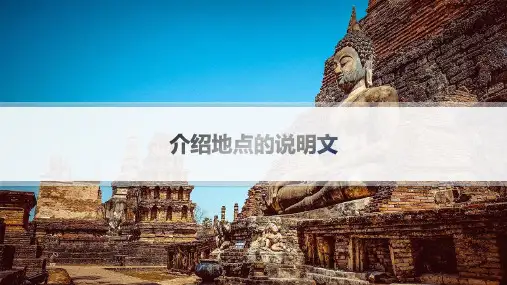
(二)精彩句型 1.They attract visitors from every corner of the world. 它们吸引了来自全世界的游客。 2.A trip along the Yellow River will enable you to know more about the people living on its banks. 一次黄河之行将使你更多地了解生活在黄河两岸的人民。 3.The ancient temple covers an area of ten mu,with a history of over 100 years. 这座古庙占地十亩,有一百多年的历史。 4.It is most famous for the beautiful West Lake,which has a long history with a love story. 它最著名的是美丽的西湖,它有着悠久的爱情故事。
人教版(2019)必修第二册Unit 4 History and Traditions List教案

2019新人教高中英语必修二Unit 4 Listening and Speaking公开课教案Analysis of the materials:Theme Group: History,Society and CultureThis unit focuses on history and traditions covering the long history and cultural traditions of China,Britain,Russia,Ireland,Brazil,Greece,Egypt and other countries.It's of great significance for students to understand the English language,the historical and cultural connotation of the world's important civilization and the way of thinking contained in these history and traditions.In this unit,you will read about history and traditions of the UK;and listen to people talk about historic places and share your own experiences;and write about a place by describing different senses;and learnmore about different tea cultures,etc.The Target Teaching Text Analysis(目标文本分析)(What)Theme:With the section purpose of sharing views on historic sites under the guidance of the unit theme history and traditions,the listening script is a dialogue between a Chinese student and a British tourist on their way to Confucius Temple.It'll help Ss learn about Confucius in Qufu and Shakespeare in the UK as well as their profound influence on Chinese and British history and traditions respectively,which need all human's protection and inheritance(保护和传承)and lay a good foundation for the following Reading and Thinking section.(How)Feature:Evidently,it is a conversation with Shakespeare and Confucius mentioned together and some idioms as well as historic sites at home and abroad presented, aiming to make Ss learn more about Confucius and be open with colorful cultures and traditions.(Why)Purpose:It's mainly meant to help Ss understand it is human beings,history and traditions that make historic sites truly alive and meaningful, andreflect on the profound influence of Confucius and his thoughts on Chinese history and traditions,after which Ss will share some views on two questions,enhancing their international perspective,strengthening national identity and cultural confidence and learning to present China stories well(增强国际视野,坚定民族认同与文化自信,讲好中国故事).Analysis of the students:Students involved are from Pearl Class 2,Senior 1,most of whom are active, energetic and quick-minded with relatively creative thinking,and have mastered some good learning methods.In a way,they are generally hard-working and eager to improve their overall English abilities.Luckily, they know about Confucius and Shakespeare,and are very familiar with Confucius's thoughts as well as some basic information about Shakespeare. (Wonder)H owever,they complain that they have much trouble in listening and speaking,forgetting what they've heard quickly.And they have a strong desire to have more to say rather than 1 or 2 words. (To learn)Thus,listening strategies with three steps will be presented ahead of time.Then Ss may find it relatively relaxing to share views on historic sites to practice listening and speaking,the purpose of which is to strengthen their national identity and cultural confidence.Teaching aims:1.Enable students to get familiar with the vocabulary of“Confucius,Temple ofConfucius,Confucius' descendants,Confucius 'educational thoughts”.2.Guide students to understand some English idioms and their related cultural allusions.3.Help students to talk about Confucius 'ideas on education and introduce the historyand importance of a historic site.Teaching key and difficult points:1.To help students to get familiar with the vocabulary of“Confucius,Temple ofConfucius,Confucius' descendants,Confucius' educational thoughts".2.To enable students to understand English idioms and the related cultural allusions.3.To lead students to talk about Confucius' educational thoughts.Teaching procedures:Step I Lead-inLook at the Opening Page and have a discussion.1.How do you understand the quote“A people without the knowledge of their past history,origin and culture is like a tree without roots"by Marcus Garvey?2.Why is it important to protect historic buildings and cultural traditions?Suggested answers:1.In this quote,Garvey is emphasizing the importance of knowledge about the history of yourcountry and people.He uses“people”in the countable form to refer to all the persons who live in a particular place or belong to a particular country,race,or other groups.In Garvey's case,race is especially important.A tree is a good metaphor for a group of people.For example,we talk about“family trees”,which detail our relatives across time.A tree without roots would easily fall down and die.The roots also feed the tree.The roots of a tree cannot usually be seen,but they often spread deep and wide.In this way,a people's history also has deep roots that spread far and wide.If people do not know about their history,they will not learn from the past and will not be able to develop and progress well into the future. 2.It is important to protect historic buildings and cultural traditions because they are a recordof our shared history and tell us a lot about who we are as a country and people.Step ⅡListeningActivity 1 Warming upLook at some photos ofQufu.What can you say about these places?Suggested answers:Activity 11.Temple of Confucius:The most famous and largest temple honoring the great sage.It is also aUNESCO World Heritage Site.It covers 16,000 square meters and has 460 rooms.The main part consists of nine courtyards with several gates.Dacheng Hall stands at the centre and isthe principal place for offering sacrifices to Confucius.2.Kong Family Mansion:Located to the east of the Temple of Confucius,this was the historicalhome of the descendants of Confucius from where they managed sites and ceremonies in Qufu.Today it is a museum.3.Cemetery of Confucius:This is where Confucius and his descendants are buried.There are morethan 10,000 of them,buried here over 2,000 years.The cemetery has had many renovations and extensions in its history.Activity 2 PredictionPredict what the listening text is about by looking at Activity 2 on page 38.Suggested answer:The listening text is probably about the introduction of a great educator—Confucius.Activity 3 First listeningListen to a conversation between a British tourist and a Chinese student in Qufu,and then write down what they say about Confucius.(红色为学生作答)Activity 4 Second listening1.Listen again and decide whether these statements are true(T),false(F),or not mentioned(NM).(1)Confucius said that learning without understanding leads to confusion.( )(2)Xiao Kong is doing a research project on Confucius philosophy.( )(3)As one of Confucius' descendants,Xiao Kong's name is recorded in the family tree.((4)Dacheng Hall is the tallest building in Qufu.( )2.Answer the question:Why do you think William said his hometown was similar to Qufu?A.There are famous halls in his hometown.B.There are no tall buildings in his hometown.C.Both places have a famous person who was born there.D.His hometown doesn't allow other buildings to be more noticeable than the historic buildings. Suggested answers:1.(1)F(2)F(3)NM(4)T 2.DActivity 5 Third listeningWrite down the English idioms that are used in the conversation.Explaintheir meanings and think about some Chinese equivalents.(红色为学生作答部分)SteplIISpeakingActivity 1 Draw a mind map to sort out the information about Confucius in this class and listActivity 2 Think about a historic site that you have visited,work in groups and give anintroduction to its historyand importance.and statues.They were constructed over many dynasties and are an important record of tradition and belief in China during that time.StepIV Homework1.Must:Explorative assignment(探究性作业):Output a n essay with requirements below.(30′)假如你是来自21世纪的李华,有幸穿越时空遇见孔子,你想对他说些什么?要点如下:(1)孔子及其弟子的言行和思想汇聚成《论语》,在全世界广为传播,并举例说明;(2)结合日常学习生活阐述孔子的“温故而知新”对你的影响;Key words:The Analects of Confucius《论语》;Review the old and learn the new 温故而知新注意:可适当增加细节,恰当描述你对孔子想说的话。
Unit4HistoryandtraditionsReadingforWriting课件-高中英语人

• rolling green hills • sheep
• coast • ocean waves
Pre-reading
Work in pairs and make a prediction: What is the text
mainly about according to the title and the given picture?
smell
sweet scent
While-writing
Use what you have learnt in this unit to describe an interesting, exciting, or surprising place.
Step 1: Work in pairs. Choose one of your favorite places and tell a partner why you think it is interesting, exciting, or surprising. Step 2: Use the questions below to describe the place you have chosen. ·What can you see?·What can you hear?·How does the place feel? ·What can you smell?·What can you taste there? ·What does the place make you think or feel? Step 3 : Use your answers to draft a passage about the place.
What words does the writer use to describe sensory details?
人教版(2019)必修第二册Unit 4 History and Tradit课文讲解课件(共30页
people: 1) [pl.] 人,人们 2) [C] 民族,种族 the 56 peoples of China
Big Ben (大本钟)
Houses of Parliament (国会大厦)
Buckingham Palace(白金汉宫)
Tower Bridge(塔桥)
Activity 3
when? 1st century 5th century 8th century
11th century
16th century
What happened?
What changed?
Romans arrived
towns and roads
language and way Anglo-Saxons came houses were built
联合王国的人被称为“英国人”,这意味着联合 王国也经常被称为英国或大不列颠。
Para.3
The four countries that belong to the United Kingdom work together in some areas.
last country was Ireland, but later the southern half didn't want
to be __jo_i_n_e_d__to________ the United Kingdom.
A: I remember now! The southern part _b_r_o_k_e__a_w_a_y___ from
Wales was joined to Kingdom of England
When?
What happened?
新人教版高中英语必修二Unit4History and Traditions单元分析
Unit 4 History and Traditions 单元分析本单元主题:人与社会﹣﹣历史、文化与传统一、单元内容分析本单元以历史与传统为话题,围绕中国、英国和爱尔兰等国家的悠久历史和文化传统展开,内容涉及历史遗迹和国家历史概况,通过景物描写表达的深层含义和作者情感,以及分享观光旅游的经历,引领青少年了解中国、英国、爱尔兰、墨西哥等多个国家的悠久历史和文化传统,积极思考历史文化与传统的重要性及现实意义。
旨在让青少年能够结合自己的生活和学习需要及相关历史文化知识等,观察和分析语言和文化现象,了解相关国家悠久历史和特色传统的文化内涵和现实意义,思考历史与现实的辩证关系。
以下为教材各部分教学内容简要分析及教学活动实施建议:1.Opening Page 主题图展示的流经伦敦的泰晤士河及其岸边的重要建筑群,集中体现了英国的历史文化风貌,是英国历史、地理、人文、建筑艺术等方面的一个缩影。
开篇页的引言" A people without the knowledge of their past history , origin and culture is like a tree without roots ."即"一个不了解自己历史、起源和文化的民族,就如同一棵无根之树"。
通过类比,阐释了历史起源及其所蕴含文化的重要性。
2.Listening and Speaking : Share views on historic sites 外国游客的视角,描写他们对孔子这位对中国历史与文化传统产生深刻影响的伟大人物的好奇、仰慕和喜爱,并由孔子后人Xiao Kong 来介绍有关孔子后裔及其教育思想等方面的情况,语境创设真实,容易引起学生的兴趣和共鸣。
在对话中,William 用到了Achilles ' heel 、pull one ' s leg 、fish out of water 等英语习语和典故,并由一个城市建筑限高的细节,联想到自己的故乡﹣﹣埃文河畔的斯特拉特福,从而引出英国伟大的剧作家莎士比亚,既体现了语言、文化、历史、传统的有机结合,又反映出中英两国对历史与传统的尊重与保护,同时也为后面板块中与英国相关内容的学习进行预热和铺垫。
Unit 4 History and Traditions高一英语(人教版2019必修第二册)
教学中学生基本适应了主题探究,语言应用和交流分享的教学 方法,表现出了很强的学习和表达的兴趣和愿望,能积极参与阅 读任务获取信息,理解表达回答问题,提取文本中的关键功能句, 并用于自己的思维表达中,通过学生的表现,我们对新教材的读 思教学编写思路有了信心,今后的教学中只要坚持,就一定还会 有成绩;但同时也暴露出了学生们对理解和表达一体学习方式的 准备不足, 对新的英语方式还没有完全适应,导致课堂不知如 何应用。今后一段时间需坚持理解和表达一体的课堂学习方式的 探索。 通过在理解中学习构思和语言,在表达中应用语言,在 完成任务中提升能力的课堂学习方式,落实学科核心素养的培养 目标。
教学反思
1)Reading and Thinking部分获取梳理文本信息,耗时长且乏 味,如何改进教学设计,使课堂形成有趣的教学过程?
2)就本单元小单元2,涉及很多背景知识,课堂时间有限,不 能留出足够的活动时间,请问学生应从哪些方面进行单元学习前 的预习工作?
无论历史和传统,都是很大的概念,本单元主要通过旅行感受 历史遗迹,感觉把历史的范畴狭窄化了,请问如何通过有意引导 来避免知识的诅咒?
语篇内容
主题意义
从一个旅行者的角度 描述自己熟悉的、有 描述爱尔兰乡村的美 趣的、令人惊讶的地 丽景色和风土人情。 点,挖掘其历史文化
传统,并表达感受和 情感。
全面细致地介绍了伦 深度介绍伦敦历史景
敦的概况和历史文化 点,更好地了解英国
景点。
社会文化及英语语言
的文化背景。
单元大观念 本单元以历史与传统为话题,围绕中国、英国和爱尔兰等国家的 悠久历史和文化传统展开,内容涉及历史遗迹和国家历史概况,通 过景物描写表达的深层含义和作者情感,以及分享观光旅游的经历 ,引领青少年了解中国、英国、爱尔兰、墨西哥等多个国家的悠久 历史和文化传统,积极思考历史文化与传统的重要性及现实意义。 旨在让青少年能够结合自己的生活和学习需要及相关历史文化知识 等,观察和分析语言和文化现象,了解相关国家悠久历史和特色传 统的文化内涵和现实意义,思考历史与现实的辩证关系。
Unit 4 History and traditions英语新教材知识讲学(人教版必修第二册)
人教版新教材高一英语必修二知识点梳理Unit 4 History and Traditions1.belong to属于,是……的成员e.g. ①He belongs to the football club.他是足球俱乐部的成员。
②Lions and tigers belong to the cat family.狮子和老虎属于猫科。
③As is known to us, China is a country belonging to the Third World. 众所周知,中国是一个属于第三世界的国家。
温馨提示:belong to不用于进行时态也没有被动语态。
类似用法的还有take place, occur, happen 等。
2.defence n. 防御;保卫(1)in defence of 为了保卫;为……辩护in sb.'s defence为某人辩护(2)defend vt.防守;保卫;辩护;维护defend ... from (against)...保护……免受……;保卫……抵御……e.g. ①More and more women today have learned to arise in defence of their legal rights. 现在越来越多的妇女学会起来保护她们的合法权利。
②I have to say in her defence that she knew nothing about it beforehand. 我得为她说句话,她事先并不知道此事。
③Their duty is to defend the country from / against its enemies. 他们的职责就是保卫国家,抵御敌人。
温馨提示:与defend ... from / against ... 用法类似的还有:prevent ... (from) ...; stop ... (from) ...; keep ... from ...; protect ... from / against ...等,在被动语态中from都不可省略。