
人教版新课标高中英语必修二-unit4-wildlife-protection-Warming-up
2020春高中英语 Unit 4 Wildlife protection Section Ⅰ Warming Up,Pre-reading,Reading & Comprehend
Unit 4 Wildlife protection
Section Ⅰ Warming Up,Pre-reading,Reading & Comprehending
一、写作词汇检测
根据每一组的提示词,完成或者翻译句子
1.succeed
1)I believe that I will be in the future.
2)他成功地游过了那条河流。
答案:1)successful
2)He succeeded in swimming across that river.
2.harm
1)No one believes that the product is
to the environment.
2)他们不会伤害那个孩子。
答案:1)harmful
2)They won’t harm that child/kid.
3.employ
1)My friend and I have been
by that company.
2)我们正忙着做作业。
答案:1)employed
2)We are employed in doing our homework.
运用所学单词或短语造句
4.appreciate
答案:I would appreciate it if you could offer me the job.
5.protect...from...
答案:They have to protect the children from catching a cold.
二、阅读词汇检测
阅读下列句子,说出黑体词的含义
1.—What is Mike doing?
—He is rubbing his glasses.
含义:
答案:擦
2.—Can you tell me where you placed the money?
高中英语:必修2+4+Unit+4 Wildlife+protection+Word版含答案
高中英语讲义
只要坚持 梦想早晚会实现 1
一、语基必备知识
(一)重点词汇——分类记忆
Ⅰ.阅读词汇——知其意
1.wildlife n. 野生动植物
2.habitat n. 栖息地;(动植物的)自然环境
3.threaten vt.& vi. 恐吓;威胁
4.endanger vt. 危害;使受到危险
5.reserve n. 保护区
6.zone n. 地域;地带;地区
7.species n. 种类;物种
8.carpet n. 地毯
9.fur n. 毛皮;毛;软毛 高中英语讲义
只要坚持 梦想早晚会实现 2 10.rub vt. 擦;摩擦
11.mosquito n. 蚊子
12.insect n. 昆虫
13.income n. 收入
14.county n. 县;郡
15.incident n. 事件;事变
16.fierce adj. 凶猛的;猛烈的
17.extinction n. 灭绝;消亡
Ⅱ.核心词汇——写其形
1.certain adj. 确定的;某一;一定
2.importance n. 重要(性)
3.contain vt. 包含;容纳;容忍
4.attention n. 注意;关注;注意力
5.bite vt.& vi. 咬;叮;刺痛
6.loss n. 损失;遗失;丧失
7.ending n. 结局;结尾
8.decrease vi.& vt. 减少;(使)变小或变少
9.laughter n. 笑;笑声
10.affect vt. 影响;感动;侵袭
Ⅲ.拓展词汇——通其变
1.protect vt.保护→protection n.保护
2.respond vi.回答;响应;做出反应→response n.回答;反应
3.distant adj.远的;远处的→distance n.距离;远方
人教版高中英语选修2-Unit-4-Wildlife-Protection教学设计
word格式-可编辑-感谢下载支持
英语学科教学设计
(1)教学内容分析
课型 阅读课
教学时间 45分钟
教学对象 高一年级学生
教学方法 直观教学法,任务型教学法,合作学习教学法,情境教学法
教学目标
知识与技能
1.了解濒危野生动物的相关知识及他们的生存现状;
2.掌握与野生动物保护有关的词汇、短语及句型,如respond,contain,protect...from,We are being
killed for the wool beneath our stomach等;
3.掌握略读、寻读、细读等阅读技巧,能理清文章主要脉络及重要事件。
过程与方法
1.通过略读、寻读、细读等阅读技巧,归纳文章大意及段落大意并找出重要信息;
2.通过仔细阅读,培养学生创造性探索和解决问题的能力;
3.积极参与小组合作与交流,分组讨论完成任务,培养学生合作探究的精神。
情感态度与价值观
1.认识保护共同生活在地球上的动植物的重要性和紧紧迫性,树立保护动物、保护自然的意识;
2.了解更多有关保护野生动物的知识,培养学生保护动动物、热爱自然的责任感和使命感;
3.在小组交流讨论中,培养学生的合作探究意识。
教学重点 1.培养学生的阅读能力。学会运用标题预测、略读、寻读、细读等阅读微技能,使学生从微观和宏观两个层面来把握课文内容,培养学生的阅读理解能力;
2.熟悉重点词汇、短语和重点句型;
3.帮助学生树立保护动物、保护自然的意识,培养起责任感与使命感。
教学难点 1. 培养学生快速阅读,查找文章信息的能力;
2. 引导学生积极参与课堂学习及相关活动,使学生认识到保护共同生活在地球上的动植物的重要性和紧迫性。
学习技能 学习层次 教学媒体
听 说 读 写 知道 理解 运用 黑板 录音 录像 课件
语词教学 √ √ √ √ √ √ √
结构教学 √ √ √ √ √ √ √ √
高中英语人教版必修2Unit4WildlifeProtection完整教案

高中英语人教版必修2Unit4WildlifeProtection完整教案
教学过程
一、课堂导入
Wildlife Protection
As we all know,there are less and less animals,we should try
our best to protect animals.Do you know why we should protect
wild animals?If you want to know more,please follow me,let’s
learn the text“wildlife protection”.
二、复习预习
1)The important words in this passage:
1.goal_________________
2.calculate_____________
3.simplify_____________
4.sums______________
5.technology____________
6.tube_________________
7.revolution____________
8.arise_________________
9.appearance_____________
10.totally_____________
11.download______________
/doc/1e1003784.html,work_______________必修2Unit4Wildlife Protection
适用学科英语适用年级高三适用区域全国课时时长(分钟)60知识点
名词辨析;动词辨析;形容词辨析;副词辨析;
动词短语辨析;完成句子;句子翻译
教学目标知识: 1.快速复习掌握本单元词汇。
2.快速扩词汇量。 方法: 1.老师和学生一起翻译短文并从中找出自己不认识的词汇。
2.学生将不认识的词汇整理到笔记本上,并默写出所整理的词汇的汉语意思。能力: 1.能根据老师所翻译的文章快速记住生词的汉语意思。
高中英语必修二unit4wildlifeprotection教学设计
1 专题名 必修二Unit4 Wildlife protection
课题名 Reading---How Daisy Learned To Help Wildlife
编者:
一、课标内容。
重点难点 重点: 学生通过阅读课文,理解保护野生动物的重要性,提高保护野生动物的意识
难点: 学生能够在阅读的过程中,采用不同的阅读技巧,对主要的阅读信息进行记录,并能根据这些信息对原文进行复述。
学科指导意见 不宜要求学生用长篇文章叙述保护野生动物的现状及对策。
会考
考纲 知识条目 考试要求
合格 优秀
能从一般性文章中获取和处理主要信息,能通过文章中的线索进行推理 √
能理解文章主旨和作者意图 √
能通过上下文克服生词困难,理解语篇意义 √
高考
考纲 理解主旨和要义;理解文章中具体信息;根据上下文推断生词的词义;作出判断和推理;理解文章的基本结构;理解作者的意图、观点和态度。
二、学案内容。
【预习了解】
Task1.True or False
○1. The antelope in Tibet becomes an endangered species because of its fur being used to make
sweaters. ( )
○2.The living conditions of the elephants are better than they were.
( )
○3.The millipede insect produces a drug natually which can protect animals from mosquitoes.
高中英语必修二-课文详解Book-2-unit-4
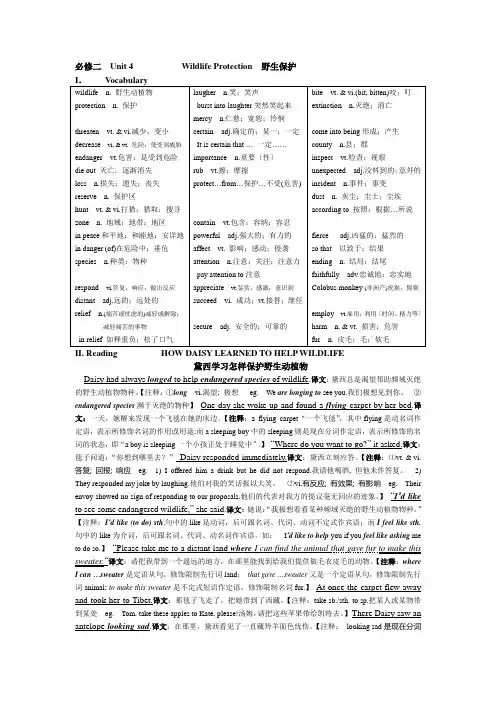
必修二 Unit 4 Wildlife Protection 野生保护
I. Vocabulary
wildlife n. 野生动植物
protection n. 保护
threaten vt. & vi.减少,变小
decrease vi. & vt. 危险;使受到威胁
endanger vt.危害;是受到危险
die out 灭亡;逐渐消失
loss n.损失;遗失;丧失
reserve n. 保护区
hunt vt. & vi.打猎;猎取;搜寻
zone n. 地域;地带;地区
in peace和平地;和睦地;安详地
in danger (of)在危险中;垂危
species n.种类;物种
respond vi.答复;响应;做出反应
distant adj.远的;远处的
relief n.(痛苦或忧虑的)减轻或解除;
减轻痛苦的事物
in relief 如释重负;松了口气 laugher
n.笑;笑声
burst into laughter突然笑起来
mercy n.仁慈;宽恕;怜悯
certain adj.确定的;某一;一定
It is certain that … 一定……
importance n.重要〔性〕
rub vt.擦;摩擦
protect…from…保护…不受(危害)
contain vt.包含;容纳;容忍
powerful adj.强大的;有力的
affect vt. 影响;感动;侵袭
attention n.注意;关注;注意力
pay attention to注意
appreciate vt.鉴赏;感激;意识到
succeed vi. 成功;vt.接替;继任
secure adj. 安全的;可靠的
bite vt. & vi.(bit, bitten)咬;叮
extinction n.灭绝;消亡
人教版高一英语必修二Unit 4课文翻译
人教版高一英语必修二Unit 4课文翻译
Unit 4 Wildlife protection
Reading
HOW DAISY LEARNED TO HELP WILDLIFE
戴茜是如何学会保护野生动物的
AtDaisy had always longed to help endangered species of wildlife. 戴茜一直以来都渴望帮助那些濒临灭绝的野生动植物。One day she woke
up and found a flying carpet by her bed. 一天她醒来,发现床边有一块飞毯。 “Where do you want to go?” it asked. Daisy responded
immediately. “I’d like to see some endangered wildlife,” she said. 飞毯问:“你想去哪儿?”戴茜立刻回答道:“我想去看看濒临灭绝的野生动物。 “Please take me to a distant land where I can find the animal that
gave fur to make this sweater.” 请带我到遥远的地方,在那里我可以发现为制作这件毛衣而提供毛绒的那种动物。”At once the carpet flew
away and took her to Tibet. 飞毯立刻开始起飞了,带她到了中国的西藏。 There daisy saw and antelope looking sad. 在那里,戴茜看到一只藏羚羊面带忧郁的神色。 It said, “We’re being killed for the wool
beneath our stomachs. Our fur is being used to make sweaters for people
英语高一必修二学案:Unit_4_Wildlife_protection_Period_2_Language_points_in_Warming_up_and_Reading
Book 2 Unit 4 Wildlife protection
Period 2 Language points in Warming up and Reading (I)
导学目标
1.熟记学案中所列出的单词和短语: decrease, die out, hunt, in danger of, relief
2.通过对这些词汇的理解能够更深层次地理解课文,同时会用这些词汇造句
自主合作学习
1.decrease vt.& vi.减少;(使)变小;或变少 n.减少,减小
品味典例:
If their habitat is threatened or they cannot find enough food,their numbers may decrease.(P25)
如果它们的栖息地受到威胁或是它们找不到足够的食物,它们的数量就会减少。
They are making every effort to decrease the production cost.他们正尽力降低生产成本。
There's a decrease in the annual birthrate. 年出生率正在下降。
归纳拓展:
decrease to / by ... 减少到/了…… a decrease in...在…方面减少了 decrease from...to...从…减少到…
increase vi. & vt. 增加;增长;增强 n.增加;增加的数量
increase to/by ...增加到/了……
on the decrease/increase 在减少/增加
The price of wheat has decreased by 15%. 小麦价格降低了15%。
小试牛刀: 介词填空
①There has been some decrease _____________ traffic accidents this year.
人教版高中英语必修二Unit 4 Wildlife protection
Unit 4 Wildlife protection
(学生版)
◆ 思维导图
重点词汇 protection decrease respond distant relief contain hunt loss
appreciate succeed powerful employ harm inspect affect
重点短语 protect... from... in peace in danger in relief burst into laughter
pay attention to die out so that according to come into being
其它词汇 wildlife endanger reserve laughter carpet mercy certain wild zone
importance unexpected attention income secure insect incident bite
fierce faithfully ending disappearance
重点语法 现在进行时的被动语态
◆ 新课讲解
Part 1 重点词汇(一)
1. Green vegetables _________ nutrients, __________ vitamin A and C.
高中英语吉林同步教学设计:Unit 4 Wildlife protecti
2015-2016高中英语吉林同步教学设计:Unit 4 Wildlife
protection(3)(人教新课标必修2)
Period 3: A sample lesson plan for Using Language
(ABOUT DINOSAURS)
Aims
To read and listen about dinosaurs
To speak about helping the dodo
To write to the dodo
Procedures
I. Warming up by reading to the tape
Let’s warm up by reading aloud to the recording of the text
ABOUT DINOSAURS on page 30.
II. Listening about DINOSAURS
Now I’d like to tell you something about DINOSAURS
■In formation about Dinosaur
Dinosaur means terrible lizard in Latin. They were called that because people
used to think dinosaurs were lizards, but they were not. Dinosaurs first
appeared about 200 million years ago. 65 million years ago, many kinds of
dinosaurs became extinct. Birds are a special type of dinosaur and they were the only kind to live
until today.
There were many kinds of dinosaurs. Some ate plants and some ate