
小学英语时态语法:现在进行时、一般现在时时态讲解PPT课件 (1)
合集下载
小学英语语法 一般现在时详细讲解PPT课件

第23页/共58页
一般现在时
(否定句)
1、I am a teacher.否:I am not a teacher. 2、He is a student.否: He is not a student. 3、You are a boy.否: You are not a boy.
第24页/共58页
变否定句
☺主语(He/She/It)+ does+not+动词原形+其他 如:He doesn’t stay at home on Saturdays. Lucy doesn’t have sports every day.
第19页/共58页
3) 一般疑问句及其肯、否定回答:
☺Do+主语(I/we/you/they)+动词原形+其他? 如:Do you stay at home on Saturdays? Yes,I do./No,I don’t. Do they have sports every day? Yes, they do./No, they don’t.
第36页/共58页
变一般疑问句
We go to school every day. Do you go to school every day?
②This book is yellow. 这本书是黄色的。 ③That car is red. 那辆小汽车是红色的。 ④The cat is black. 这只猫是黑色的。
第14页/共58页
3、实义动词第三人称单数的动词形式变化规则
一般情况下直接加-s walk—walks
以s. x. sh. ch. o尾 watch—watches
watches washes teaches 3、以辅音字母加o结尾,一般加es ,如:does, goes 4、“元音字母+y”结尾的单词,直接在词尾加s。
一般现在时
(否定句)
1、I am a teacher.否:I am not a teacher. 2、He is a student.否: He is not a student. 3、You are a boy.否: You are not a boy.
第24页/共58页
变否定句
☺主语(He/She/It)+ does+not+动词原形+其他 如:He doesn’t stay at home on Saturdays. Lucy doesn’t have sports every day.
第19页/共58页
3) 一般疑问句及其肯、否定回答:
☺Do+主语(I/we/you/they)+动词原形+其他? 如:Do you stay at home on Saturdays? Yes,I do./No,I don’t. Do they have sports every day? Yes, they do./No, they don’t.
第36页/共58页
变一般疑问句
We go to school every day. Do you go to school every day?
②This book is yellow. 这本书是黄色的。 ③That car is red. 那辆小汽车是红色的。 ④The cat is black. 这只猫是黑色的。
第14页/共58页
3、实义动词第三人称单数的动词形式变化规则
一般情况下直接加-s walk—walks
以s. x. sh. ch. o尾 watch—watches
watches washes teaches 3、以辅音字母加o结尾,一般加es ,如:does, goes 4、“元音字母+y”结尾的单词,直接在词尾加s。
一般现在时现在进行时和一般过去时和一般将来时态ppt课件
• I was not born in 1980. • Were you born in 1980?
经营者提供商品或者服务有欺诈行为 的,应 当按照 消费者 的要求 增加赔 偿其受 到的损 失,增 加赔偿 的金额 为消费 者购买 商品的 价款或 接受服 务的费 用
第二种
含有行为动词的
• 肯定结构 • 主语+行为动词(过去式)+其它
加es.如:study carry
练习:写出下列动词的三单形式
enjoyS stays plays stops runs
have has are is
经营者提供商品或者服务有欺诈行为 的,应 当按照 消费者 的要求 增加赔 偿其受 到的损 失,增 加赔偿 的金额 为消费 者购买 商品的 价款或 接受服 务的费 用
• 3)末尾只有一个辅音字母的重读闭音节,应先双 写这个辅音字母,再加-ed.
• e.g. shop-----shopped; stopped
• 4)以"辅音字母+y"结尾的动词,先把y变成i,再加ed. e.g. carry----carried; study------studied.
经营者提供商品或者服务有欺诈行为 的,应 当按照 消费者 的要求 增加赔 偿其受 到的损 失,增 加赔偿 的金额 为消费 者购买 商品的 价款或 接受服 务的费 用
prefer preferring
经营者提供商品或者服务有欺诈行为 的,应 当按照 消费者 的要求 增加赔 偿其受 到的损 失,增 加赔偿 的金额 为消费 者购买 商品的 价款或 接受服 务的费 用
一般过去时
•
一般过去时主要表示过去某时发生的动作或 情况
• 1态)。过去某个时间所发生的动作或存在的状
经营者提供商品或者服务有欺诈行为 的,应 当按照 消费者 的要求 增加赔 偿其受 到的损 失,增 加赔偿 的金额 为消费 者购买 商品的 价款或 接受服 务的费 用
第二种
含有行为动词的
• 肯定结构 • 主语+行为动词(过去式)+其它
加es.如:study carry
练习:写出下列动词的三单形式
enjoyS stays plays stops runs
have has are is
经营者提供商品或者服务有欺诈行为 的,应 当按照 消费者 的要求 增加赔 偿其受 到的损 失,增 加赔偿 的金额 为消费 者购买 商品的 价款或 接受服 务的费 用
• 3)末尾只有一个辅音字母的重读闭音节,应先双 写这个辅音字母,再加-ed.
• e.g. shop-----shopped; stopped
• 4)以"辅音字母+y"结尾的动词,先把y变成i,再加ed. e.g. carry----carried; study------studied.
经营者提供商品或者服务有欺诈行为 的,应 当按照 消费者 的要求 增加赔 偿其受 到的损 失,增 加赔偿 的金额 为消费 者购买 商品的 价款或 接受服 务的费 用
prefer preferring
经营者提供商品或者服务有欺诈行为 的,应 当按照 消费者 的要求 增加赔 偿其受 到的损 失,增 加赔偿 的金额 为消费 者购买 商品的 价款或 接受服 务的费 用
一般过去时
•
一般过去时主要表示过去某时发生的动作或 情况
• 1态)。过去某个时间所发生的动作或存在的状
一般现在时和现在进行时的区别PPT课件

【时间状语不同】 常与现在进行时连用的时间状语有:now, at the moment; 另外,以Look, Listen 或 Don't ... 等开头的祈使句常常会引出现在进行时的句子。但是, 有时也用一般现在时,要看是表示正在进行的动作还是表示现在的状态。如果表示正在进行的动作就用现在进行时,如果表示现在的状态就用一般现在时。试比较:
动词为双音节或者多音节:最后一个音节为重读音节,以单一元音字母 + 单一辅音字母结尾 辅音字母双写,再加 ing; Beging beginning
以 y 结尾的动词 直接加 ing; Carry carrying Enjoy enjoying
现在进行时
现在进行时的功用
1) 表示说话时正在发生或者进行的动作 Please don’t make so much noise, I’m studying. Let’s get out. It isn’t raining any more. 2) 表示在现在相对较长一段时间内正在进行的动作,但是说话一刻不一定在做的动作 He is building his own house. David is teaching English and learning Chinese in Beijing. 这些动作,在说话时并不一定在发生或进行,而是在包括说话的一刹那在内的一段时间内发生、进行的。
现在进行时是由助动词to be 的现在时 + 现在分词构成现在分词的构成,是在动词原形上加—ing,
动词以单个e 结尾 去掉e, 加 ing Love _lovingArgue _ arguing
动词以 —ee结尾 直接加 ing Agree_ agreeingSee _ seeing
动词为双音节或者多音节:最后一个音节为重读音节,以单一元音字母 + 单一辅音字母结尾 辅音字母双写,再加 ing; Beging beginning
以 y 结尾的动词 直接加 ing; Carry carrying Enjoy enjoying
现在进行时
现在进行时的功用
1) 表示说话时正在发生或者进行的动作 Please don’t make so much noise, I’m studying. Let’s get out. It isn’t raining any more. 2) 表示在现在相对较长一段时间内正在进行的动作,但是说话一刻不一定在做的动作 He is building his own house. David is teaching English and learning Chinese in Beijing. 这些动作,在说话时并不一定在发生或进行,而是在包括说话的一刹那在内的一段时间内发生、进行的。
现在进行时是由助动词to be 的现在时 + 现在分词构成现在分词的构成,是在动词原形上加—ing,
动词以单个e 结尾 去掉e, 加 ing Love _lovingArgue _ arguing
动词以 —ee结尾 直接加 ing Agree_ agreeingSee _ seeing
英语时态8种基本时态讲解.ppt课件

4)动词过去式变化规则。 a)一般情况下的词加-ed. work---worked call----called b)以不发音的字母e结尾的单词直接加-d . live----lived change----changed smoke----smoked die----died graduate----graduated drive----drove
8.过去完成时 表示动作发生在过去某一时间之前已经完成的动作或状态, 强调“过去的过去”, 常与 by the time, by the end of…,before , by 等引导时间的状语连用。
基本结构 主语+ had + 动词过去分词 + 其他成分 When I got to the cinema yesterday the film had begun already. He had learned English before he came here.
现在完成时与一般过去时的区别: 1)现在完成时侧重于对现在的影响;而一般过去时侧重于某一动作发生在过去某个时间或某段时间。即现在完成时侧重于现在的结果,而一般过去时侧重于动作发生的时间。例如:
I have seen the film. 我看过这部电影。(现在我仍记得电影的内容) I saw the film three days ago. 三天前我看了这部电影。(强调是三天前,而不是别的什么时候看的电影)
be going to含有“打算,准备”的意思,而will则没有这个意思, She is going to lend us her book. He will be here in half an hour.
be about to+V.原形(意为马上做某事,在时间上指最近的将来) I am about to leave school. 不能与表示时间的副词连用。 They are about to set out.(√) They are about to set,变y为i加-ed. study----studied carry----carried cry----cried try----tried d)以元音字母+y结尾的单词直接加-ed. play----played stay----stayed
8.过去完成时 表示动作发生在过去某一时间之前已经完成的动作或状态, 强调“过去的过去”, 常与 by the time, by the end of…,before , by 等引导时间的状语连用。
基本结构 主语+ had + 动词过去分词 + 其他成分 When I got to the cinema yesterday the film had begun already. He had learned English before he came here.
现在完成时与一般过去时的区别: 1)现在完成时侧重于对现在的影响;而一般过去时侧重于某一动作发生在过去某个时间或某段时间。即现在完成时侧重于现在的结果,而一般过去时侧重于动作发生的时间。例如:
I have seen the film. 我看过这部电影。(现在我仍记得电影的内容) I saw the film three days ago. 三天前我看了这部电影。(强调是三天前,而不是别的什么时候看的电影)
be going to含有“打算,准备”的意思,而will则没有这个意思, She is going to lend us her book. He will be here in half an hour.
be about to+V.原形(意为马上做某事,在时间上指最近的将来) I am about to leave school. 不能与表示时间的副词连用。 They are about to set out.(√) They are about to set,变y为i加-ed. study----studied carry----carried cry----cried try----tried d)以元音字母+y结尾的单词直接加-ed. play----played stay----stayed
小学英语四种时态 ppt课件

ppt课件 4
3. 一般疑问句 (1)Am / Is / Are+主语+表语+? Is your mother a nurse? 你妈妈是护士吗? Is Polly a bird? 波利是鸟吗? (2)Do+主语+动词原形+其它+? Do you like learning English? 你喜欢学习英语吗? Does your father go to work every day? ppt课件 你爸爸每天都上班吗?
5
4. 特殊疑问句
特殊疑问词+一般疑问句+? What is your father? 你爸爸是干什么的? What do you do every day? 你每天做些什么? When does your mother go to work every day? 你妈妈每天什么时候去上班?
ppt课件 6
13
1.The twins are ___________(wash) the washing clothes now. 2.Look! He is ________ playing(play) basketball over there. 3.Listen! ______ Sally _______(sing)? singing Is 4.What _____(be) you doing (do) are now.
注意,以下情况要使用一般现在时:
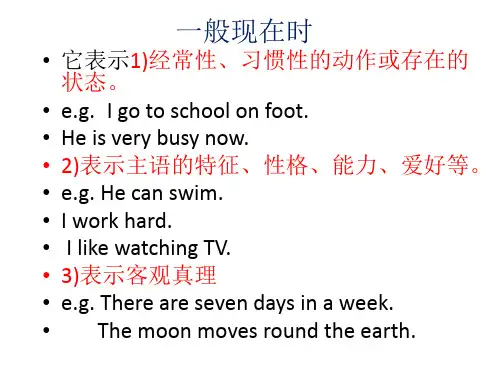
• 表示特征、性格和能力。如: Lifeng is a tall boy. 李锋是一个高个子男孩。 That's a big tree. 那是一棵大树。 My skirt is very new. 我的裙子很新。 She can speak English. 她会说英语。 2. 表示经常发生的或习惯性的动作。如: I get up at seven every day. 我每天7点起床。 Classes begin are seven days in a week. 一周有七天。 The earth goes around the ppt sun. 课件 地球绕着太阳转。
3. 一般疑问句 (1)Am / Is / Are+主语+表语+? Is your mother a nurse? 你妈妈是护士吗? Is Polly a bird? 波利是鸟吗? (2)Do+主语+动词原形+其它+? Do you like learning English? 你喜欢学习英语吗? Does your father go to work every day? ppt课件 你爸爸每天都上班吗?
5
4. 特殊疑问句
特殊疑问词+一般疑问句+? What is your father? 你爸爸是干什么的? What do you do every day? 你每天做些什么? When does your mother go to work every day? 你妈妈每天什么时候去上班?
ppt课件 6
13
1.The twins are ___________(wash) the washing clothes now. 2.Look! He is ________ playing(play) basketball over there. 3.Listen! ______ Sally _______(sing)? singing Is 4.What _____(be) you doing (do) are now.
注意,以下情况要使用一般现在时:
• 表示特征、性格和能力。如: Lifeng is a tall boy. 李锋是一个高个子男孩。 That's a big tree. 那是一棵大树。 My skirt is very new. 我的裙子很新。 She can speak English. 她会说英语。 2. 表示经常发生的或习惯性的动作。如: I get up at seven every day. 我每天7点起床。 Classes begin are seven days in a week. 一周有七天。 The earth goes around the ppt sun. 课件 地球绕着太阳转。
小学英语语法——现在进行时复习课件(共15张PPT)

Look ,Daming and Sam a bike, Amy kite. Dad
football. Lingling to music .
mum . Grandpa photos .
Homework:
1、 找出M6中过去式的句子(至少6句)1×1 2、 P51常见动词的过去式单词1×1.
mmaakkee------mmaakkiinngg
watch watch TV watching TV I am watching TV now.
She/He is watching TV now. They/We are watching TV now.
"信息河"
1.现在进行时的肯定句基本结构为: 主语+be+动词ing +其它...
语法复习
现在进行时表示现在正在 进行或发生的动作,也可 表示当前一段时间内的活 动或现阶段正在进行的动 作。(句中一般含有now, look, listen.)
写出下列动词的现在分词: play_______ make________ run____
go________ like______
swim ________
making, taste-tasting 3.如果末尾是辅音字母加一个元音字母和一个 辅音字母,双写末尾的辅音字母,再加ing,如:
run-running, stop-stopping
lቤተ መጻሕፍቲ ባይዱt’s read :
eat eating fly flying visit visiting get getting see seeing look looking watch watching walk walking make making speak speaking drink drinking wish wishing run running shine shining swim swimming ride riding buy buying take taking
一般现在时和现在进行时PPT课件
第4页/共33页
➢ May 经常看电视。 ➢ May often watches TV. ➢ Peter 总是拿一个很重的包。 ➢ Peter always carries a heavy bag. ➢ Tina 每天都在洗盘子。 ➢ Tina washes the dishes every day.
washing
am
3 Are you wash your car now? Yes, I do.
cleans 4 John usually clean his car on Sundays. He
is are cleaning his car at the moment.
cries
is crying
第13页/共33页
Now you try.
1.__D_o_ the children __he_l_p_ at home? (help) Yes, __t_h_e_y__d_o__.
2.What _D_o_e_s the farmer__d_o___ ? (do) 3. __D_o_ Tom and Charlie __p_l_a_y_ tennis? (play)
第15页/共33页
Present continuous tense 现在进行时
He is playing basketball.
第16页/共33页
They’re swimming.
第17页/共33页
They are writing now.
第18页/共33页
现在进行时的定义: 表示现在正在进行的动作。
23goinggoingdotalkwatchplayreadlookdoingtalkingwatchingplayingreadinglookingpractice直接在动词后面加ing24去e再加ingcomeingcominghavehavingwritewritingrideridinglivelivingdrivedrivingmovemovingpractice25以重读辅元辅结构结尾的动词需要双写最后一个字母再加ing
一般现在进行时PPT课件
ask
asking
以不发音的e 结尾的,去e, +ing
重读闭音节 以一个辅音 字母结尾的, 双写这一字 母+ing
write take dance get run swim put
.
writing taking dancing getting running swimming putting
16
•
What are you listening to?
8.She is fifteen years old. (就画线部分提问)
How old is she?
.
22
.
23
小学现在进行时
.
1
英语时态: 就是用动词的形式变化 来表示不同时间内发生的动作或存在的状态
.
2
Look, he is drawing .
.
3
The boy is swimming now.
.
4
Listen! The bird is singing.
.
5
They are watching TV now.
Look
Look ,the boy is running .
Listen
Listen , the girl is singing .
It’s +时间 It’s 9:00 a.m. We are having math class.
Where is …? Where is Mike ? He is reading under the tree
如: She is crying. 她正在哭。 He is snoring. 他正在打鼾
They are laughing. 他们正在大笑。 I am eating hamburger. 我正在吃汉堡包.
一般现在时与现在进行时区别课件ppt
have_h_a_v_i_n_g____ take__t_a_k_i_n_g___ singsi_n_g_i_n_g_____
swimming
getting sitting
walking sit__________ walk__________
differences(不同点):
概念不同: 一般现在时表示主语经常性和习惯性的动作或存在的状态,也表示说话者的能力及自然现象。而现 在进行时表示说话时(瞬间)正在进行的动作,也表示目前或现阶段一直进行的动作。如: She often does her homework in the evening. 她经常在晚上做作业。 She is doing her homework now. 现在她正在做作业。
• 5. I watch TV every day. (改为一般疑问句) • 6. David has a goal. (改为一般疑问句) • 7. We have four lessons.(否定句) • 8. Nancy doesn’t run fast (肯定句)
• 1. 1.The children arreu_n_n_i_n_g______ (
six hours a day.
3. Listen! Joanis__s__i_n_g__i_n_g(sing) in the classroom.sSihnegosften __________ (sing) there.
4. _D_o_e__s_____ your brotherk_n_o_w_______(know)
A:aren't B:do C:don't D:are
用单词正确形式填空
1. My father always c_o__m_e_s_____(come) back from
swimming
getting sitting
walking sit__________ walk__________
differences(不同点):
概念不同: 一般现在时表示主语经常性和习惯性的动作或存在的状态,也表示说话者的能力及自然现象。而现 在进行时表示说话时(瞬间)正在进行的动作,也表示目前或现阶段一直进行的动作。如: She often does her homework in the evening. 她经常在晚上做作业。 She is doing her homework now. 现在她正在做作业。
• 5. I watch TV every day. (改为一般疑问句) • 6. David has a goal. (改为一般疑问句) • 7. We have four lessons.(否定句) • 8. Nancy doesn’t run fast (肯定句)
• 1. 1.The children arreu_n_n_i_n_g______ (
six hours a day.
3. Listen! Joanis__s__i_n_g__i_n_g(sing) in the classroom.sSihnegosften __________ (sing) there.
4. _D_o_e__s_____ your brotherk_n_o_w_______(know)
A:aren't B:do C:don't D:are
用单词正确形式填空
1. My father always c_o__m_e_s_____(come) back from
小学英语四种时态语法讲解PPT
like→liked dance→danced live→lived
以辅元辅结尾的重读闭音节,双 plan→planned
写尾字母,再加-ed
stop→stopped
drop→dropped
结尾是“辅音字母+y”的动词, study→studied
改“y”为“i”再加-ed
worry→worried
已有e,则只加-s。
wash→washes
do→does
以辅音字母加y结尾的词
study→studies
carry→carries
fly→flies
第12页,共18页。
三、现在进行时
第13页,共18页。
现在进行时
1、概念:现在(说话的瞬间)正在进行或发生的动 作,强调“此时此刻”。
2、标志词: look 看 ;listen听 ;now现在;
等;
3)由“时间段+ago”构成的短语:long long ago,a moment ago, a short
time ago,three days ago等;
4)其它:just now等
第5页,共18页。
3、基本结构:
• ①be动词(注意be的人称变化,单数用was,复数 用were)
I was in the classroom yesterday morning. He was in the classroom yesterday morning. They were in the classroom yesterday morning.
第11页,共18页。
动词第三人称变化规则: 规则
例子
一般在词尾加-s
Play→plays leave→leaves swim→swims