
人教版七年级上Unit5 Do you have a soccer ball单元教案
人教版七年级英语上册教案之Do you have a soccer ball
3eud教育网 百万教学资源,完全免费,无须注册,天天更新!
3eud教育网 教学资源集散地。可能是最大的免费教育资源网! Unit 5 How old is he?
Lesson 17
Task: To learn to identify people
Language points: Who is this/that? This/That/It is…. How old is he/she/it? He/She/It is….
Difficult points: Using he, she and it
Teaching steps:
Step 1 Revision
1. Revise: What’s your name? Can you spell it, please? How old are you?
2. Revise the numbers 0-20. Teach 21.
Step 2 Prevision checking
Read the phonetic scripts and match them with the relevant words
Step 3 Presentation
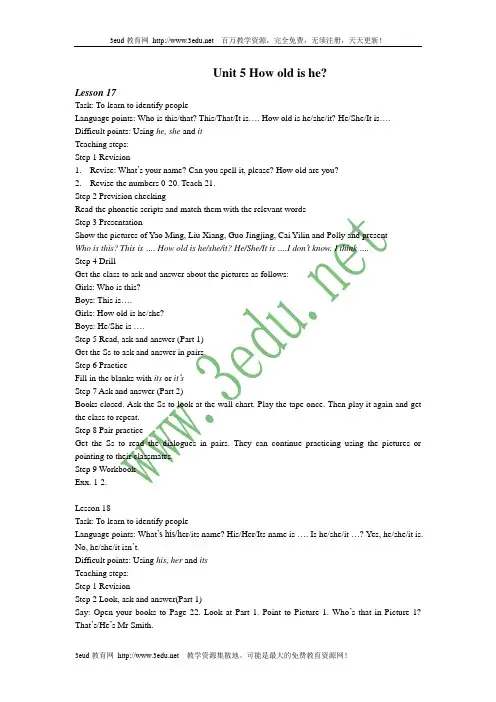
Show the pictures of Yao Ming, Liu Xiang, Guo Jingjing, Cai Yilin and Polly and present
Who is this? This is …. How old is he/she/it? He/She/It is ….I don’t know. I think ….
Step 4 Drill
Get the class to ask and answer about the pictures as follows:
Girls: Who is this?
Boys: This is….
Girls: How old is he/she?
人教版新目标英语七年级上册Unit 5 单元话题写作教学案
广东省教育研究院2014年科研课题《初中英语写作教学的创新体验研究》最终成果
人教版初中英语 单元话题写作指导 1 七年级上册Unit 5 Do you have a soccer ball?写作教学案
(教师使用)
【话题】与朋友共度快乐时光(Spending time with friends)
【写作目标】能够用have/has对物品的所属关系进行问答,并用所学语言介绍自己或朋友喜欢或不喜欢的运动项目并能够说明原因。
【课前任务】
一、写出下列短语。
1、乒乓球 2、打网球
3、喜爱运动 4、让我们
5、棒球拍 6、在学校
7、参加体育运动或比赛 8、和我的同班同学一起
参考答案:1. ping-pong ball 2. play tennis 3. like/love sports 4.let us 5.baseball bat
6.
at school/in the school 7.play sports 8. with my classmates
二、根据汉语意思完成下列句子。
1、你有棒球吗?
Do you __________ __________ ___________?
2、我没有棒球。
I __________ ___________ a baseball.
3、她不踢足球。
She ___________ __________ football.
4、对我来说很容易。
It __________ __________ ___________ me.
人教版英语七上 U5 Do you have a soccer ball 讲义
1
Unit5 Do you have a soccer ball?
一、 重点词汇及拓展
1. have v.
(1) 有
e.g. I have a pen. 我有一只钢笔。
(2) 吃;喝
e.g. I have breakfast every day. 我每天吃早饭。
(3) 经历
e.g. have a good time 玩得开心;过得愉快
(4) 上课
e.g. We have English lessons every day. 我们每天上英语课。
(5) 举办
e.g. Mark has a party. 马克举办了一个派对。
(6) 得…病
e.g. He has a cold and a headache. 他感冒和头疼。
2. let v. 允许;让
let’s = let us 让我们
let sb. do sth. 让某人做某事
let sb. not do sth. 让某人不要做某事
e.g. Let’s have a party tonight! 让我们今晚举办一个派对吧!
make sb. do sth. 使某人做某事
e.g. The movie makes me miss my mother. 这部电影使我怀念我的妈妈。
3. go v.去;走
go to +地点 去某地
go to school 去学校
go here/there/home 去这儿/去那/回家
go shopping 去购物
go swimming 去游泳
go hiking 去远足
go skating 去轮滑
go boating 去划船
4. late
adj. 迟的;晚的
be late for school 上学迟到
be late for class 上课迟到 2
be late for work 上班迟到
adv. 迟地;晚地
later adv. 后来;以后
(完整word版)最新人教版七年级上册英语精品教案Unit5
(完整word版)最新人教版七年级上册英语精品教案Unit5
最新初中英语精品资料设计 1 Unit 5 Do you have a soccer ball?
Language
Goal
【语言目标】 Be able to talk about ownership.
Knowledge
Goals
【知识目标】 Key Words do,have,tennis,ball,soccer,volleyball,basketball,let,us,go,we,late,has,get,great,play,sound,interesting,boring,fun,difficult,relaxing,watch,TV,same,love,with,sport,them,only,like,easy,after,class,classmate
Key Phrases let’s=let us,watch TV,soccer ball
Key
Sentences Do you have a ping-pong bat?
Yes,I do./No,I don’t。
Do they have a ping-pong ball?
Yes,they do。/No,they don’t.
Does she/he have a tennis ball?
Yes,she/he does./No,she/he doesn't。
Key Grammar The simple present tense
Ability Goals
【能力目标】 Be able to talk about activities and express your own
feelings about them。 (完整word版)最新人教版七年级上册英语精品教案Unit5
最新初中英语精品资料设计 2 Moral Goals
【情感目标】 Form a good habit of loving sports。
英语人教版七年级上册新目标英语七年级(上)第五单元教案
新目标英语七年级(上)第五单元教案
Unit 5 Do you have a soccer ball?
Language goal(教学目标): Ask and answer the questions about ownership.
nguage knowledge to be needed(所需知识):
(1).Words, expressions & language structures that students have learned:
do, you,baseball, yes, no, I, computer game,don’t , your ,brother,one he.This
is my friend John. Nice to meet you!
(2).Words, expressions & language structures that students have to be learned:
have, tennis, racket, tennis racket, baseball, bat, volleyball, basketball, TV,
does, doesn’t=does not. let us, let's=let us, play, well,
sound,good,welcome,our,sport,center,like,we,many,club,ping-pong,morejoin,class,interesting, boring, fun, difficult, relaxing, watch, watch TV,
has,collection,but,play, sports, only, them, small, every, day, every day.
Do you have a baseball? Yes, I do./ No, I don’t.
2021-2022学年人教版七年级英语上册Unit 5 1-5课时教案
课 题 Unit 5 Do you have a soccer ball? 课时 1 总课时
教学目标
【知识目标】
Important words:do,have,tennis,ball,pingpong,bat,soccer,volleyball,basketball
Important phrases:tennis ball,pingpong ball,soccer ball,baseball bat
Important sentences:
1.—Do you have a pingpong bat?—Yes,I do.
2.—Do you have a pingpong ball?—No,I don't.
【能力目标】1.学会用have对物品所属进行提问以及回答。2.学会使用do引导的一般疑问句。
【情感目标】1.利用学生喜爱运动的心理,激发学生学习英语的欲望和兴趣,使他们乐于参与各种英语实践活动。2.在小组活动中,培养学生团结协作的精神。
教 学
重难点 重点:1.学会用have对物品所属进行提问以及回答。2.学会使用do引导的一般疑问句。
难点:助动词do的用法。
教学准备 PPT
流 程 设 计
教 学 活 动 批 注
Step 1 自主学习
【新词自查】
根据句意及汉语提示填写单词。
1.We have (有) a new English teacher.
2.That is her soccer (足球).
3.What color is the ball (球)?
4.Where is your volleyball (排球)? 5.Please bring my basketball (篮球) here.
6.Is that your pingpong bat (球拍)?
Step 2 情景导入
T:Look at the sports things.Here,the pingpong ball is mine.It belongs to
人教版七年级上册英语讲义 Unit 5 Do you have a soccer ball
第1页 /共 12页 Unit5 Do you have a soccer ball?讲义
一、【重点单词】
do /du:/助动词,帮助构成一般现在时的否定句或疑问句,无意义;实义动词“做,干”
have /hæv/有
tennis /'tenɪs/网球
ball /bɔ:l/球
ping-pong乒乓球
bat /bæt/球棒;球拍
soccer /'sɑ:kər/,/'sɒkə/(英式)足球
soccer ball(英式)足球
volleyball /'vɒlɪbɔ:l/排球
basketball /'bɑ:skɪtbɔ:l/篮球
let /let/允许;让
us /ʌs/ (we的宾格)我们
let's = let us让我们(一起)
go /ɡəʊ/去;走
we /wi:/我们
late /leɪt/迟到
has /hæz/有(have的第三人称单数形式)
get /ɡet/去取(或带来);得到
great /ɡreɪt/美妙的;伟大的
play /pleɪ/参加(比赛或运动);玩耍
sound /saʊnd/听起来好像
interesting /'ɪntrəstɪŋ/有趣的;使人快乐的;乐趣;快乐
difficult /'dɪfɪkəlt/困难的
relaxing /rɪ'læksɪŋ/轻松的;令人放松的
watch /wɒʧ/注视;观看
TV /,ti:'vi:/电视
same /seɪm/相同的 第2页 /共 12页 love /lʌv/爱;喜爱
with /wɪð/和...在一起;带有;使用
sport /spɔ:(r)t/体育运动
them /ðem/ /ðəm/他(她、它)们
only /'əʊnlɪ/只;仅
like /laɪk/喜欢;喜爱
easy /'i:zi/容易的;不费力的
after /'ɑ:ftə/在...之后
class /klɑ:s/班级;课
classmate /'klɑ:smeɪt/同班同学
七年级英语Unit5 教案
Unit5 Do you have a soccer ball?
第一课时(Section A 1a-2c)
语言知识
1. 单词和词组:have, soccer ball, ball, tennis, racket, ping-pong, volleyball,
basketball, bat, tennis racket, computer game.
2. 重点句子
Do you have a soccer ball? Yes,I do./No,I don’t.
Does he/she have a soccer ball? Yes,he/she does.
No,he/she doesn’t.
3. 语法:have 的一般疑问句用法(用于第一、二人称和第三人称的复数)及
其肯定和否定回答
Has只用于第三人称单数形式
教学重点
1. 能听说读写以下单词:have, soccer ball, tennis, racket, ping-pong,
volleyball, basketball. 同时,能灵活运用句型 Do you have… Does he/she have… 及其肯定否定回答。
2. 掌握球类词汇的发音以及助动词do的运用。
3. “271”教学模式在课堂教学中的运用。
Teaching steps:
Step1. Greet and lead in.
T: Good morning, boys and girls.
Ss: Good morning, Mr. Cheng.
T: I like sports,do you like sports?
Ss: Yes,we do.
T:very good. And I have a soccer ball?Do you have a soccer ball ? Ss: No.
T: Do you like watching soccer games?
Unit 5 Do you have a soccer ball
Unit 5 Do you have a soccer ball? 临江市第六中学 张洪霞
课题 Unit 5 Do you have a soccer
ball? Period1 课型 新授课
授课班级 七年级 授课教师 张洪霞
教学方法 采用任务型语言教学,交际法,情感激励法等教学方法 教学用具 Tape,recorder,ppt
Teaching Target(s) 1.Learn the names of balls and some new words:
soccer ball ,tennis ball ,ping-pong ball ,volleyball , basketball ,bat,
have, do
2. Sentences: I have…
He/She has…
Do you have a… ?Yes, I do./No,I don’t.
Does he/she have…?
Yes, he/she does./No, he/she doesn’t.
3. Arouse the students’ interest in learning English
Key Point(s) To use the words they learnt
Difficult Point(s) I have…; He/She has…;
Do you have a… ? Yes, I do./No, I don’t.
Does he/she have… Yes, he/she does./No, he/she doesn’t.
Teaching Procedures:
Step1 Warming up
Show the students a picture of Yao Ming and ask some questions to review and lead in: Who is
七年级英语上册Unit 5单元教案人教新目标版
XX学校--用心用情 服务教育!
用心用情 服务教育 1 精品基础教育教学资料,请参考使用,祝你取得好成绩!
Unit 5 Do you have a soccer ball?
Part 1: Teaching design (第一部分:教学设计)
Structures:
Present tense to
have; Yes/No questions and short answers; Let’s…; Adjectives of
quality
Vocabulary:
TV, ball, basketball, soccer, bat, tennis racket, volleyball, interesting, boring,
fun, difficult, relaxing
Learning strategies: Guessing; Classifying
SECTION A
Goals
● To learn to use present tense to have; Yes/No questions and short answers;
Let’s…; adjectives of quality
● To learn to talk about ownership
● To learn to make suggestions
● To enable the students to describe what he owns
Procedures
Warming up by learning about present tense to have; Yes/No questions and short
answers
Hi, everyone. First I like to ask you, “Do you have a brother?” Some of you may