
情态动词归纳表格
______________________________________________________________________________________________________________
精品资料
1. can/could 能力 He can sing songs in French.
He could swim at the age of 3.
表示请求 Can you help me carry the box into the room?
Could you help me, please?
可能性, 表示有时会 Jeff is clever, but sometimes he is very dull.
针对不同时间表示推测(只能用于否定句和问句) can’t do
He can’t be at home right now, for I saw him go
out just now.
can’t be doing
He can’t be studying in the classroom, for I saw
him go to the football field with a football.
can’t have done
He can’t have finished homework so soon, for he
didn’t come to school yesterday.
Where can I have put my keys?
2. may/might 允许 May I smoke here?
表示祝愿 May you a happy life!
针对不同时间表示推测(只能用于否定句和问句) may do
He may come, but he is not sure.
may be doing
Jim may be reading in the library.
may have done
He may have left the bag in the library.
3. must 肯定形式表示必须,应该;否定形式表示绝对禁止,语气强烈 You must have a passport if you want to go abroad.
You mustn’t take photos here!
回答must/need的一般疑问句时,肯定回答用must;否定回答用needn’t/don’t have to Must I come back home early? Yes, you must.
Need I come back late? No, you needn’t/don’t
have to.
针对不同时间表示推测(只能用于肯定句) must do
Tom must study hard, for he always gets the first
place every time.
must be doing
It’s so noisy upstairs. They must be quarreling
again.
must have done
It must have been around 9:00, because it was
totally dark.
4. shall 一三人称的问句表示请求 Shall he wait here?
What shall we do next?
二三人称的陈述句表示允诺,警告,命令,威胁… You shall get an answer tomorrow.
5. should 劝告,建议 You should see your parents regularly.
根据客观事实作出的的判断,可能性较大 It’s 7:20. He should come.
______________________________________________________________________________________________________________
精品资料
why/how+should 表示说话人对某事不能理解,感到意外,译为“竟会” Why should you be so late today?
6. will 表示意愿 Tom is ill at home. I will see after school.
表示请求 Will you please open the door for me?
习惯性动作, 指现在 Accident will happen.
7. would 表示意愿 He said he would give me a gift.
表示请求 Would you please clean up the messy room?
习惯性动作,指过去 We would sit around grandpa, listening to his
story.
8. need/dare半情态动词 作情态动词时常用于否定和问句中;作实意动词时常用于肯定句 Need I tell him all? You needn’t tell us.
He dares to answer questions loudly in front of
us.
need doing是主动表示被动=need to be done The machine needs repairing. = The machine
needs to be repaired.
9. ought to 应该 否定形式:oughtn’t/ought not to You ought to make an apology to him.
He oughtn’t attend the meeting.
10. have to 不得不 I can’t see things clearly, I have to wear
glasses.
情态动词+have done
1. must have done 对过去的肯定推测(只能用于肯定句)译为“过去肯定…” She must have earned much money, for he bought
an expensive car last week.
2. cannot have done 对过去的否定推测(只能用于否定句)译为“过去肯定没有…” He can’t have gone far, for his coat is still
here.
can have done 还可用于问句表示对过去的推测 Where can he have put the bag?
3. may/might not have done 表示对已经发生的事进行推测,可能性不大 I can’t find purse anywhere. You may have
dropped it when you were shopping in the market.
4. should/ought to have done 过去该做而没有做 You should have come to school if you were really
serious about your study.
5. should not /ought not to have done 做了不该做的事(过去) We oughtn’t to have given him so much money.
6. could have done 过去本来可以做某事,但没有做 He could have visited the Great Wall but it
suddenly began to rain yesterday.
7. couldn’t have done 过去不能做而做了的事 He couldn’t have known the decision, but someone
told him.
8. needn’t have done 过去不必做的事却做了 You needn’t have finished the homework because
you were ill.
______________________________________________________________________________________________________________
精品资料
高考英语语法大全图表[优质ppt]
![高考英语语法大全图表[优质ppt]](https://360docs-1393072327.cos.ap-beijing.myqcloud.com/40c259b4680203d8ce2f2467.webp)
听力
根据对话和短文回答问题、根据录音内容填空、判断正误、根据录音 内容排序、根据录音内容匹配
口语
对话、访谈、复述、描述、讨论、角色扮演、朗读、回答问题
阅读 写作
基本技能
运用简单的阅读策略获取信息,根据上下文和构词法推 断、理解生词含义,理解句子间的逻辑关系,找出文章 的主题、理解故事情节、预测故事的结局。
1.书虫(50本) 《 21世纪报Teens》
2.每天三篇300字左右的高考阅读训练 100—120 w 记叙文 应用文 议论文等 背诵经典句型;每周一篇习作
形容词、副词 介词、数词 名词、冠词
代词 分类
1.最高级的表达方式 2.倍数表达 3.多个形容词修饰一个名词 4.加不加-ly均是副词意义有区别 的词 5.比较级、同级比较级固定搭配
《英语知识网络图》
语法 词汇
高
短语
考
英
交际用语
语
知
听力
识
口语
网
络
阅读
图
写作
知识运用
词法
语 法
句法
词 法
词类 名词 代词 数词
名词、动词、形容词、副词、数词、代词、冠词、介词、连词
可数名词、不可数名词、名词所有格、名词单复数、专有名词
人称代词、物主代词、反身代词、指示代词、不定代词、疑问代词、 连接代词、关系代词、相互代词
4既可以接不定式又接v-ing做宾语有区分的动词。
5it做形式主语和形式宾语的句式。 6使役性动词的过去分词和v-ing的理解。 7不定式各种形式的考查 。
1. 非谓语动作与主句动作发 生的时间先后
2. 与逻辑主语之间的关系
重点、难点
非谓语动词
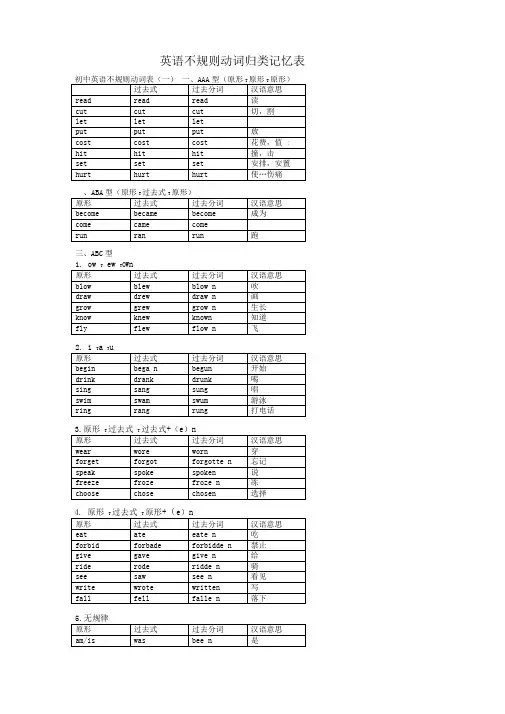
动词过去式、分词不规则变化表格分类记忆
spelled
拼写
spelt
spelt
burn
burned
burned
烧
burnt
burnt
smell
smelled
smelled
闻
smelt
smelt
shine
shined
shin ed
照耀
shone
shone
dream
dreamed
dreamed
做梦
dreamt
Pdreamt
wake
生长
know
knew
known
知道
fly
flew
flow n
飞
2. itatu
原形
过去式
过去分词
汉语意思
begin
bega n
begun
开始
drink
drank
drunk
喝
sing
sang
sung
唱
swim
swam
swum
游泳
ring
rang
rung
打电话
3.原形t过去式t过去式+(e)n
原形
过去式
waked
waked
醒
woke
woke n
hide
hid
hid
躲藏
hid
hidde n
七、情态动词
原形
「过去式
过去分词
汉语意思
can
could
/
匕匕 厶冃
may
might
/
也许must//来自必须shall
should
/
英语时态16种表格
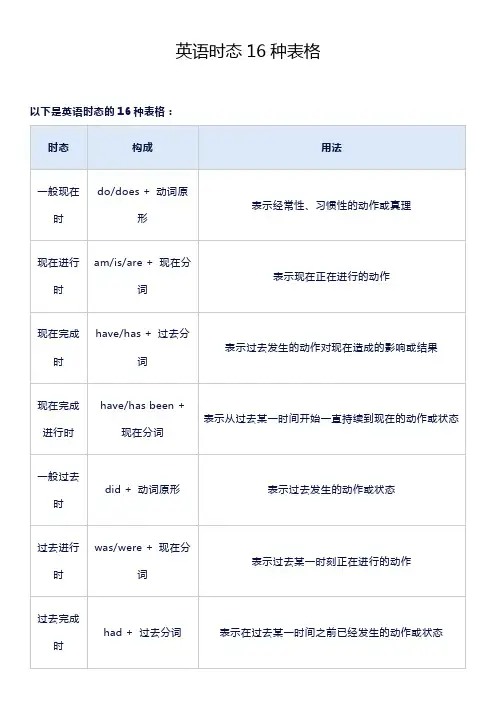
英语时态16种表格以下是英语时态的16种表格:基本时态(12种):1.一般现在时(Simple Present)o结构:主语+ 动词原形/动词的第三人称单数形式o示例:I walk to school every day. (我每天步行上学。
)2.一般过去时(Simple Past)o结构:主语+ 过去式动词o示例:She worked at the library yesterday. (她昨天在图书馆工作。
)3.一般将来时(Simple Future)o结构:主语+ will/shall + 动词原形o示例:He will study abroad next year. (他明年将出国留学。
)4.现在进行时(Present Continuous)o结构:主语+ am/is/are + 动词-ing形式o示例:They are watching TV now. (他们现在正在看电视。
)5.过去进行时(Past Continuous)o结构:主语+ was/were + 动词-ing形式o示例:We were playing football when it started raining. (下雨的时候我们正在踢足球。
)6.将来进行时(Future Continuous)o结构:主语+ will be + 动词-ing形式o示例:I will be cooking dinner at 7 p.m. tonight. (今晚7点我将会在做饭。
)7.现在完成时(Present Perfect)o结构:主语+ have/has + 过去分词o示例:She has finished her homework already. (她已经完成了作业。
)8.过去完成时(Past Perfect)o结构:主语+ had + 过去分词o示例:They had left before I arrived. (在我到达之前他们就已经离开了。
英语十六种动词时态归纳表
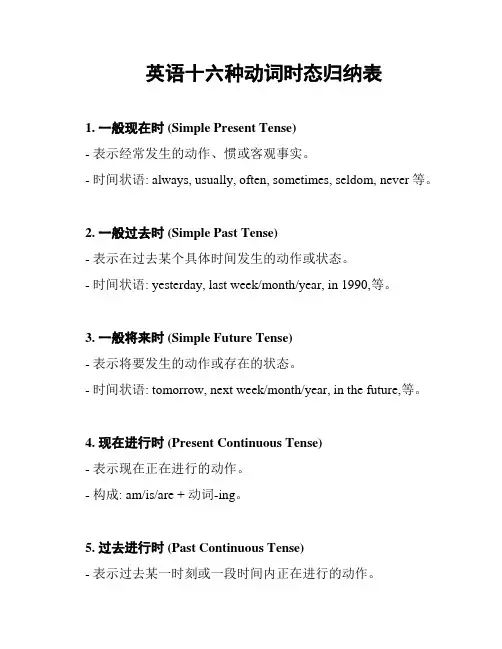
英语十六种动词时态归纳表1. 一般现在时 (Simple Present Tense)- 表示经常发生的动作、惯或客观事实。
- 时间状语: always, usually, often, sometimes, seldom, never等。
2. 一般过去时 (Simple Past Tense)- 表示在过去某个具体时间发生的动作或状态。
- 时间状语: yesterday, last week/month/year, in 1990,等。
3. 一般将来时 (Simple Future Tense)- 表示将要发生的动作或存在的状态。
- 时间状语: tomorrow, next week/month/year, in the future,等。
4. 现在进行时 (Present Continuous Tense)- 表示现在正在进行的动作。
- 构成: am/is/are + 动词-ing。
5. 过去进行时 (Past Continuous Tense)- 表示过去某一时刻或一段时间内正在进行的动作。
- 构成: was/were + 动词-ing。
6. 将来进行时 (Future Continuous Tense)- 表示将来某一时刻或一段时间内正在进行的动作。
- 构成: will be + 动词-ing。
7. 现在完成时 (Present Perfect Tense)- 表示动作对现在造成的影响或状态。
- 构成: have/has + 过去分词。
8. 过去完成时 (Past Perfect Tense)- 表示在过去某一时间点或动作之前已经发生的动作。
- 构成: had + 过去分词。
9. 将来完成时 (Future Perfect Tense)- 表示在将来某一时间点之前将会发生的动作。
- 构成: will have + 过去分词。
10. 现在完成进行时 (Present Perfect Continuous Tense)- 表示从过去某一时刻开始一直延续到现在且可能继续下去的动作或状态。
(完美)动词过去式、分词不规则变化表格(---默写版)

过去分词
汉语意思
穿
忘记
说
冻
选择
原形→过去式→原形
原形
过去式
过去分词
汉语意思
吃
禁止
给
骑
看见
写
落下
无规律
原形
过去式
过去分词
汉语意思
是
是
做
走
拿
四、型
原形→→
原形
过去式
过去分词
汉语意思
带来
买
打架
思考
原形→→
原形
过去式
过去分词
汉语意思
捉抓
教
变其中一个元音字母
原形
过去式
过去分词
汉语意思
喂
遇见
得到
拥有
临时照看
原形
过去式
过去分词
汉语意思
生
吊死
挂
学
说谎
躺
给看
拼写
烧
闻
照耀
做梦
醒
躲藏
英语不规则动词归类默写表
一、型(原形→原形→原形)
原形
过去式
过去分词
汉语意思
读
切,割
让
放
花费,值
撞,击
安排,安置
使伤痛
二、型(原形→过去式→原形)
原形
过去式
过去分词
汉语意思
成为
来
跑
三、型
→→
原形
过去式
过去分词
汉语意思
吹
画
生长
知道
飞
→→
原形
过去式
过去分词
汉语意思
开始
喝
唱
游泳
动词过去式、分词不规则变化表格分类记忆

有,吃
lay
lain
lain
放
lose
lost
lost
丢失
pay
paid
paid
付钱
say
said
said
说
sell
sold
sold
卖
tell
told
told
告诉
stand
stood
stood
站
五、AAB型
原形
过去式
过去分词
汉语意思
beat
beat
beaten
打败
六、有两种形式
原形
过去式
过去分词
dealt
处理
dig
dug
dug
挖
do
did
done
做
draw
drew
drawn
画
dream
dreamed
dreamed
做梦
dream
dreamt
dreamt
做梦
drink
drank
drunk
喝
drive
drove
driven
驾驶
eat
ate
eaten
吃
fall
fell
fallen
落下
feed
fed
动词过去式、分词不规则变化表格分类记忆
英语不规则动词归类记忆表
初中英语不规则动词表(一)
一、AAA型(原形→原形→原形)
原形
过去式
过去分词
汉语意思
read
read
read
读
cut
cut
cut
(整理)动词过去式、分词不规则变化表格分类记忆
forbid
forbade
forbidden
禁止
forget
forgot
forgotten
忘记
freeze
froze
frozen
冻
get
got
got
得到
give
gave
given
给
go
went
gone
走
grow
grew
grown
生长
hang
hanged
hanged
吊死
hang
hung
hung
caught
捉,抓
choose
chose
chosen
选择
come
came
come
来
cost
cost
cost
花费,值
cut
cut
cut
切,割
deal
dealt
dealt
处理
dig
dug
dug
挖
do
did
done
做
draw
drew
drawn
画
dream
dreamed
dreamed
做梦
dream
dreamt
smelled
smelled
闻
smell
smelt
smelt
闻
speak
spoke
spoken
说
spell
spelled
spelled
拼写
spell
spelt
spelt
拼写
spend
spent
初中英语语法八年级下册总结表格
以下是初中英语八年级下册的语法总结表格: 语法要点 描述
直接引语和间接引语 直接引语是直接引述他人的话语,用引号括起来。
间接引语是将他人的话转述出来,不使用引号。
被动语态 被动语态表示主语是动作的接受者,而不是执行者。
常用的被动语态结构是:be + 过去分词。
情态动词 情态动词用来表示说话人的态度、意愿、能力、可能性等。
常见的情态动词包括can、could、may、might、shall、should、will、would、must等。
定语从句 定语从句用来修饰名词,常用关系代词who、which、that引导。
关系代词在定语从句中可以作主语、宾语、表语等。
状语从句 状语从句用来表示时间、原因、条件、目的、结果等,在句子中作状语。
常见的引导词有when、while、as、since、because、if、unless、so that等。
名词性从句 名词性从句可以作主语、宾语、表语等,常用的引导词有that、whether、if、who、which等。
宾语从句 宾语从句用来作及物动词、介词后的宾语,引导词有that、whether、if等。
独立主格结构 独立主格结构是指一个名词(或代词)和一个动词短语构成的结构,可以独立成句,表示伴随、条件、原因等关系。
这些是初中英语八年级下册的一些重要的语法要点总结。
请注意,表格中的内容仅供参考,具体的语法知识还需要参考教材或教师的指导。
最新初中英语时态和语态表格
初中生英语励志名言警句精选3. Quitters never win and winners never quit.退缩者永无胜利,胜利者永不退缩。
4. You're uinique, nothing can replace you.你举世无双,无人可以替代。
5. 6. Knowledge makes humble, ignorance makes proud.博学使人谦逊,无知使人骄傲。
7. Nothing great was ever achieved without enthusiasm.无热情成就不了伟业。
8. The secret of success is constancy of purpose.成功的秘诀在于持之于恒。
9. Better an empty purse than an empty head.宁可钱袋瘪,不要脑袋空。
10.初中生英语励志名言警句1. Nothing is impossible to a willing heart.只要有一颗意志坚强的心,没事不成。
2. Every man is his own worst enemy.一个人最大的敌人就是他自己。
3. Birth is much, but breeding is more.出身固然重要,教养更且重要。
4. Never give up, Never lose the opportunity to succeed .不放弃就有成功的机会。
5. Bitter pills may have wholesome effects.良药苦口利于病。
6. He that can have patience, can have what he will.唯坚韧者始能遂其志。
7. Energy and persistence conquer all things.能量和坚持可以征服一切事情。
8. Between two stools one falls to the ground.脚踏两头要落空。
动词详解3
评了。 A bridge should be built here. 这儿应该建座桥。
现在时
过去时
将来时
语态
主动语态
一般时
完成时
进行时
被动语态
以I clean the house为例
I clean the house.
I cleaned the house yesterday.
一般现在时(第三人称单数加 s)
一般过去时(v-ed,见表格)
I will clean the house
将来完成时(will have done)
过去将来时(would do/ was/were going to do)
过去将来完成时(would have done, “本想做但并 未做” )
以I clean the house为例
I have been cleaning the house for 3 hours.
house at this time
tomorrow.
将来进行时(will be doing)
以I clean the house为例
I have cleaned the house for 3 hours.
I had cleaned the house before I cooked.
I will have cleaned the house by 10 tonight.
tomorrow.
一般将来时(will/be going to
I am cleaning the house. do)
I was cleaning the house at this time yesterday. 现在进行时(be doing)